
LSA-1086
Fragmentary base for statue of Constans, emperor. Lychnidus (Epirus Nova). 333-337
Record details
Photographs
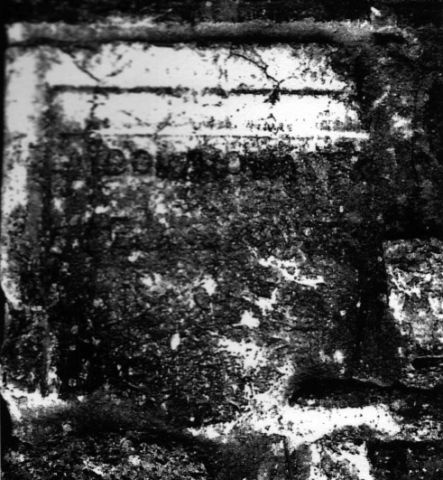
Inscription
I
Domino nostro / Flab(io) Constan[ti] / nob(ilissimo) Cạesaṛị / Fl(avius) Hygin[us] / p(raeses) pr(ovinciae) [Epiri] / [novae ----]
II
[[----AL----]]
Inscription translation
I
Flavius Hyginus, governor (praeses) of the province of Epirus Nova [set this up to] our Lord Flavius Constans the most noble Caesar
II
Bibliography
- Inscriptiones Graecae, X, 2(2), 365
Discussion
INSCRIPTION
Domino nostro / Flab(io) Constan[ti] / nob(ilissimo) Cạesaṛị / Fl(avius) Hygin[us] / p(raeses) pr(ovinciae) [Epiri] / [novae ----] / [[----AL----]]
'Flavius Hyginus, governor (praeses) of the province of Epirus Nova (set this up to) our Lord Flavius Constans the most noble Caesar'
Letter height 3-4 cm.
DESCRIPTION (from IG X and the published photo).
Part of a reddish marble block, H 49 cm, W 47 cm, D 20 cm. The block is built into the western wall of the church of Santa Sophia in Ohrid. Left and upper sides are preserved. The epigraphic field is framed; the surface is heavily weathered. Between lines 1 and two there are traces of an earlier, erased inscription (IG).
HONORAND, AWARDER, AND DATE
Constans, the youngest son of Constantine I, was Caesar 333-7 and Augustus 337-50; our inscription is dated by the Caesarian rank.
The awarder Flavius Hyginus is known only from this inscription (PLRE I, 446, Fl. Hyginus 4). He was possibly a govenor (praeses) of the province of Epirus nova. Milin completed this title, which is not legible, from another inscription in Lychnidus to Constantius II and Constantius Gallus (LSA-1085) (Milin 1997, 140 hence IG X, 2(2)). We fully accept this completion, since dedications in provincial towns are usually awarded by the local governors.
FURTHER DISCUSSION
The province of Epirus nova was cut out of the province of Macedonia in the wake of the tetrarchic reforms, securely after 293 and before 311, possibly before 298 (Milin 1997, 141-3).
Discussion references
- Jones, A. H. M. et al., The Prosopography of the Later Roman Empire. Vol. I 260-395, Cambridge et al. 1971 (1975)
- Milin, M., Epirus Nova sine Dalmatorum, Ziva Antika 47, 139-44, Skopje 1997
Cite: Last Statues of Antiquity, LSA-1086 (Ulrich Gehn).