
LSA-1166
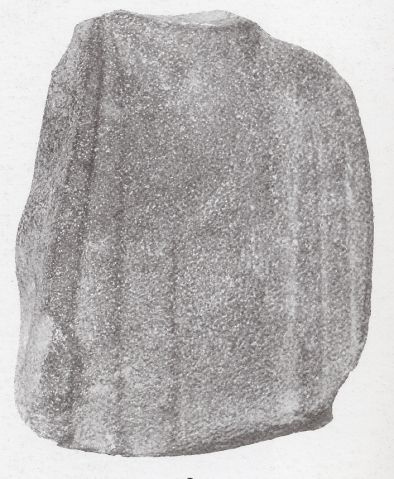
Fragment of porphyry statue in chlamys of Emperor. Constantinople. Late fourth to sixth century.
Record details
Photographs
Bibliography
- Fıratlı, N., La sculpture byzantine figurée au Musée archéologique d'Istanbul, Paris 1990, 8, no. 8, pl. 4
- Gehn, U., Ehrenstatuen in der Spätantike. Chlamydati und Togati, Wiesbaden 2012, 346-7 cat. no. P 8
Discussion
DESCRIPTION (Object):
Fragment of under life-size statue. H: 26.5, W: 21, D: 8 cm. Porphyry.
The statue is broken through the waist and at the right shoulder. The back has been cut off. The neck has been prepared for the addition of a separately-worked head. Thus, now missing are the head, the arms, and the body from the waist down.
PROVENANCE:
Found in the foundations of the annex of the Archaeological Museum in Istanbul in 1973.
DESCRIPTION (Subject)
The statue shows an emperor dressed in a chlamys. The chlamys is fastened on the right shoulder and covers the entire upper body. The folds hang vertically down from the left shoulder which suggests that the left arm was held by the side. In contrast, the folds hanging from the right shoulder suggest that the right arm moved away from the body.
COMMENTARY
The manner, in which the chlamys is worn, corresponds loosely to that of the larger porphyry statue, now in Ravenna, LSA-1010. The position of the arms however suggests a gesture other than the usual hands-on-sword pose of emperors; see LSA-1010 or LSA-1185. It relates better to portrait statues of imperial officials; see LSA-170.
HONORAND AND DATE
The use of porphyry makes it certain that this is from the statue of an emperor.
The garment and manner in which it is worn suggest a date no earlier than the late fourth-century. Statues in this guise continued until the sixth century.
Cite: Last Statues of Antiquity, LSA-1166.