
LSA-1167
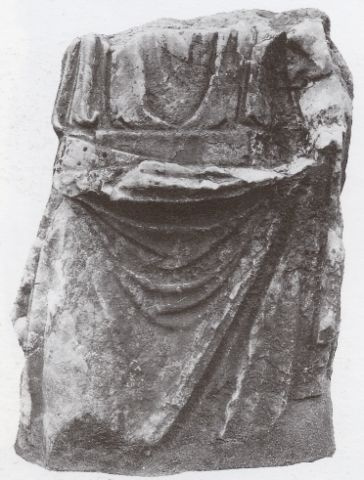
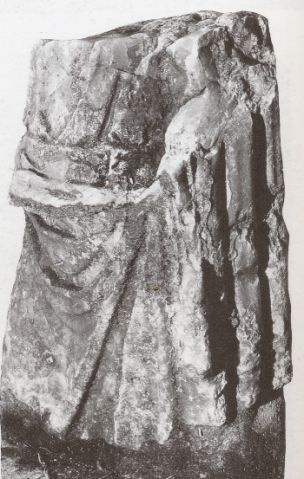
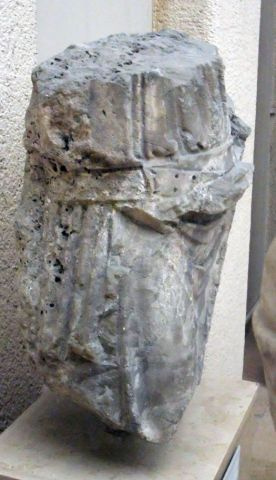
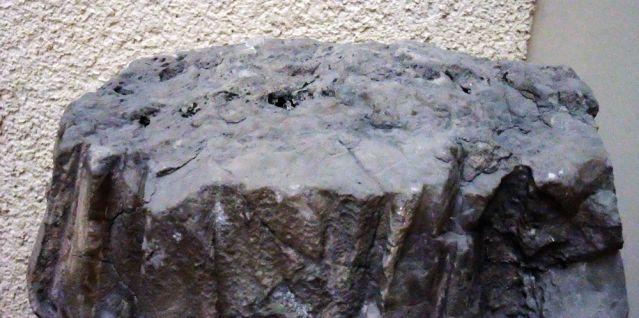
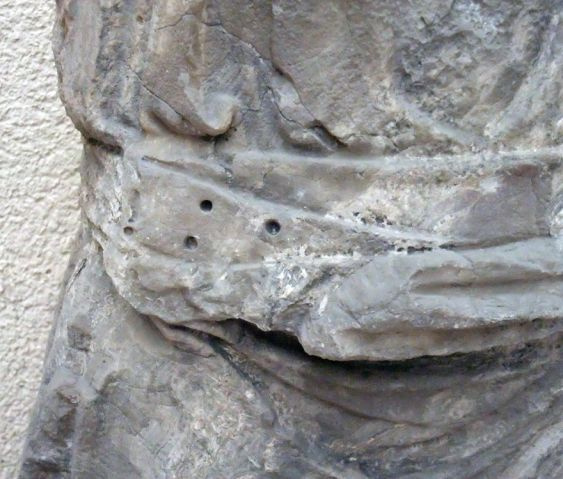
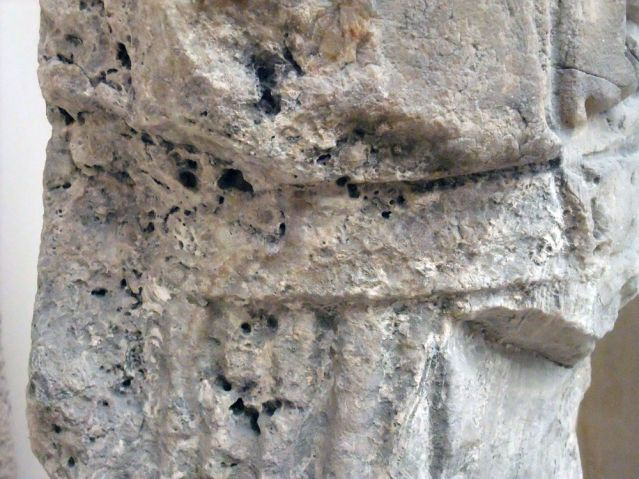
Torso of alabaster portrait statue wearing chiton, cloak, and prominent belt. Constantinople. Late fourth to early fifth century.
Record details
Photographs
Bibliography
- Fıratlı, N., La sculpture byzantine figurée au Musée archéologique d'Istanbul, Paris 1990, 8-9, no. 9, pl. 4
- Gehn, U., Ehrenstatuen in der Spätantike. Chlamydati und Togati, Wiesbaden 2012, 347-8 cat. no. O 1
Discussion
DESCRIPTION (Object)
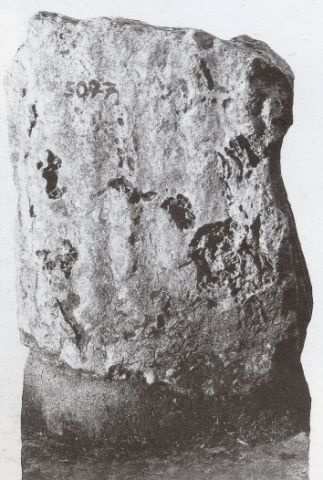
Alabaster, H 63, W 49, D 25 cm. The centre of the body under the breast bone and above the knees is preserved. The surface is heavily weathered at the back side; at the other sides there are many flakes.
The front and lateral faces are worked in detail, the back face only summarily. The garment and details of the costume are worked with precision and in a realistic style. The underlying body is shadowing under the garment and influences the fall of the folds (see below, ‘Date’).
PROVENANCE AND CURRENT LOCATION
The statue was found in 1949 during building work for the palace of Justice in Istanbul, in the area of the hippodrome and of the Augusteum. It is now in the Istanbul Archaeological Museum, inv. no. 5077.
DESCRIPTION (Subject)
The statue was standing over its left leg; it is clad in a tunic which is held at the waist by a broad belt. A cloak is draped in front of the lower body and laid over the left forearm; it leaves the view in belt and tunic free at the front. At the right waist, the cloak is tucked under the belt. This cloak which covers the left side and leaves the right side open must be a chlamys. However, the way it is draped here is unparalleled; the chlamys is in most cases covering the entire front of the statue. The buckle of the broad belt must have been at the right side; it is now chipped off. From the right waist the end of the belt, fitted with a double row of eyes, is drawn to the front where it disappears under the cloak.
The chlamydatus must represent a high ranking imperial office holder who was honoured in the Eastern capital; the precious and unusual material is possibly a further element of distinction. However, he was probably not an emperor, because the imperial belt would have been decorated with jewels (LSA-4, LSA-439, LSA-1009, LSA-1010).
DATE
The realistic treatment of the garment and the impact of the underlying body on the build-up of the statue suggest a date in the late 4th or early 5th century for the statue; before the late 4th century the chlamys was not used in the representation of the senatorial class, but entered the senatorial imagery massively at that time (see also LSA-1160). The unusual drapery of the garment is possibly an indicator that this statue was made at a time when conventions for this new statue type were not yet firmly established (Gehn 2012, 137-48).
FURTHER DISCUSSION
This statue was found in the centre of Constantinople, in the area of the Augusteum. This square is known as a mainstay for imperial statuary from literary sources; our statue suggests that it was possibly also fitted with non-imperial honorific statuary which was not recorded by our mid-byzantine sources (see also LSA-1160, LSA-1168).
Cite: Last Statues of Antiquity, LSA-1167 (Ulrich Gehn).