
LSA-1168
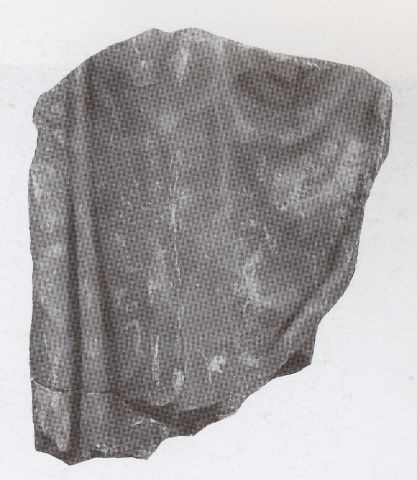
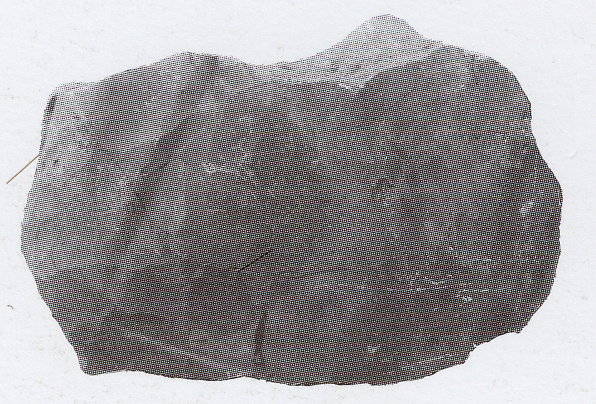
Two fragments from alabaster portrait statue in chlamys. Constantinople. Fourth to fifth century.
Record details
Photographs
Bibliography
- Fıratlı, N., La sculpture byzantine figurée au Musée archéologique d'Istanbul, Paris 1990, 9, no. 10, pl. 5
- Gehn, U., Ehrenstatuen in der Spätantike. Chlamydati und Togati, Wiesbaden 2012, 350-1 cat. no. O 2
Discussion
DESCRIPTION (Object)
Two non-joining fragments of life-size statue. Fragment A, H: 33, W: 32, D: 21 cm. Fragment B, H: 20, W: 31, D: 14 cm. Alabaster
Fragment A preserves the area of the knees. It is broken unevenly above the knees and through the area of the shins. Fragment B preserves the shoulders but not the neck. It is broken on all sides, and the back has been heavily cut away.
The folds at the front of the body have been worked plastically without sharp edges. The right leg is fully modeled under the garment on fragment A (see below, ‘Date’).
PROVENANCE AND CURRENT LOCATION
The statue was found in 1950 during the construction of the new Palace of Justice in Istanbul, in the area of the hippodrome and of the Augusteum. It is now in the Istanbul Archaeological Museum, inv. no. 5158.
DESCRIPTION (Subject)
The statue was clad in a chlamys which was extended in front of the body; it was of a high ranking imperial office holder or even of an emperor (cf. LSA-1167).
DATE
The probable terminus post quem for the statue is the late 4th century when the chlamys enters massively the visual representation of the late Roman upper classes. The smooth plastic rendering of the folds and the impact of the body suggest a date in the late 4th or early 5th century. The rendering of the folds is closely comparable to an imperial toga statue from Aphrodisias, now in Istanbul, and datable 388/92 (LSA-163). This suggests a date in the late 4th century also for our statue.
FURTHER DISCUSSION
This statue was found in the centre of Constantinople, in the area of the Augusteum. This square is known as a mainstay for imperial statuary from literary sources; however, some statue finds from the area possibly suggest that it was also used for non-imperial honorific statuary (LSA-1160, LSA-1167).
Cite: Last Statues of Antiquity, LSA-1168 (Ulrich Gehn).