
LSA-1202
Base for statue of Maximus, local benefactor. Stratonicea (Caria). Fifth century.
Record details
Photographs
Inscription
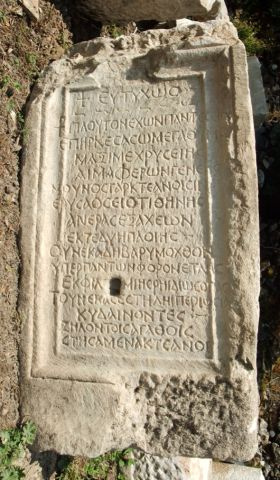
(cross) Εὐτυχῶς. / (Chi-Rho) Πλοῦτον ἔχων πάντεσσιν /(3) ἐπήρκεσας, ὦ μεγάθυμε / Μάξιμε, χρυσείης / αἷμα φέρων γενεῆς· /(6) μοῦνος γὰρ κτεάνοισιν / ἐρύσαο σεῖο τιθήνης / ἀνέρας ἐξ ἀχέων /(9) ἔκ τε δυηπαθίης. / Οὕνεκα δὴ βαρύμοχθον / ὑπὲρ πάντων φόρον ἔτλης / (12) ἐκ φιλο̣[τι]μίης ῥηϊδίως ὀπάσ<ας>, / τοὔνεκα σὲ στήληι περιώσια / κυδαίνοντες / (15) ζῆλον τοῖς ἀγαθοῖς / στήσαμεν ἀκτέανοι.
Inscription translation
To good fortune. Having wealth, you helped everyone, great-hearted Maximus, you who bear the blood of the golden generation. For you alone, with your wealth, rescued the men of your nurse (= his native town) from sorrows and misery. Since you suffered the heavily-onerous (tax) burden on behalf of all, giving from love of honour, and readily; therefore, honouring you greatly with a statue, we who lack wealth set you up, an object of emulation for good people.
Bibliography
- Şahin, M. Ç. 'Recent Excavations at Stratonikeia and New Inscriptions from Stratonikeia and its Territory', Epigraphica Anatolica 41, Bonn 2008, 67-8, no. 33
- Şahin, M. Ç. (ed.), The Inscriptions of Stratonikeia, Part III. (Inschriften griechischer Städte aus Kleinasien, bd. 68), Bonn 2010, 66-7, no. 1530
Discussion
INSCRIPTION
Verse epigram of four elegiac distichs laid out in 15 lines, with all but one line of the verse (line 12) set out over two lines of inscription; preceded by an introductory formula, in all 16 lines:
(cross) Εὐτυχῶς. /
(Chi-Rho) Πλοῦτον ἔχων πάντεσσιν /(3) ἐπήρκεσας, ὦ μεγάθυμε /
Μάξιμε, χρυσείης / αἷμα φέρων γενεῆς· /
(6) μοῦνος γὰρ κτεάνοισιν / ἐρύσαο σεῖο τιθήνης /
ἀνέρας ἐξ ἀχέων /(9) ἔκ τε δυηπαθίης. /
Οὕνεκα δὴ βαρύμοχθον / ὑπὲρ πάντων φόρον ἔτλης /
(12) ἐκ φιλο̣[τι]μίης ῥηϊδίως ὀπάσ<ας> , /
τοὔνεκα σὲ στήληι περιώσια / κυδαίνοντες /
(15) ζῆλον τοῖς ἀγαθοῖς / στήσαμεν ἀκτέανοι.
'To good fortune. Having wealth, you helped everyone, great-hearted Maximus, you who bear the blood of the golden generation. For you alone, with your wealth, rescued the men of your nurse (= his native town) from sorrows and misery. Since you suffered the heavily-onerous (tax) burden on behalf of all, giving from love of honour, and readily; therefore, honouring you greatly with a statue, we who lack wealth set you up, an object of emulation for good people.'
Letter height 2.1 –3.2 cm.
We reproduce the inscription with a slight correction to the versions given by Şahin 2010 and Jones 2009: line 13 clearly reads ... σὲ στήληι... It is neither necessary to assume σ‘ ἐσστήληι (with an alliteration for σ‘ἐν στήληι), as did Şahin (followed by Staab 2009), nor to explain a double sigma at the beginning of 'stele' (σὲ σστήληι, as did Jones). As Jones 2009, 148 points out, the phrase needs to be read as a dative of instrument.
Letter height 2.1 – 3.2 cm.
DESCRIPTION
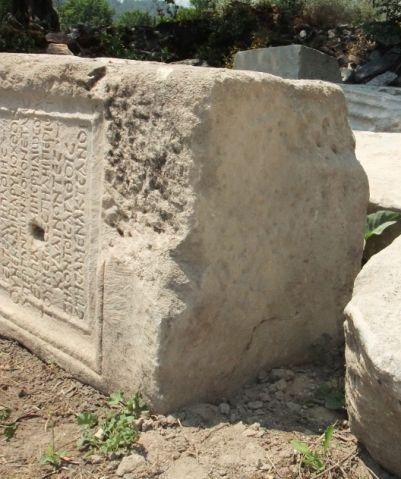
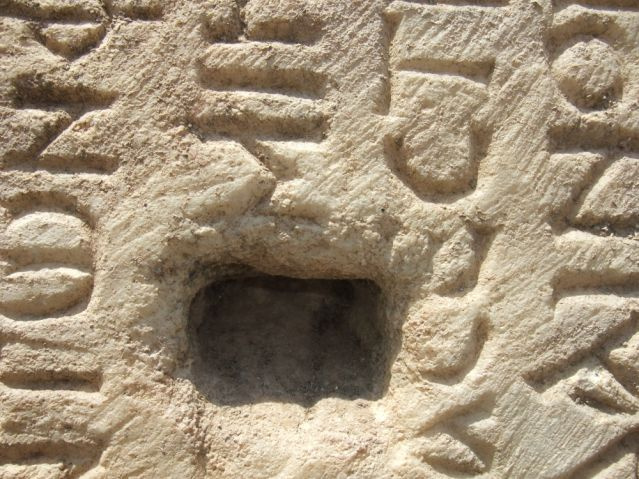
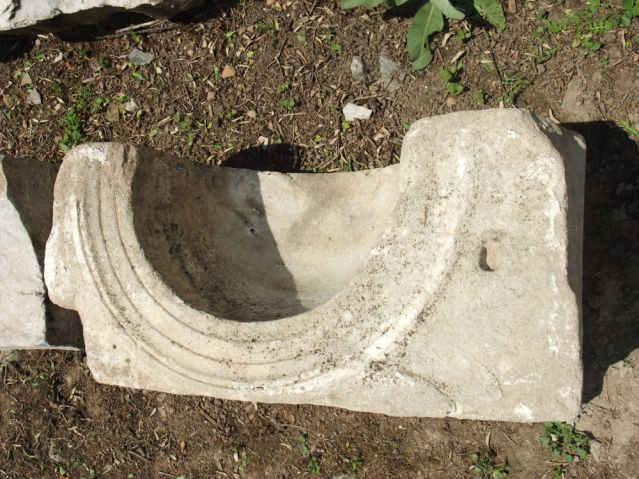
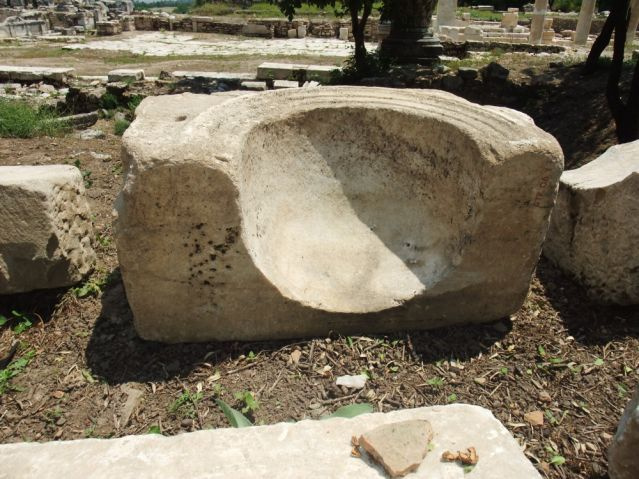
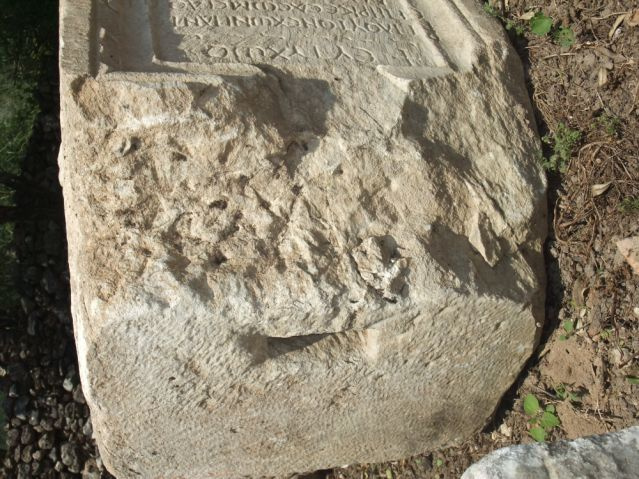
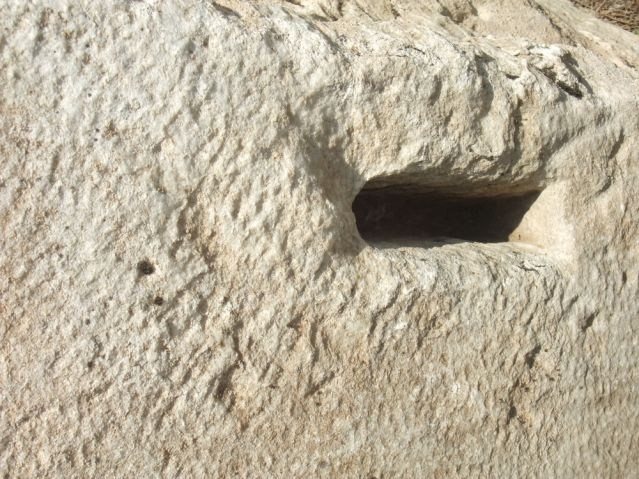
Rectangular marble base: H 118, W 60, D 56 cm. The upper front edge and the left front corner are broken. The epigraphic field is contained within a frame, with the inscription extending over the edge, an indication of re-use. In the lower portion of the front face a rectangular hole has been cut into the stone destroying two letters of our text (in line 12). The back of the block has been hollowed as if to form a basin.
PROVENANCE AND CURRENT LOCATION
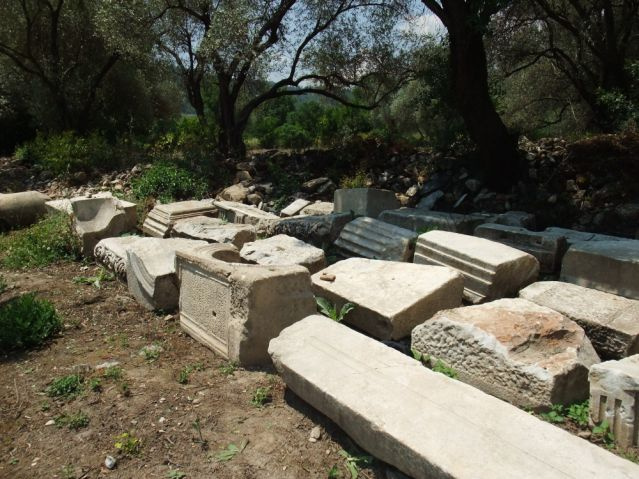
The inscription was first recorded in 2006 in Stratonicea, south of the eastern city gate (for location see Şahin 2008, 53). It was still lying in that area in spring 2011.
HONORAND, DATE AND AWARDER
Maximus, the honorand, was a native of Stratonicea ('σεῖο τιθήνης, of your mother', line 7) from a family of local notables (lines 4-5). He is commemorated in several inscriptions in the city (this one, LSA-657, LSA-1200, and LSA-1201). He was a wealthy man (line 1) and is here praised for paying a tax burden laid upon the people of Stratonicea (lines 10-11). This may have been the same tax mentioned in LSA-1201, the χρυσάργυρον (chrysargyron) collected every fourth year. The abolition of this tax by Anastasius in 498 provides the terminus ante quem for all the dedications to Maximus (Şahin 2010, 66), while the prominent Christian sentiments in the inscriptions to him suggest a date not earlier than the beginning of the 5th century.
Jones 2009, 147-8 points out, that the reference to Maximus' native city Stratonicea as his 'nurse' (σεῖο τιθήνης, line 7) suggests that he held the civic office of 'Father of the city' (πατὴρ τῆς πόλεως).
Our inscription was set up by 'those without wealth, ἀκτέανοι' (line 15). This highly unusual description of the awarding body, which reoccurs in one of the other inscriptions to Maximus (LSA-657), could be a way of describing the demos of the city in a manner that would suit the specifically Christian virtue of aiding the poor. However, in another inscriptions set up to Maximus (LSA-1201), the demos is described in an entirely conventional manner (and see also the mention of boule and demos on LSA-1200).
FURTHER DISCUSSION
This inscription and the other verse inscription to Maximus (LSA-657) were found along with two statues, holding scrolls and with scroll bundles at their feet, as mentioned by Şahin 2008, 53; Şahin 2010, 67 (LSA-1205, LSA-1206). These statues (a rare instance of ones found in association with inscriptions) are not yet published.
Discussion references
- Jones, C. P., New Late Antique Epigrams from Stratonicea in Caria, Epigraphica Anatolica 42, 145-51, 2009, 147-8
- Staab, G., Zu zwei neuen Epigrammen aus Stratonikeia in Karien, Zeitschrift für Epigraphik 170, 35-42, 2009, 35-8
Cite: Last Statues of Antiquity, LSA-1202 (Ulrich Gehn).