
LSA-1297
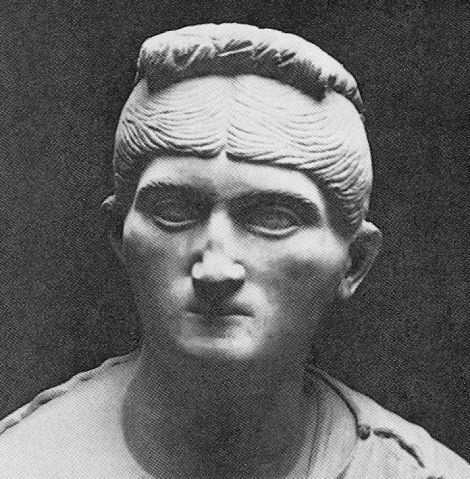
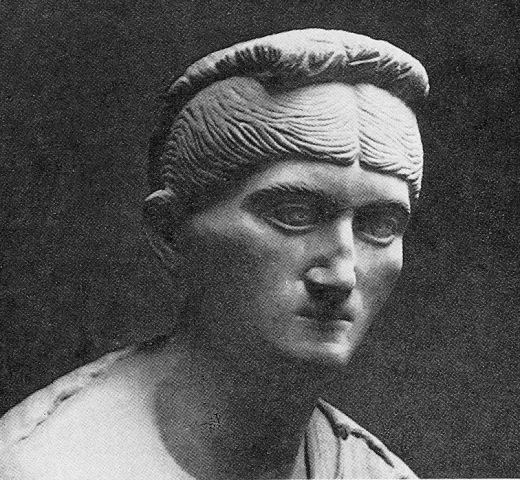
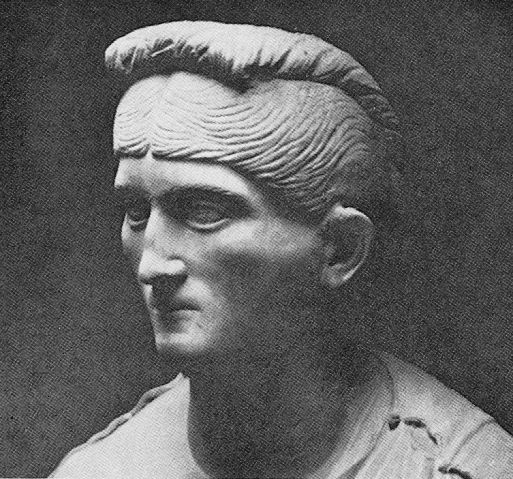
Portrait bust of woman wearing chiton and undergarment. From Italy. Earlier fourth century.
Record details
Photographs
Bibliography
- Bergmann, M. 'Fälschung, Umarbeitung oder eigener Stil. Beobachtungen zu einer ‘Konstantinischen’ Porträtbüste', Städel-Jahrbuch 10, Munich 1985, 52-4, figs. 13-15
Discussion
DESCRIPTION (Object)
Life-size bust. White marble.
The head and bust are worked from one piece of marble. The hair has been regularly worked with a large flat chisel. The eyeballs are marked. The irises are engraved semi-circles, and the pupils appear to be drilled. The hair of the eyebrows has been engraved with a flat chisel.
Bergmann believes that the head has been re-cut. The upper portion of the ears appear to have been carved out of an area that was once hair. The lower face is reduced, and the mouth so small that the lips are almost non-existent.
PROVENANCE
Unknown.
DESCRIPTION (Subject)
The bust depicts a woman with a distinctive physiognomy and an unusual manner of dress. She turns slightly to her right.
The head wears a central braid hairstyle that came into fashion in the mid-third century and continued into the fourth century. The hair begins low on the brow and is parted in the centre. It is pulled plainly back around the ears into a central braid which rises up the back of the head and finishes in a roll several centimetres above the brow.
The face is marked by broad, protruding cheek bones and a small, narrow, lower face. The nose is fine and slightly hooked, the mouth is tightly closed and with thin lips. The chin is set back but square. The small eyes are framed by engraved eyebrows and have marked pupils.
The bust wears a tunic or chiton that has buttons on its sleeves. One of the buttons has even been inexplicably omitted. Beneath this an inner garment appears at the neckline. The manner of dress can be seen on a handful of early second century busts in Rome (Capitoline and Vatican).
DATE
The unusual proportions of the face, the harshly engraved hair which begins low on the brow, and the upper ears all suggest that the bust has been re-worked. The incongruity of the second century clothing and the later technique for eyes and eyebrows demonstrate almost securely that this is a carefully re-carved portrait.
The hairstyle might plausibly be third century. It is best compared to three other examples which are difficult to date: LSA-1298, LSA-1588, andLSA-255) (Doria Pamphili, Berlin, and Perge). The low brow and the spare face with small eyes and a fine nose, however, are considered by Bergmann to be most comparable to the so-called Capitoline Florence type (see LSA-965 and LSA-966) which is generally considered Helena. Bergmann sees in all of these portraits a ‘Zeitgesicht’ and notes that the female hairstyles are no longer such reliable modes of dating in the fourth century.
Cite: Last Statues of Antiquity, LSA-1297 (J. Lenaghan).