
LSA-1364
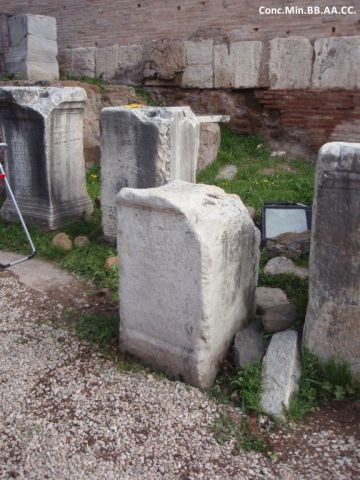
Base for statue of Maximian, emperor. Rome, Forum. 286-305
Record details
Photographs
Inscription
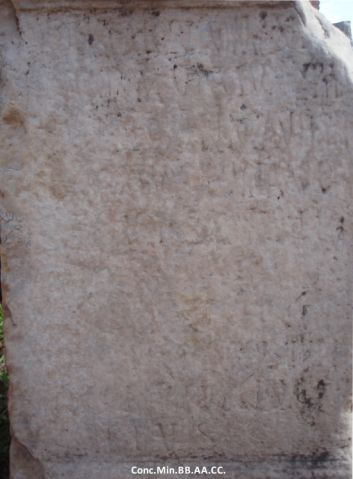
P̣ṛọp̣ạg̣ạṭọṛị Ṛọṃạṇị [imp(erii)], / [om]ṇịụṃ ṿịṛṭụṭụṃ / [compo]ṭị, ḍ(omino) ṇ(ostro) Ṃ(arco) Ạụṛẹḷ(io) / [Valeri]ọ Ṃạx̣ịṃịạṇọ, /(5) [p(io)], fẹ[l]ịc̣ị, ṣẹṃp̣ẹṛ [Augu]ṣṭọ, / [---]ṇụṣ ẹṭ [---]/[---]ṃụṣ, ṿṿ(iri) ẹẹ(gregii), / [---] ḍẹṿọṭị ṇ(umini) ṃ(aiestati)q̣(ue) /(9) ẹịụṣ.
Inscription translation
To the extender of Roman rule, the companion of all virtues, our lord Marcus Aurelius Valerius Maximianus, pious, fortunate, forever Augustus. ...nus and ...mus, of egregius rank, both devoted to his divine spirit and majesty, [set this up].
Bibliography
- Corpus Inscriptionum Latinarum; , VI, 36947 (+p. 4354)
Discussion
INSCRIPTION
In nine lines. Letter height 3-4 cm.
P̣ṛọp̣ạg̣ạṭọṛị Ṛọṃạṇị [imp(erii)], / [om]ṇịụṃ ṿịṛṭụṭụṃ / [compo]ṭị, ḍ(omino) ṇ(ostro) Ṃ(arco) Ạụṛẹḷ(io) / [Valeri]ọ Ṃạx̣ịṃịạṇọ, /(5) [p(io)], fẹ[l]ịc̣ị, ṣẹṃp̣ẹṛ [Augu]ṣṭọ, / [---]ṇụṣ ẹṭ [---] / [---]ṃụṣ, ṿṿ(iri) ẹẹ(gregii), / [---] ḍẹṿọṭị ṇ(umini) ṃ(aiestati)q̣(ue) / ẹịụṣ.
'To the extender of Roman rule, the companion of all virtues, our lord M(arcus) Aurel(ius) [Valeri]us Maximianus, [pious], fortunate, forever Augustus. [---]nus and [------]mus, of egregius rank, devoted to his divine spirit and majesty, [set this up].'
DESCRIPTION (personal inspection)
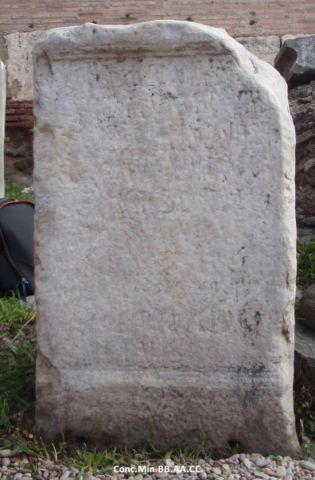
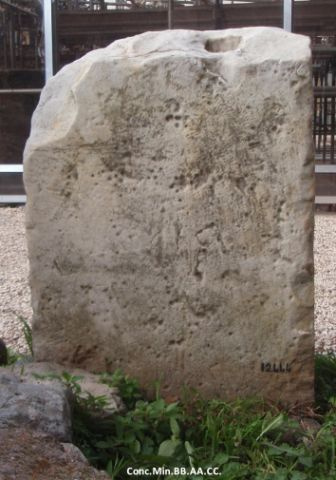
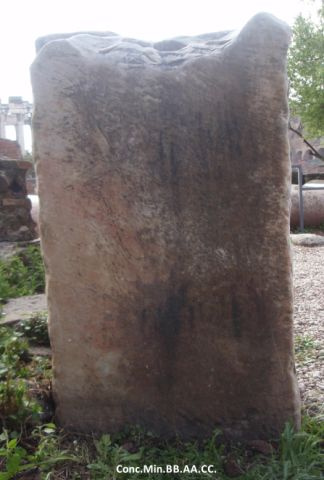
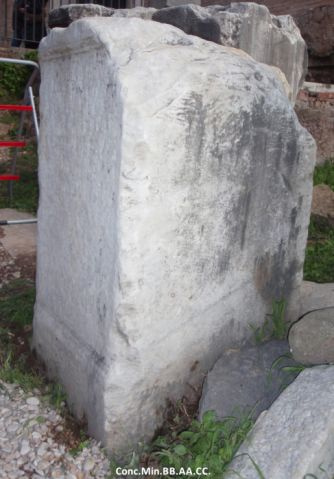
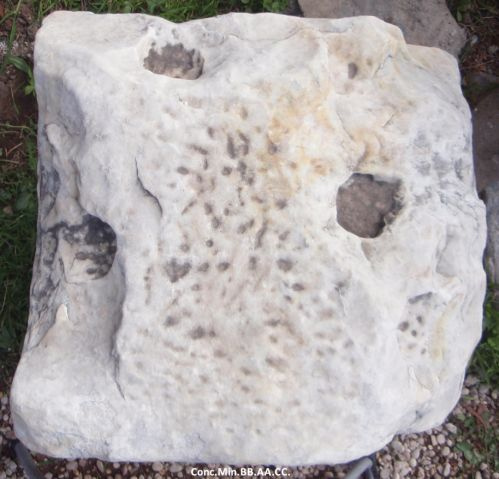
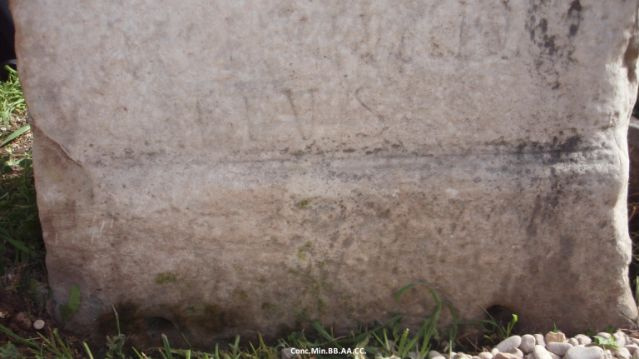
White marble base, 99 x 59 x 52.5. The base is badly weathered, but preserved on all sides. The epigraphic field has mouldings on top and bottom. The inscription is badly corroded. The top of the base survives at parts. It is roughly finished, with three round holes and two rectangular holes towards the back. There are two small round holes at the lower part of the base.
PROVENANCE AND CURRENT LOCATION
The base was found in the Roman Forum, re-used as building material in an Early Medieval structure in front of the Curia. It is in front of the Curia, Sopr. For.-Pal. Inv. N. 12444.
HONORAND, AWARDER AND DATE
The inscription records a dedication to the emperor Maximian (286-305). It was set up by two men of egregius rank, whose names do not survive. Their rank suggest that they were imperial officials.
Cite: Last Statues of Antiquity, LSA-1364 (Carlos Machado).