
LSA-1387
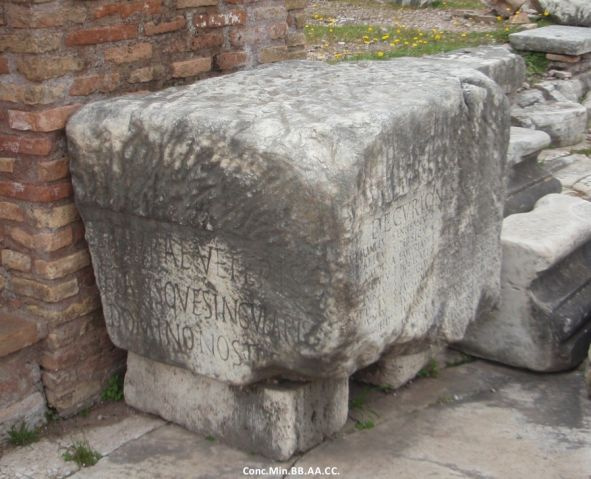
Fragmentary base for statue of Maxentius, emperor. Rome, Forum. 306 - 312
Record details
Photographs
Inscription
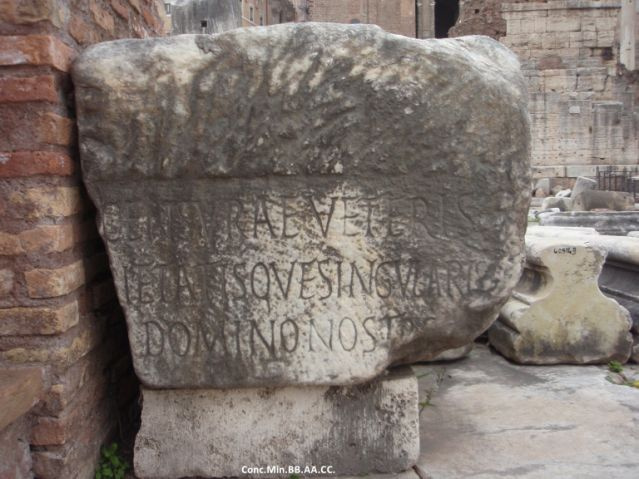
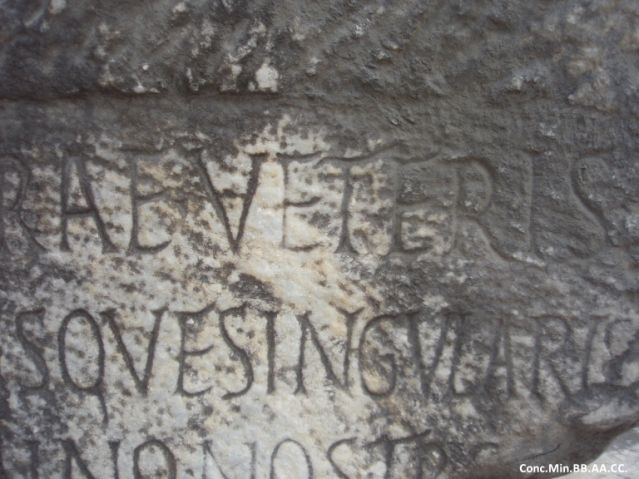
Censurae veteris / pietatisque singularis, / domino nostro / [[[M]ạx̣ẹṇṭị[o]]].
Inscription translation
To him of old-fashioned morals and of exceptional piety, our lord Maxentius ...
Bibliography
- Corpus Inscriptionum Latinarum; , VI, 1220=31394a=33857b (+p.4351)
Discussion
INSCRIPTION
In four lines. Letter height 5-6 cm.
Censurae veteris / pietatisque singularis / domino nostro / [[[M]ạx̣ẹṇṭị[o]]].
'To him of old-fashioned morals and of exceptional piety, our lord Maxentius ...'
The final line was erased after the damnatio memoriae of Maxentius in 312.
DESCRIPTION (personal inspection)
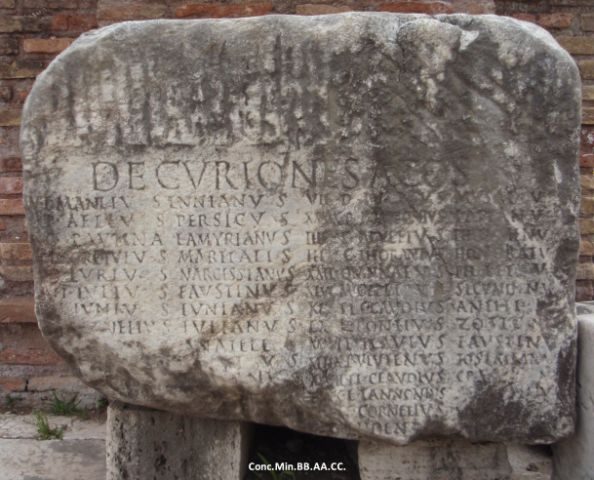
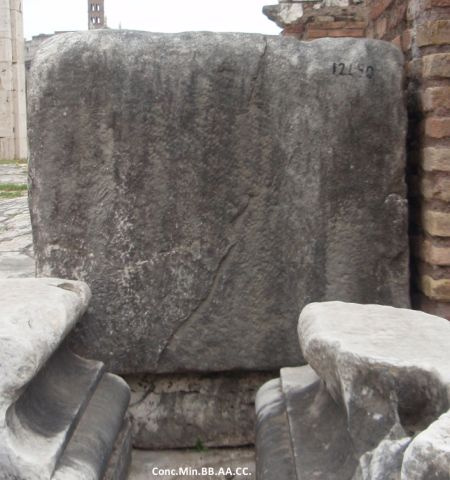
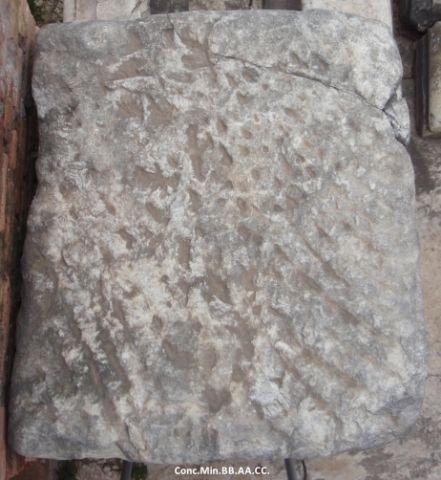
Broken marble base, 55 x 70 x 75 cm. Part of the moulding at the top survives. The epigraphic field was cut back to prepare the base for re-use. There is a partly preserved earlier inscription on the right side. The top was roughly finished, and there are no dowel holes.
PROVENANCE AND CURRENT LOCATION
The base was found in the Roman Forum, in the basilica Iulia, towards the clivus Capitolinus. It is still there, inv. n. 12450.
HONORAND, AWARDER AND DATE
The inscription records a dedication to the emperor Maxentius, who ruled between 306 and 312. His name was erased after his defeat against Constantine. The identity of the awarder dos not survive.
Cite: Last Statues of Antiquity, LSA-1387 (Carlos Machado).