
LSA-1501
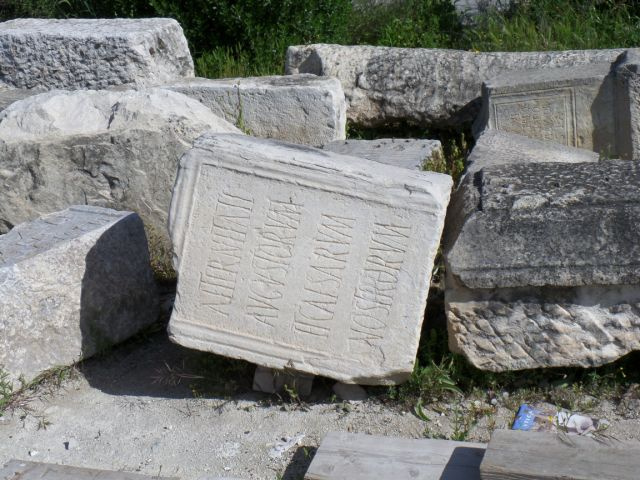
Base with dedication to the 'Eternity of the Emperors', possibly for a statue. From Sicilibba (Africa Proconsularis). 293-310, probably 296-299
Record details
Photographs
Inscription
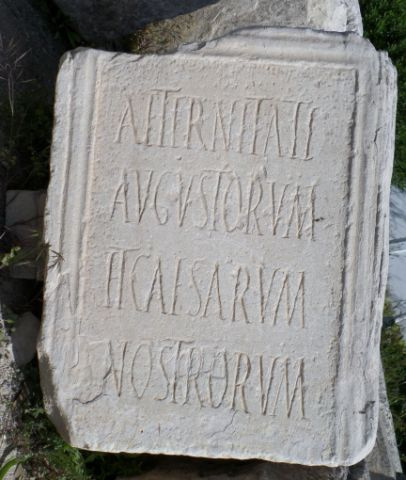
Aeternitati / Augustorum / et Caesarum / nostrorum.
Inscription translation
To the Eternity of our Augusti and Caesars.
Bibliography
- Corpus Inscriptionum Latinarum; , VIII, 25819
- Ben Abdallah, Z. B., Catalogue des inscriptions latines païenne du Musée du Bardo, Rome 1986, 77 no. 200
Discussion
INSCRIPTION
In four lines:
Aeternitati / Augustorum / et Caesarum / nostrorum.
'To the Eternity of our Augusti and Caesars'.
Letter height 9-10 cm.
The epigraphic formula makes it possible that this is a statue base inscription (see below, 'Description' and 'Further Discussion').
DESCRIPTION
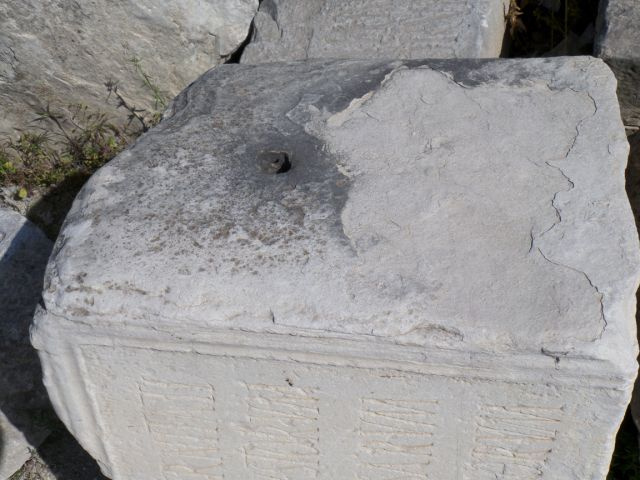
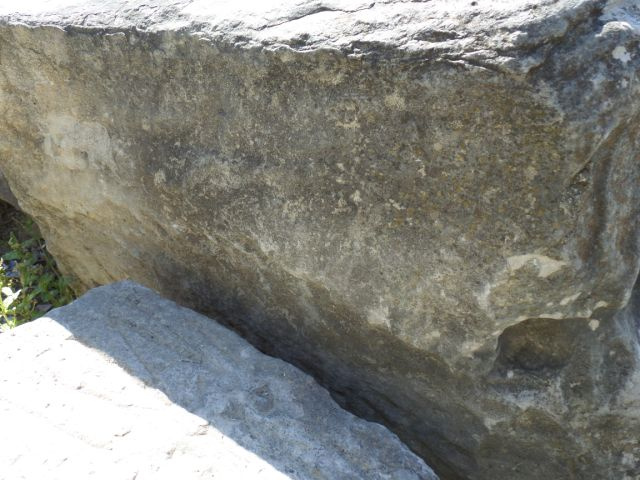
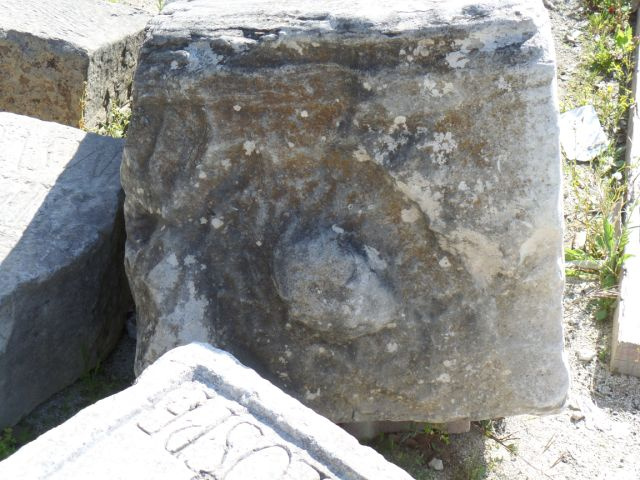
Rectangular limestone block, H 72, W 60, D 58 cm. The epigraphic field at the front has a moulded frame at the top and sides; at the bottom the frame is missing. The front and right faces are smoothly finished (the left is currently not visible); there is a shallow round hole on the right face. The back face is only roughly finished, with a rectangular hole at the centre top, possibly a clamp hole to secure a crowning element. On the top face there is a broad oval impression around a knob standing proud.
PROVENANCE AND CURRENT LOCATION
The inscription was first recorded in Henchir El-Alouin by Gauckler 1907; this is the area of the ancient city of Sicilibba. Gauckler recorded our inscription on a paved area which he thought was probably the forum of the city ("sur une esplanade dallée, qui semble bien avoir constitué le forum de l'ancienne Sicilibba", Gauckler 1907, 378). It was found together with other inscriptions, among them a statue base inscription to Constantius I (LSA-1890) (see below, 'Honorand, Awarder and Date').
The block is now lying in the forecourt of the Bardo Museum, Tunis (without published inv. no.).
HONORAND, AWARDER AND DATE
The dedication honours the Eternity of the tetrarchs (293-306). It was found together with a statue base to Constantius I Caesar (293-305) precisely datable to 296/9 (LSA-1890). The letter forms of both inscriptions are similar; Gauckler 1907, 380 convincingly suggested that they were set up at the same time (see also below, 'Further Discussion').
The awarder is not recorded in our inscription; his name was possibly included below the extant inscription and is now lost.
FURTHER DISCUSSION
The base to Constantius I (LSA-1890) was probably accompanied by statues to his co-emperors. If our base carried a statue - and its form and wording would suggest this - the group of four imperial statues was accompnied by a fifth statue, the personification/deity of their joint Eternity.
Discussion references
- Gauckler P., Rapport sur des Inscriptions latines découvertes en Tunisie de 1900 à 1905, Nouvelles archives des missions scientifiques et littéraires, XV, Paris, 1907, 379 no. 178
- Lepelley, C., Les cités de l'Afrique romaine au Bas-Empire, t. 2, Notices d'histoire municipale, Paris 1981
Cite: Last Statues of Antiquity, LSA-1501 (Ulrich Gehn).