
LSA-1515
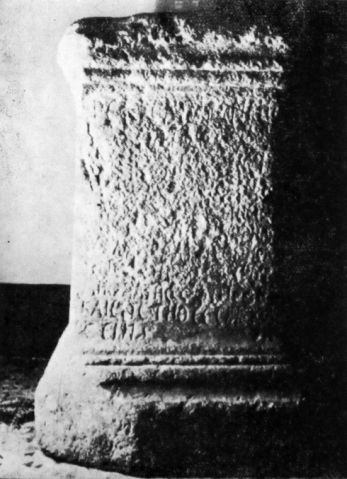
Base for statue of Perpenna Romanus, governor of Sicilia. Syracusae (Sicilia). Mid fourth century
Record details
Photographs
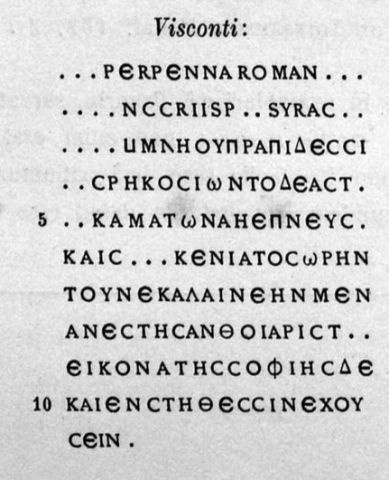
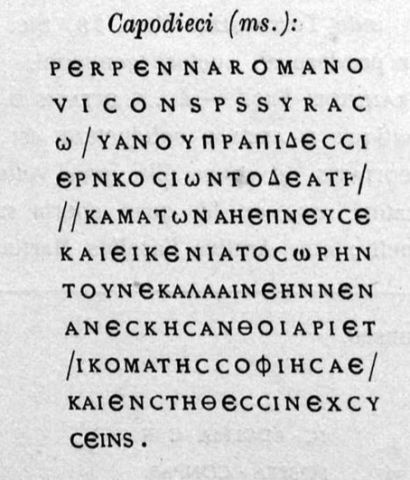
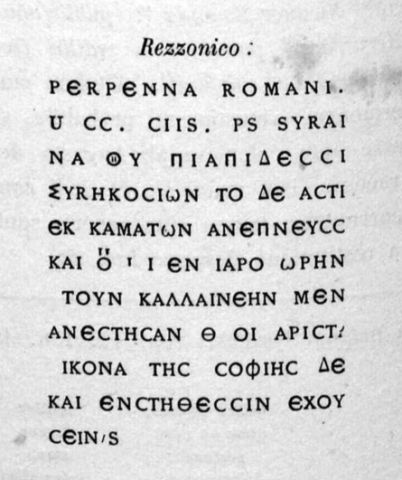
Inscription
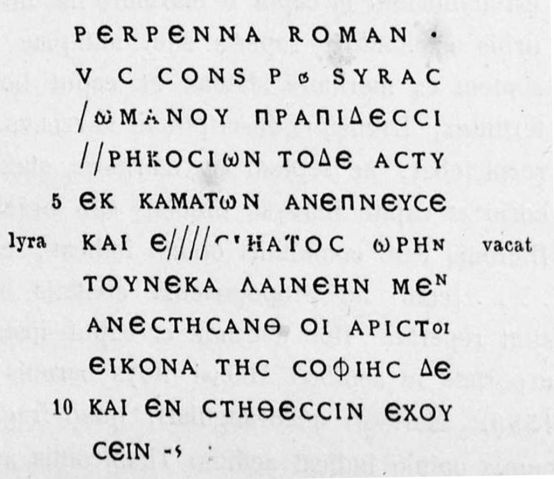
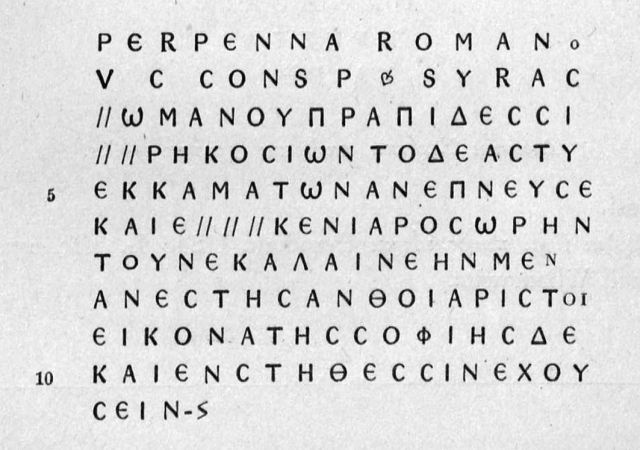
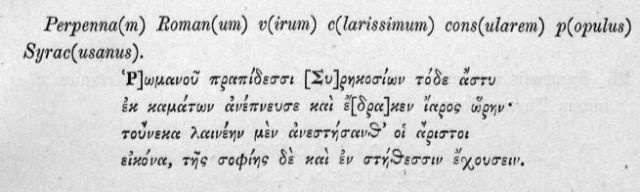
Perpenna(e) Roman(o) / v(iro) c(larissimo) / cons(ulari) p(opulus) Syrac(usanus) / [Ῥ]ωμανοῦ πραπίδεσσι / [Συ]ρηκοσίων τόδε ἄστυ / (5) ἐκ καμάτων ἀνέπνευσε / καὶ ἔ[δρα]κεν ἴαρος ὥρην· / τοὔνεκα λαϊνέην μὲν / ἀνεστήσανθ’ οἱ ἄριστοι / εἰκόνα, τῆς σοφίης δὲ /(10) καὶ ἐν στήθεσσιν ἔχου-/σειν.
Inscription translation
To Perpenna Romanus, of clarissimus rank, governor (consularis,), the people (populus) of Syracuse.
This city of the Syracusians has breathed again from her toils through the foresight of Romanus, and has experienced a time of renewal (literally, 'springtime'). Because of this, the council, having set up a statue in stone, bear (the image) of [his] wisdom also in their hearts.
Bibliography
- Corpus Inscriptionum Latinarum; , X 7125
- Inscriptiones Graecae, XIV 14
Discussion
INSCRIPTION
Two lines of Latin prose followed by four Greek hexameters laid out in nine lines, in total eleven lines:
Perpenna(e) Roman(o) / v(iro) c(larissimo) cons(ulari) p(opulus) Syrac(usanus) /
[Ῥ]ωμανοῦ πραπίδεσσι / [Συ]ρηκοσίων τόδε ἄστυ /
(5) ἐκ καμάτων ἀνέπνευσε / καὶ ἔ[δρα]κεν ἴαρος ὥρην· /
τοὔνεκα λαϊνέην μὲν / ἀνεστήσανθ’ οἱ ἄριστοι /
εἰκόνα, τῆς σοφίης δὲ /(10) καὶ ἐν στήθεσσιν ἔχου-/σειν.
'To Perpenna Romanus, of clarissimus rank, governor (consularis,), the people (populus) of Syracuse.
This city of the Syracusians has breathed again from her toils through the foresight of Romanus, and has experienced a time of renewal (literally, 'springtime'). Because of this, the council, having set up a statue in stone, bear (the image) of [his] wisdom also in their hearts.'
Letter height not recorded.
DESCRIPTION (from Manganaro 1959 and the published photo)
Tall marble base with mouldings at top and bottom. H 105 cm, W 67 cm. The base is complete except for a break on the front left bottom moulding; the top moulding is chipped. The surface is heavily weathered, rendering the inscription almost illegible. On the left side of the base a lyra is depicted (Manganaro 1959, 19 n. 60).
PROVENANCE AND CURRENT LOCATION
The base was found in 1792 in the ruins of the Castello di Casanova on the island of Ortygia (Inscriptiones Graecae). It is today in the National Museum of Syracuse, inv. no. 8.
HONORAND AND DATE
Perpenna Romanus, the honorand, was governor (consularis, line 2) of Sicilia (PLRE I, 770 Perpenna Romanus 11). Sicilia was governed by a corrector in the early 4th century; the governorship was upgraded to the rank of consularis after 321 and before 330 (Jones 1954, 28; Manganaro 1959, 9). PLRE I suggests that our honorand is identical with the Romanus recorded in the office of palatinus sacrarum largitionum in 379 (PLRE I, 769 Romanus 4).
The inscription was set up by the city council of Syracuse, styled the aristoi (οἱ ἄριστοι, line 9).
FURTHER DISCUSSION
Remarkably the inscription takes up the convention of verse dedications otherwise known from the Greek east in its Greek part.
Discussion references
- Jones, A. H. M. et al., The Prosopography of the Later Roman Empire. Vol. I 260-395, Cambridge et al. 1971 (1975)
- Jones, A. H. M., The Date and value of the Verona List, The Journal of Roman Studies 44, 1954, 21-9
- Manganaro, G., Iscrizioni latine e greche di Catania tardo-imperiale, Archivio Storico per la Sicilia Orientale, Quarta serie, anni XI e XII, LIV e LV dell'intera collezione, fasc. I-III 1958 e I-III 1959, 1-25
Cite: Last Statues of Antiquity, LSA-1515 (Ulrich Gehn).