
LSA-1554
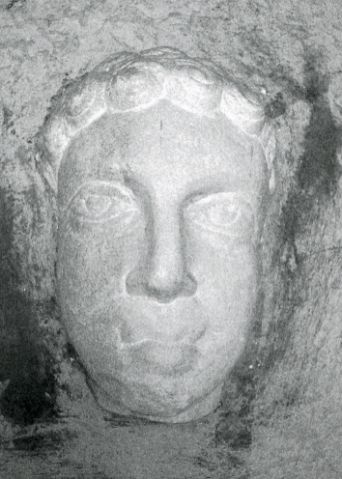
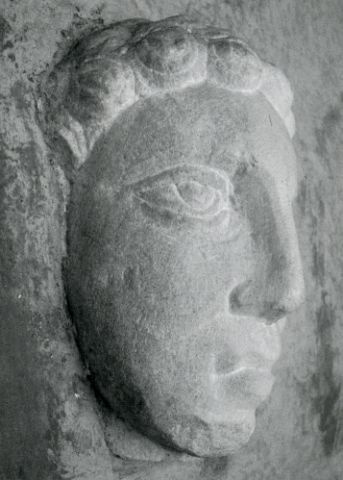
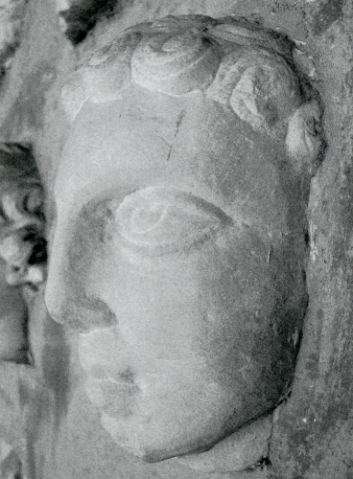
Portrait head of clean-shaven man with curly hair. From Rome. Late fourth to early fifth century.
Record details
Photographs
Bibliography
- Ambrogi, A. 'Ritratto maschile della basilica di San Paolo fuori le mura', Mitteilungen des Deutschen Archäologischen Instituts, Römische Abteilung 115, Berlin 2009, 203-219, figs. 1-5
Discussion
DESCRIPTION (Object)
Under life-size head. H: 19.5, W: 13, D: 8 cm. Proconnesian marble.
The head is cut through the neck. The back of the head is missing. There is a chip in the chin. It is unclear whether the head comes from a relief or an under life-size statue. Ambrogi believes the latter is more likely given the depth of the face and its frontal pose.
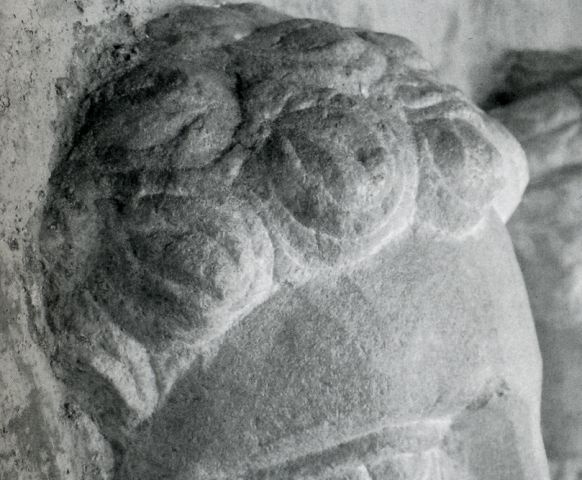
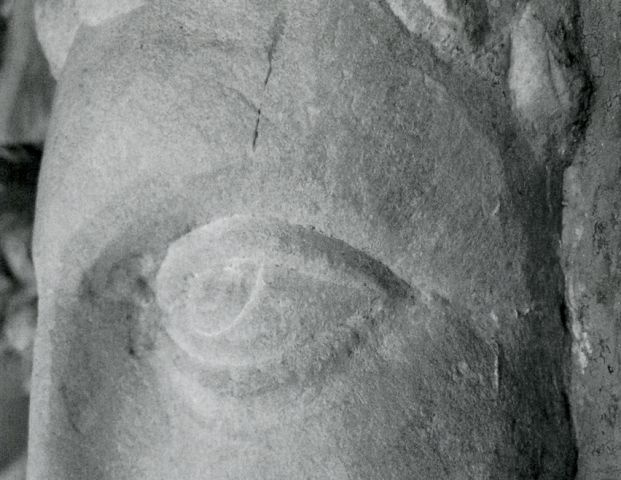
The surface has been left roughly finished. The hair and irises (three-quarters of a circle) are indicated with a flat chisel. The pupil is a shallow drill hole. Beneath the lower lip, a curving drill channel marks the disjunction between mouth and chin. The nostrils, however, are not drilled.
PROVENANCE
Most of the material in the cloister came from the surrounding area on the via Ostiense which, above all, was occupied by large necropoles. The arrangement of the cloister was finished in 1756 but was renovated between 1905-1908 at which point all objects were temporarily removed. Then in 1909-1910 objects were reset and incorporated into the walls of the cloister. It is unclear whether this head was there before the early 20th century renovation or was brought there during that renovation.
Notwithstanding these facts, Ambrogi proposes that it may be better associated with the basilica itself. She considers the work to be of high quality and notes that there may have been a mausoleum contemporary to the original basilica.
DESCRIPTION (Subject)
The head depicts a young man with a long face. The brow is tall and uncreased. The eyes are large. The nose is long, and the mouth has full lips. The lower lip pouts over a rounded chin. The hair ends high over the brow in thick snail curls. Parts of three tiers of curls are preserved.
DATE
The rendering of the head is crude and not fully finished. Nonetheless, the large, emphatically marked eyes and schematic treatment of the face indicate a late-antique date. The fashion style is comparable to that of a series of portraits (see LSA-906, LSA-907, LSA-951, LSA-2120) which are dated to the late fourth or early fifth century.
IDENTIFICATION
Ambrogi believes that this might have come from an honorific statue to an emperor or high official. She considers it to be of too high quality to have come from the middle class necropolis of via Ostiense. To this author the latter hypothesis does not seem impossible. Neither the quality nor the size of the head are remarkable and examples, such as LSA-397, indicate that competent funerary statuary did exist in the cemeteries outside of Rome in late antiquity.
Cite: Last Statues of Antiquity, LSA-1554 (J.Lenaghan).