
LSA-164
Upper part of columnar base for statue of Arcadius, emperor. Aphrodisias (Caria). 388-392.
Record details
Photographs
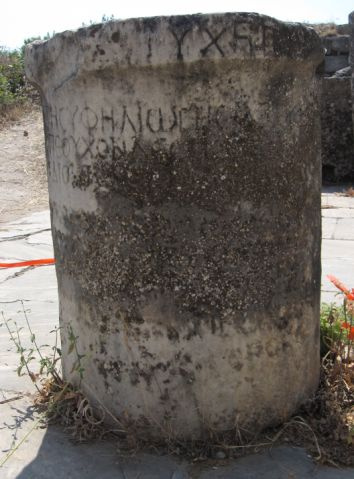
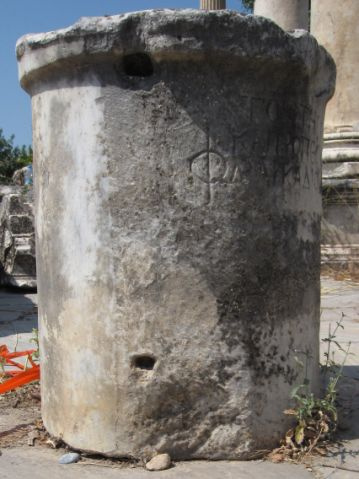
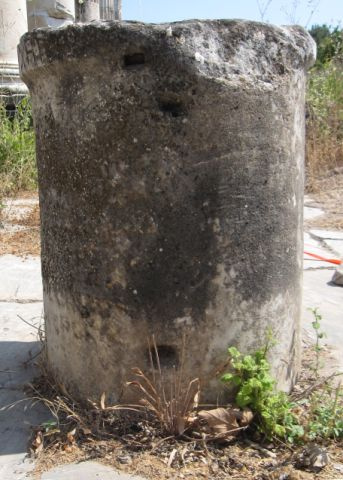
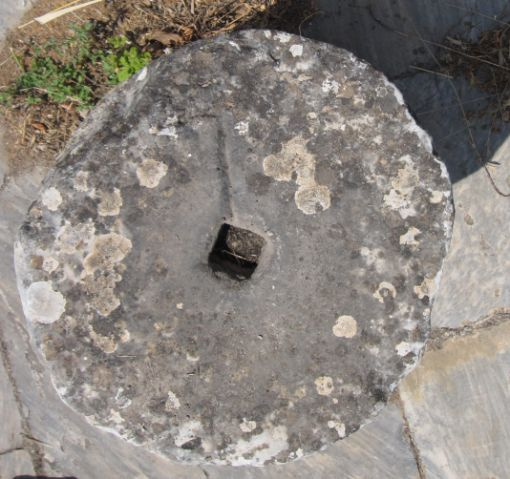
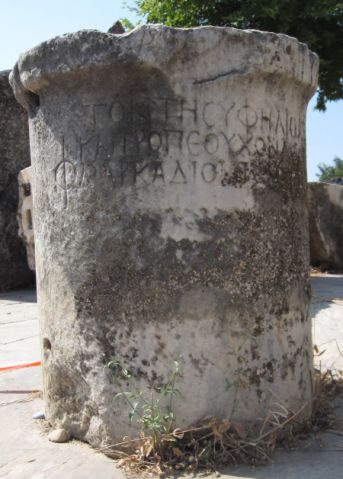
Inscription
Ἀ[γαθῆι] Τύχηι·
τὸν τῆς ὑφ' ἡλίῳ γῆς αὐτοκράτορα
καὶ τροπεοῦχον δεσπότην ἡμῶν
Φλ(άουιον) Ἀρκάδιον τὸν αἰώνιον Αὔγουστον
5 Φλ(άουιος) Εὐτόλ[μιος Τατιανὸς ὁ λαμπρ(ότατος) ἔπ]αρ[χος]
[το]ῦ [ἱερ]οῦ π[ρε]τ[ωρίου τῇ συνήθει]
[καθοσιώσει αφιέρω]σε[ν]
vacat
ἐπὶ Ἀντωνίου Πρίσκου
τοῦ λαμπρο(τάτου) ἡγεμόνος
Inscription translation
With Good Fortune, The emperor of (all) the earth under the sun, and our victorious master, Flavius Arcadius the eternal Augustus. Flavius Eutolmius Tatianus, clarissimus, prefect of the sacred praetorium, dedicated (this statue) with the customary devotion, in the time of Antonius Priscus, clarissimus Praeses.
Bibliography
- Roueché, C., Aphrodisias in Late Antiquity (Journal of Roman Studies Monograph 5), London 1989, no. 26
Discussion
INSCRIPTION
in nine lines:
Ἀ[γαθῆι] Τύχηι· / τὸν τῆς ὑφ' ἡλίῳ γῆς αὐτοκράτορα / καὶ τροπεοῦχον δεσπότην ἡμῶν / Φλ(άουιον) Ἀρκάδιον τὸν αἰώνιον Αὔγουστον /(5) Φλ(άουιος) Εὐτόλ[μιος Τατιανὸς ὁ λαμπρ(ότατος) ἔπ]αρ[χος] / [το]ῦ [ἱερ]οῦ π[ρε]τ[ωρίου τῇ συνήθει] / [καθοσιώσει αφιέρω]σε[ν] / ἐπὶ Ἀντωνίου Πρίσκου / τοῦ λαμπρο(τάτου) ἡγεμόνος.
'With Good Fortune. The emperor of (all) the earth under the sun, and our victorious master, Flavius Arcadius the eternal Augustus. Flavius Eutolmius Tatianus, clarissimus, prefect of the sacred praetorium, dedicated (this statue) with the customary devotion, in the time of Antonius Priscus, clarissimus Praeses.'
(Trans: C. Roueché)
Letter height 3-4 cm. Phi in line 4 is 10 cm.
DESCRIPTION
Fragmentary column re-used as base. H: 66, Diam (at upper moulding): cm, Diam (at break): 56.5 cm. White marble.
The column is broken beneath the inscription. The upper moulding is chipped, and the surface is generally worn. Five lines of the inscription have been deliberately effaced.
Two clamp holes on each side near the broken edge indicate that it had been repaired already in antiquity. Three further cuttings for clamps, just beneath the upper moulding, were for the attachment of the statue or for an upper moulded element. There is one on the proper left side and two (one more or less above the other) on the proper right.
PROVENANCE
Excavated in 1905 by G. Mendel. The base was found by the NYU excavations in the west stoa of the south agora. It was probably originally located on the south side of the steps that led from the west stoa of the agora into the forecourt of the Hadrianic Baths. A. Boulanger in 1913 recorded it as to the left (south) of the staircase, and its pendant, a columnar statue base to Valentinian II,(LSA-166), seems to stand in situ on the north side of this staircase.
DATE AND CONTEXT
The inscription honours the Emperor Arcadius (Augustus 383-408). The base was part of a group of prominently located statues honouring the Theodosian imperial family and erected by the same man whose name has been erased in each case. The group included statues of Arcadius(LSA-164), Valentinian II, and Honorius(LSA-167); see also LSA-163, LSA-165, and LSA-168. One imagines that there must have also been a base and a statue for Theodosius I.
The erased lines can be restored on the basis of the legibility of some letters in the erasure and the unerased final lines on the base for Honorius, LSA-167 and on the basis of similar honours awarded by Flavius Eutolmius Tatianus, a notable pagan, in Antinoopolis (for Valentinian II, Theodosius I, Arcadius, and Honorius, LSA-876) and at Side (for Valentinian II, Theodosius I, Arcadius, and Honorius, LSA-267).
The career of Fl. Eutolmius Tatianus is fully recorded in an inscription from Sidyma in Lycia (LSA-674). He was made praetorian prefect in the East in 388 and fell from power in 392. He suffered a damnatio memoriae and relegation to Lycia but at Aphrodisias he was rehabilitated posthumously by a descendant (LSA-193).
Cite: Last Statues of Antiquity, LSA-164 (J. Lenaghan).