
LSA-1675
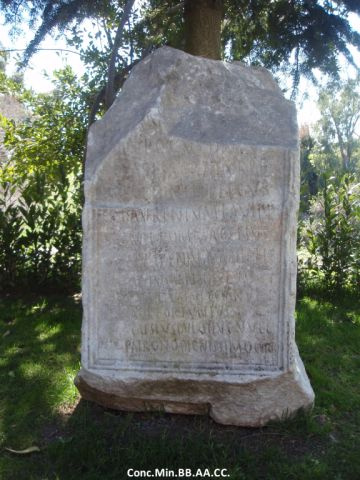
Base for statue of Virius Lupus, senatorial patron and curator. Lavinium (Campania). Late third-early fourth century.
Record details
Photographs
Inscription
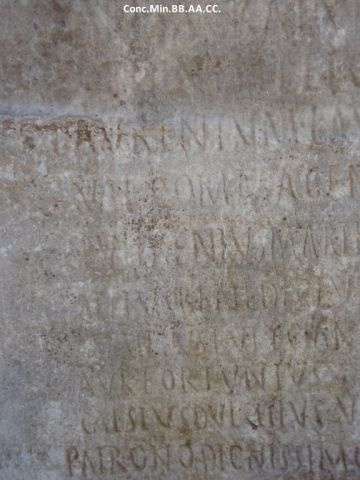
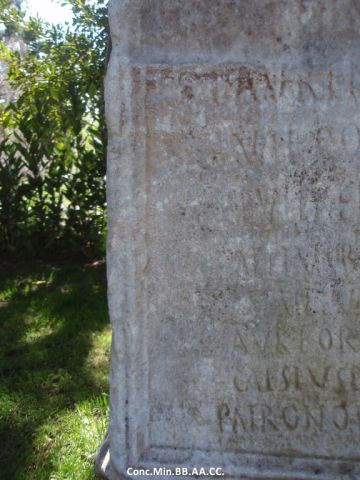
[---]AN[---] / Lupo, c(larissimo) v(iro), consu/[l]ari sacrae urbis / [re]gionis IIII, cur(atori) /(5) Laurentum Lavin(atium); / Val(erius) Commagenus / Pullaenius Martialis, / Aelius Benedictus, / Aemilius Eutycianus, /(10) Aurelius Fortunius, / Caesius Dulcitius, vv(iri) ee(gregii), / patrono dignissimo curr(auerunt) / [---]R.
Inscription translation
To (…) Lupus, of clarissimus rank, overseer (consularis) of the fourth region of the sacred Urbs, curator of Laurentum and Lavinium; Valerius Commagenus Pullaenius Martialis, Aelius Benedictus, Aemilius Eutycianus, Aurelius Fortunius, Caesius Dulcitius, of egregius rank, oversaw [this] for the most worthy patron (…).
Bibliography
- Corpus Inscriptionum Latinarum; , XIV, 2078
- Granino Cerere, M. G. (ed.), Supplementa Italica, Imagines. Latium Vetus 1, Rome 2005, n. 32
- Inscriptiones Latinae Selectae, , 1209
Discussion
INSCRIPTION
In 13 surviving lines. Letter height 4.5-3 cm.
[---]AN[---] / Lupo, c(larissimo) v(iro), consu/[l]ari sacrae urbis / [re]gionis IIII, cur(atori) /(5) Laurentum Lavin(atium); / Val(erius) Commagenus / Pullaenius Martialis, / Aelius Benedictus, / Aemilius Eutycianus, /(10) Aurelius Fortunius, / Caesius Dulcitius, vv(iri) ee(gregii), / patrono dignissimo curr(auerunt) / [---]R.
'To (…) Lupus, of clarissimus rank, overseer (consularis) of the fourth region of the sacred Urbs, curator of Laurentum and Lavinium; Valerius Commagenus Pullaenius Martialis, Aelius Benedictus, Aemilius Eutycianus, Aurelius Fortunius, Caesius Dulcitius, of egregius rank, oversaw [this] for the most worthy patron (…).'
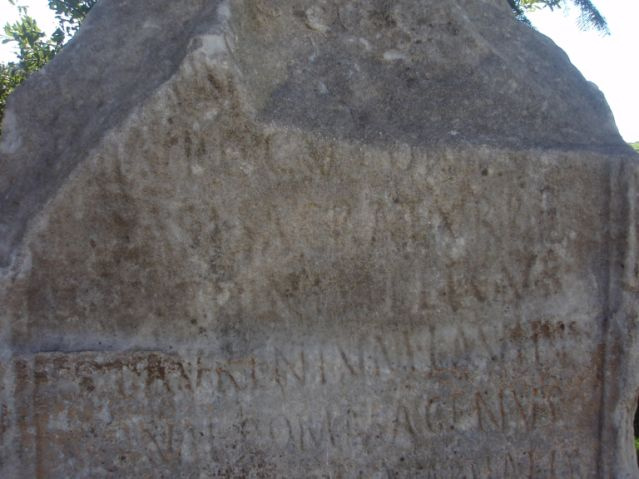
The upper part of the epigraphic field is lost, and the inscription is badly damaged. The first four lines are barely visible without instruments, and we follow here the reading of Nasti 1999, 538-539.
DESCRIPTION (personal inspection)
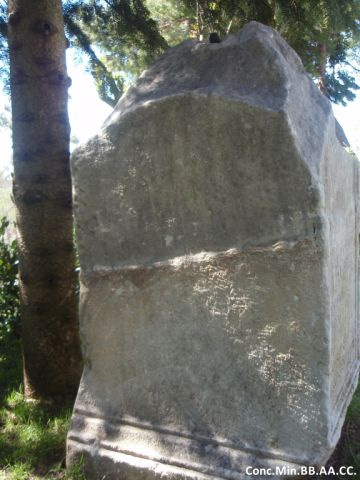
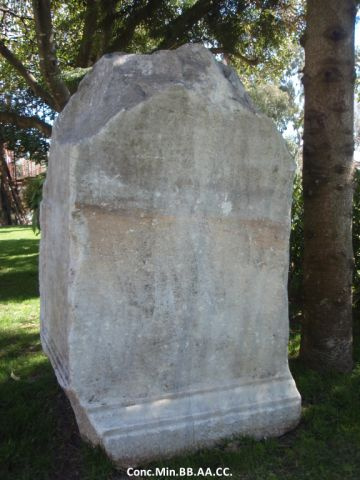
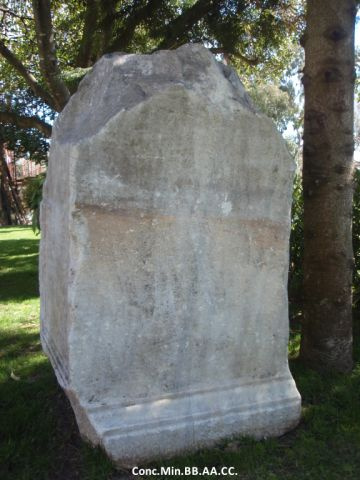
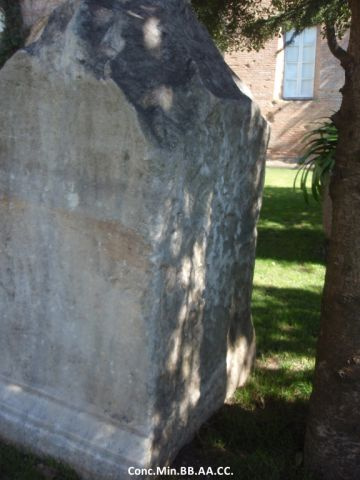
Marble base, 137 x 83 x 70 cm. The mouldings on top and bottom are damaged. The epigraphic field is damaged, affecting the reading of the inscription. The epigraphic field is deep and rough, and there are clear traces of erasure of an earlier inscription. The right side is blank. the left side is plain, the roughness of its upper part suggests that an earlier inscription was chiselled out.
PROVENANCE AND CURRENT LOCATION
The exact provenance of our base is not known. It is only recorded as being from Pratica di Mare (area of the ancient Lavinium; http://www.trismegistos.org/place/23504) (CIL). It is in the borgo of Pratica di Mare, in the gardens of the Borghese Palace.
HONORAND, AWARDER AND DATE
The base was dedicated to a certain Lupus, of clarissimus rank, who was consularis of one of the regions of Rome and curator of Lavinium.
He is usually identified as Virius Lupus, who was priest of the Sun god and governor of Arabia and of Syria Coele, before being appointed consul ordinarius in 278 and prefect of Rome in 278-280 (PLRE I, 522 Lupus 5). The base does not mention any of these offices, and this this identification is correct our dedication would probably have taken place at the very beginning of Lupus' career, approximately a decade before his first datable offices, the consulship and the prefecture of Rome.
This is not certain, however, as it seems unlikely that he would have been curator of Lavinium before being made priest of the Sun god, an office that is not mentioned in the dedication (see, for a comparison, LSA-1674). Nor is it likely that our dedication would have avoided mentioning an important priesthood as part of the cursus of an honorand. It seems more probable, therefore, that our statue was dedicated to a different Lupus, possibly a relative of the prefect and consul of 278.
Discussion references
- Jones, A. H. M. et al., The Prosopography of the Later Roman Empire. Vol. I 260-395, Cambridge et al. 1971 (1975), p. 522 (Lupus 5)
- Nasti, F., "Curatores regionum Urbis e il cursus honorum di C. Caelius Censorinus", XI Congresso internazionale di epigrafia greca e latina, vol. II, Rome 1999, 533-542
Cite: Last Statues of Antiquity, LSA-1675 (Carlos Machado).