
LSA-1690
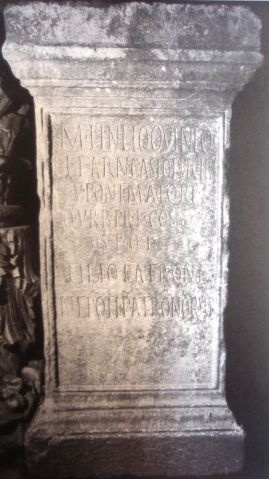
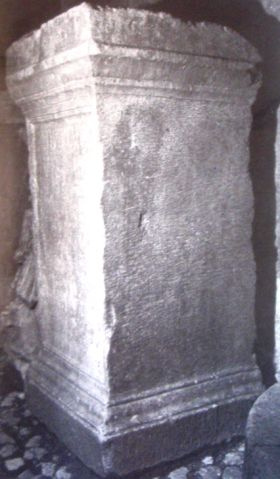
Base for bronze statue for Marcus Tineius Ovinius, consul and son of a patron of Tibur. Tibur (Flaminia et Picenum). Late third century.
Record details
Photographs
Inscription
M(arco) Tineio Ovinio / L(uci) f(ilio) Arn(ensis) Casto Puchro, / c(larissimo) v(iro), pont(ifici) maiori, / q(uaestori) urb(ano), co(n)s(uli). /(5) S(enatus) p(opulus)q(ue) T(iburs), / filio patroni, / nepoti patronarum.
Inscription translation
To Marcus Tineius Ovinius Castus Pulcher, son of Lucius, of the Arnensis tribe, of clarissimus rank, higher pontiff, urban quaestor, consul. The senate and people of Tibur, to the son of a patron and descendant of patrons.
Bibliography
- Corpus Inscriptionum Latinarum; , XIV, 3614
- Inscriptiones Italiae, Rome 1931-, IV.1, 131.
- Granino Cerere, M. G. (ed.), Supplementa Italica, Imagines. Latium Vetus 1, Rome 2005, n. 891
- Granino Cerere, M. G. (ed.), Supplementa Italica, Imagines. Latium Vetus 1, Rome 2005, n. 891
- Inscriptiones Latinae Selectae, , 1207
Discussion
INSCRIPTION:
In seven lines. Letter height 6-4.5cm.
M(arco) Tineio Ovinio / L(uci) f(ilio) Arn(ensis) Casto Puchro, / c(larissimo) v(iro), pont(ifici) maiori, / q(uaestori) urb(ano), co(n)s(uli). /(5) S(enatus) p(opulus)q(ue) T(iburs), / filio patroni, / nepoti patronarum.
'To Marcus Tineius Ovinius Castus Pulcher, son of Lucius, of the Arnensis tribe, of clarissimus rank, higher pontiff, urban quaestor, consul. The senate and people of Tibur, to the son of a patron and descendant of patrons.'
DESCRIPTION (Granino Cerere):
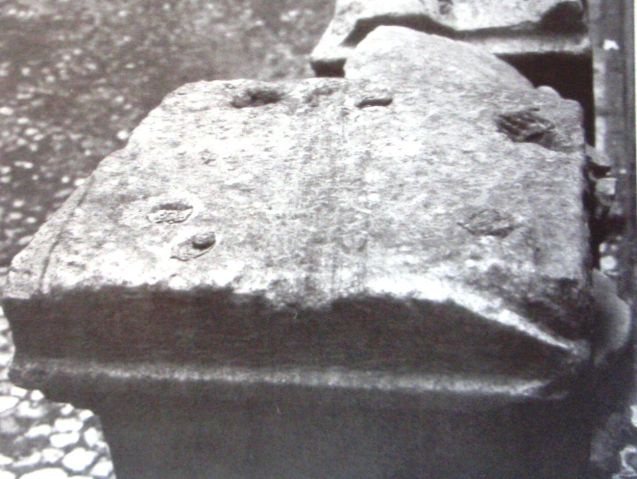
White marble base, well preserved on all sides; 122 x 63 x 59. The epigraphic field is framed by moulding, and it measures 70 x 42.8 cm. The top has dowel holes with their bronze fittings.
PROVENANCE AND LOCATION:
Our base was found in 1852 in via del Trevio, during construction of Palazzo Lolli. It is now in Palazzo Lolli, via del trevio nr. 86 (Granino Cerere, 2005).
HONORAND, AWARDER AND DATE:
Marcus Tineius Ovinius Castus Pulcher was a Roman senator and patron of Tibur. He was a suffect consul at an unknown date. The dedication is later than 274, as it mentions the college of pontifices maiores, instituted at the time of Aurelian. He was probably a descendant of Quintus Tineius Rufus, consul ordinarius in 182 (Christol (1986), p. 249).
The dedication was carried out by the senate and people of Tibur, to a patron who was also descendant of patrons. This shows that Tivoli was able to use its favourable geographical position and its links with the Roman elite to secure prestigious favours.
Discussion references
- Christol, M., Essai sur l'évolution des carrières sénatoriales dans la 2e moitié du IIIe siècle ap. J. C., Paris 1986, 249 n. 56
Cite: Last Statues of Antiquity, LSA-1690 (Carlos Machado).