
LSA-1708
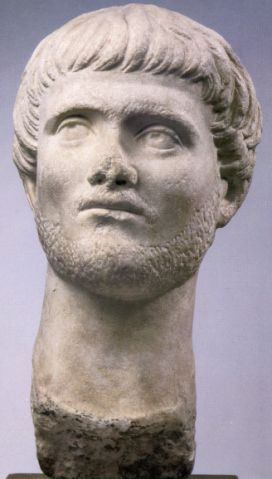
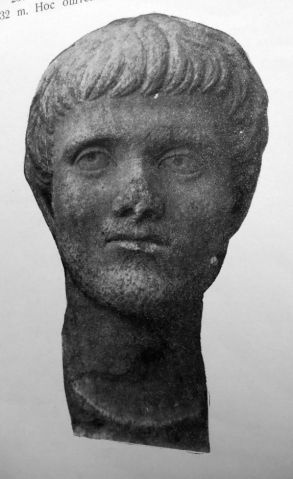
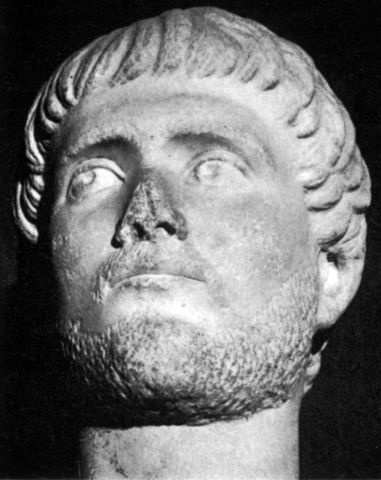
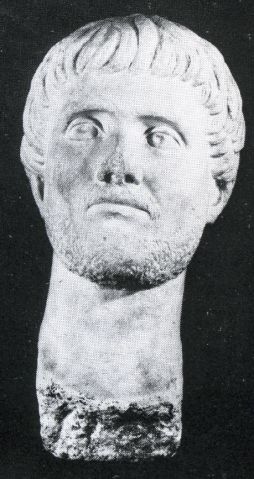
Portrait head of young man with lank hair and light beard. From Stenae (Macedonia). Late third to fourth century.
Record details
Photographs
Bibliography
- Jevtovic, J. (ed.), Antički portret u Jugoslaviji : Narodni muzej, Beograd, Muzeji Makedonije, Skopje, Arheološki muzej, Zagreb, Arheološki muzej, Split, Narodni muzej, Ljubljana , Belgrade 1987, 221-2, no. 196
- Rüsch, A., Das kaiserzeitliche Porträt in Makedonien, Jahrbuch des Deutschen Archäologischen Instituts 84, 1969, 59-196, 115-16 no. P13 fig. 5
Discussion
DESCRIPTION (Object)
The white marble head is worked for insertion; H 36 cm. the tip of the nose is broken, and there are light abrasions on eyebrows, lips and hair.
The hair is articulated into long strands by chisel work; the strands are separated from each other by deep cut lines around the face; they are arranged into various layers on the skull.
The beard is marked against the flesh by a clear cut line; it is articulated by short chisel strokes.
The eyes are marked by a bean shaped drilling; the eyebrows are indicated by fine chisel strokes.
PROVENANCE AND CURRENT LOCATION
The head is said to be from the village of Negotino at the river Vardar by Rüsch 1969; Jevtovic 1987 records its provenance from the nearby village of Demir Kapija on the river Vardar. It is today in the Museum of Macedonia in Skopje, inv. no. 37.
DESCRIPTION (Subject)
The portrayed is a mature man as indicated by the full beard; however, there are no traces of advanced age. The hair is full, and the skin is without wrinkles. His hair is brushed forward; the upper portion of the ears is covered. The hair is of medium length while the beard is trimmed short.
The short beard possibly characterizes the portrayed as a man in office.
DATE
The head was dated to the middle of the 3rd century by Jevtovic 1987, and to the Gallienic period by Rüsch 1969.
The vivid arrangement of the hair into various layers is a technique in the tradition of the 2nd/ early 3rd century. The hairstyle makes a date into the Gallienic perfectly acceptable;an earlier date in the late Severan period should not be excluded. However, the beard does not easily fit such a date; it is possibly a later addition, perhaps from the late 3rd/ 4th century.
Discussion references
- Rüsch, H. 'Das kaiserzeitliche Porträt in Makedonien', Jahrbuch des Deutschen Archäologischen Instituts 84, Berlin 1969, cat. no. P. 13, fig. 5
Cite: Last Statues of Antiquity, LSA-1708 (Ulrich Gehn).