
LSA-1742
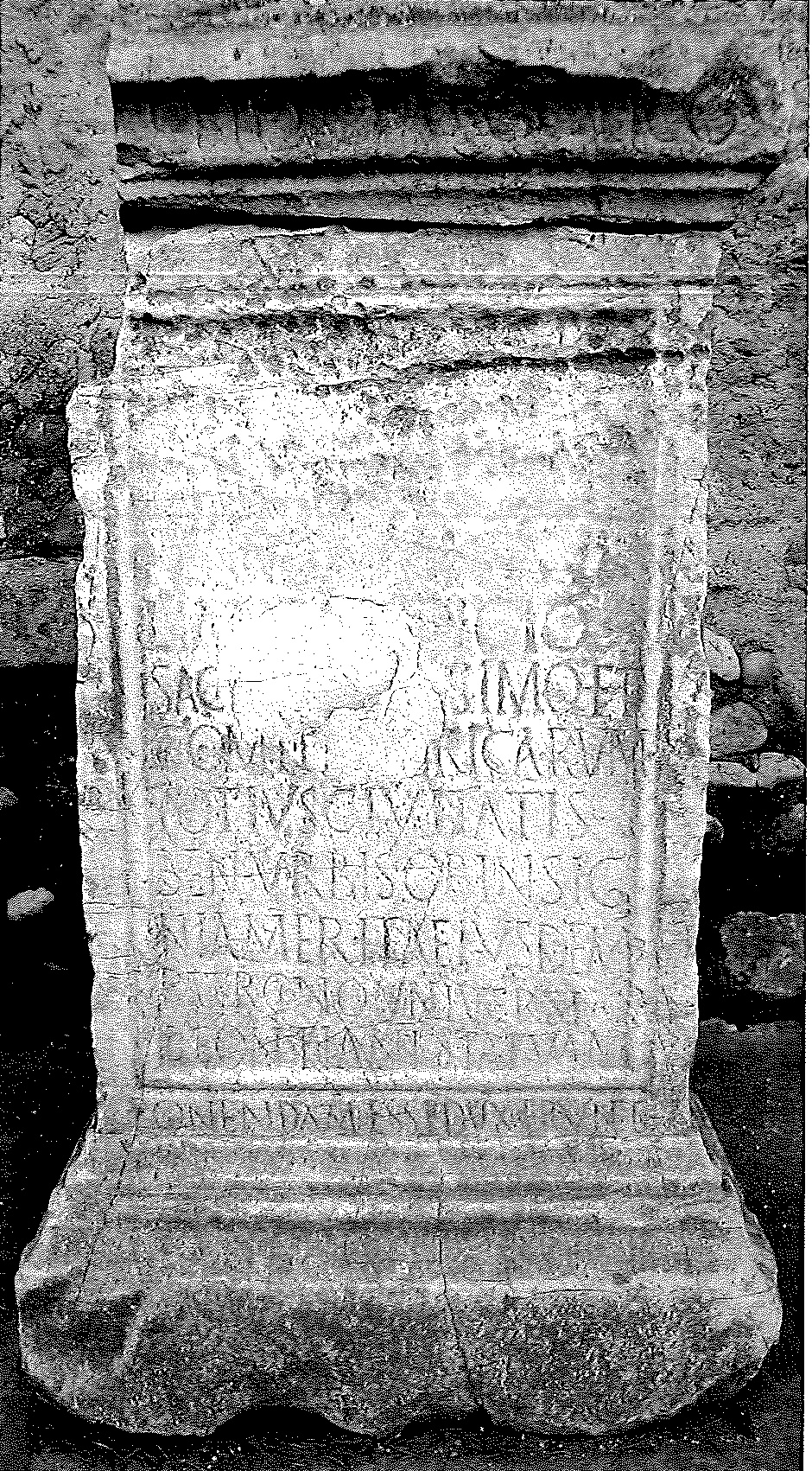
Base for statue for Pullidius Argolicus, comes fabricarum and patron. Beneventum. 353
Record details
Photographs
Inscription
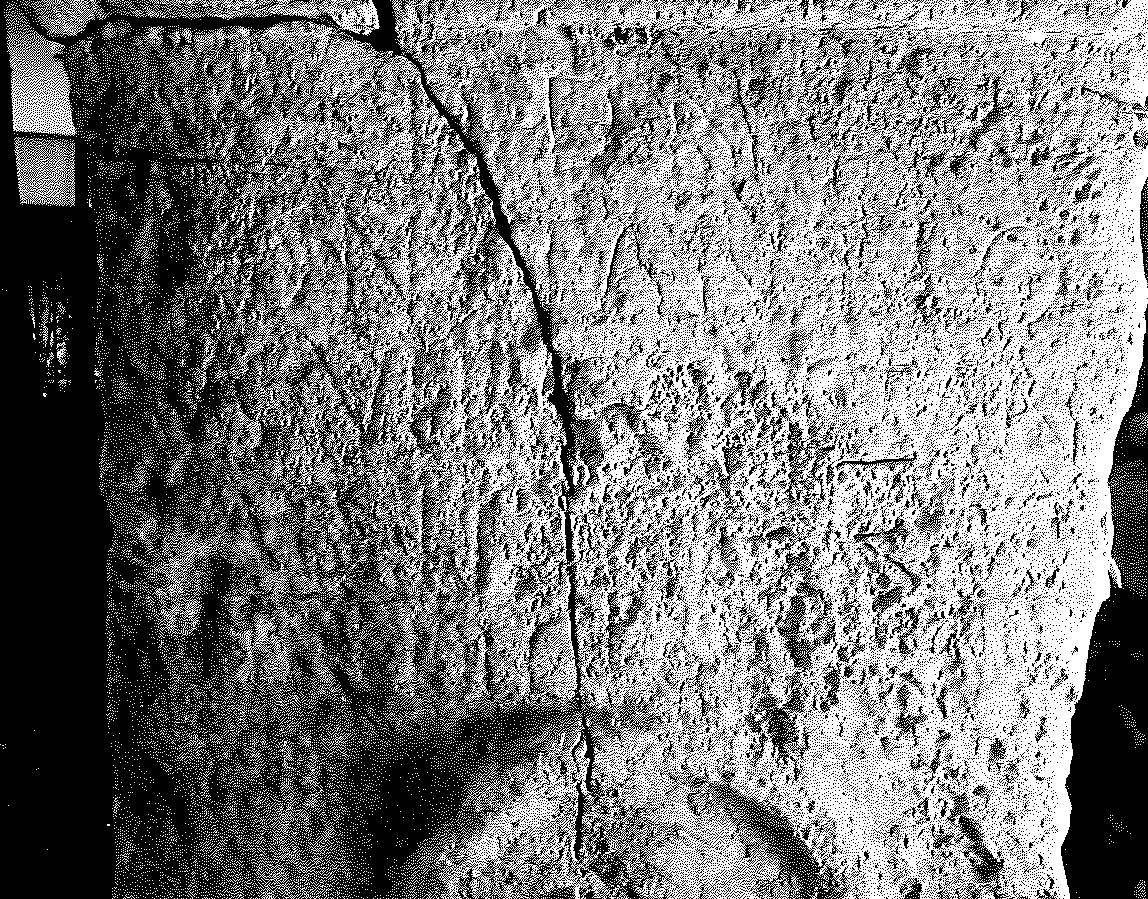
[D(is) [[M(anibus)]] / [[------]] /(3) [P]ullidio Argolico, / [------] / signo[---]RUM /(5) LIM[--- iu]dicio / sac[ratis]simo et / comiti [f]abricarum / totius civitatis / Ben(eventi) urbis. Ob insig/nia merita eiusdem, /(10) patrono universi / Leontiani statuam / ponendam esse duxerunt. // DD(ominis) nn(ostris) / Constantio / [A]ug(usto) VI et Constant[tio] / [C]aes(are) II [---] / [---]++C+[---].
Inscription translation
To the gods of the underworld... To Pullidius Arcolicus, … most blessed judgment and supervisor of works (comes fabricarum)of the entire citizenry of the city of Beneventum. On account of his services, the whole guild of the Leontiani commanded that (this) statue be set up to its patron. [On the side] During the consulship of our lords Constantius Augustus, for the sixth time, and Constantius Caesar, for the second time…
Bibliography
- Corpus Inscriptionum Latinarum; , IX, 1590
- Felle, A., "Una novità epigrafica beneventana", Zeitschrift für Papyrologie und Epigraphik 173, (2010), 278-281
Discussion
INSCRIPTION
Partly preserved in twelve lines; plus a dedicatory formula on the left lateral face:
[D(is) [[M(anibus)]] / [[------]] /(3) [P]ullidio Argolico, / [------] / signo[---]RUM /(5) LIM[--- iu]dicio / sac[ratis]simo et / comiti [f]abricarum / totius civitatis / Ben(eventi) urbis. Ob insig/nia merita eiusdem, /(10) patrono universi / Leontiani statuam / ponendam esse duxerunt. // DD(ominis) nn(ostris) / Constantio / [A]ug(usto) VI et Constant[tio] / [C]aes(are) II [---] / [---]++C+[---].
'To the gods of the underworld (...) To Pullidius Arcolicus, (…) by most blessed judgement, and supervisor of works (comes fabricarum) of the entire citizenry of the city of Beneventum. On account of his services, the whole guild of the Leontiani commanded that (this) statue be set up to its patron. [On the side:] During the consulship of our lords Constantius Augustus, for the sixth time, and Constantius Caesar, for the second time (…).'
Letter height 3.5 - 5 cm.
We reproduce the inscription here in the reading by Felle 2010. This new reading corrects the name of the honorand read by CIL in 1883, and it adds a letter from an earlier inscription (line 1, see below, 'Description'), and the dedicatory formula on the lateral face.
DESCRIPTION (from Felle 2010 and the published image)
Rectangular limestone base moulded at top and bottom; H 120, W 44, D 54 cm. The upper left corner (from viewer) is broken; the surface is worn. On the lateral faces there are a sacrificial bowl (patera) and a jug (urceus) in relief; this suggests that the block was originally used as funerary altar (arula). Felle 2010 recorded a letter M immediately above the frame of the epigraphic field; he suggested that this was probably from the funerary formula D(is) M(anibus), from the first use of the block.
PROVENANCE AND CURRENT LOCATION
The inscription was first recorded in Benevento, ancient Beneventum, by Georgius Gualterus (Georg Walter) in the early 17th century.
Most recently it was recorded in Benevento, in the garden of the Museo Provinciale del Sannio (without published inv. no.), by Felle in 2010.
HONORAND, AWARDER AND DATE
Pullidius Argolicus, the honorand, was the patron of the awarders, the Leontiani (line 10;PLRE I, 102 Pullidius Argolicus; on the awarder see next paragraph). He held office of ‘supervisor of works’ (comes fabricarum) in the city of Beneverntum; this office is unparalleled in the epigraphic record. Fabricae are usually understood to be the imperial factories for the production of arms; however, it has been argued that no such factory is recorded as far south in Italy (and remote from the borders of the empire) by our main sources (in particular the Notitia Dignitatum of the late 4th/ early 5th century). Felle suggested referring the title to building activities rather than to the production of weapons, and that Argolicus was an architect superintendent (una sorta di sovrintendente architetto, Felle 2010, 279-80 with reference to earlier discussion; see also below, 'Further Discussion').
The inscription was set up by the Leontiani (lines 10-11). The character of this institution remains obscure; it was possibly a professional guild, or a city quarter of Beneventum (see also below, 'Further Discussion').
The inscription is dated by the consular date on the lateral face (see above, 'Inscription'). Constantius II (Constantius Augustus in our inscription) and Constantius Gallus (Constantius Caesar in our inscription) held common consulship in 352 and 353; the reading proposed by Felle 2010 (Constantio Augusto VI et Constantio Caesare II - Constantius Augustus, for the sixth time, and Constantius Caesar, for the second time) dates the inscription to 353.
FURTHER DISCUSSION
Felle 2010 suggested that the honours Argolicus merited were due to restoration work in the city after the devastating earthquake of 346.
The patronage over the college of the Leontiani was apparently hereditary in the family of Pullidius Argolicus; the Leontiani dedicated a statue to Argolicus' son, of the same name, in which the generation-long relationship is emphasized (LSA-1726). A similar case is on record in Puteoli (LSA-43, LSA-47, LSA-332, LSA-335, LSA-1909).
Discussion references
- Jones, A. H. M. et al., The Prosopography of the Later Roman Empire. Vol. I 260-395, Cambridge et al. 1971 (1975)
Cite: Last Statues of Antiquity, LSA-1742 (Ulrich Gehn & Carlos Machado, discussion added 3/15 (UG)).