
LSA-1770
Base for statue of Julian, emperor. Segermes (Byzacena). 361-363
Record details
Photographs
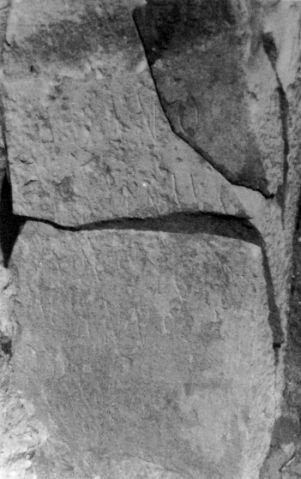
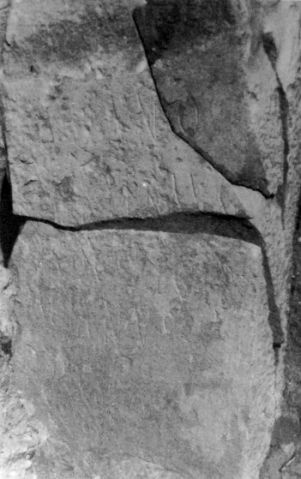
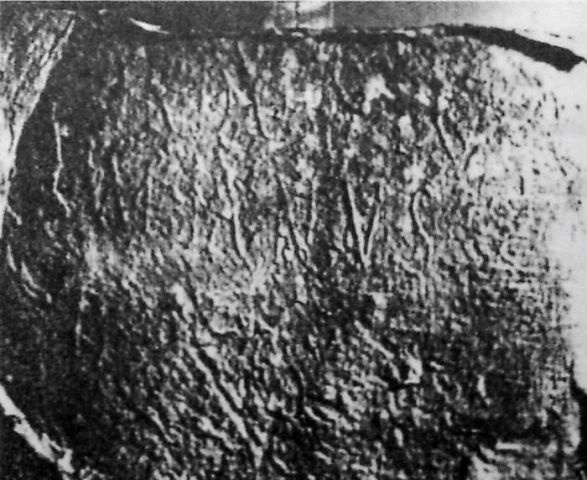
Inscription
[D(omino) n(ostro)] / [I]uliano / semper Aug(usto), / ordo [s]eg[e]r/mitanus, / d(evotus) [n(umini) m(aiestati)q(ue) e(ius)].
Inscription translation
To our lord Iulianus, forever Augustus; the council of Segermes (ordo segermitanus), devoted to his divine spirit and majesty, [set this up].
Bibliography
- L'Année épigraphique, Paris, 1995, n°1649
Discussion
INSCRIPTION
In six lines:
[D(omino) n(ostro)] / [I]uliano / semper Aug(usto), / ordo [s]eg[e]r/mitanus, / d(evotus) [n(umini) m(aiestati)q(ue) e(ius)].
'To our lord Iulianus, forever Augustus; the council of Segermes (ordo segermitanus), devoted to his divine spirit and majesty, [set this up].'
Letter height : 8 - 10 cm
DESCRIPTION (from L. Ladjimi-Sebaï and the published photo)
Grey limestone base, broken across the middle and badly damaged at the top ('base en pierre calcaire grisâtre, tronquée et mutilée dans sa partie supérieure'): H 125, W 60, D 50 cm.
PROVENANCE AND CURRENT LOCATION
Discovered during excavations in 1989, re-used in a late-antique building east of the temple. It remains where it was found.
HONORAND AND DATE
The honorand, Julian, was Augustus from 361 to 363.
The awarder was the city, as usual with imperial statues in Africa.
Ladjimi-Sebaï suggests a date for our base after Julian's law in favour of city councils of 13 March 362 (De decurionibus ad curiam revocandis). However, there is no reason to associate our dedication with any specific action of the emperor.
Discussion references
- Ladjimi Sebaï, L., "Les inscriptions de Segermes ( Hr Harrat)”, Africa Proconsularis. Regional studies in the Segermes valley of Northern Tunisia, t. I-II, Copenhagen, 1995, p. 733, n°14
Cite: Last Statues of Antiquity, LSA-1770 (Gabriel de Bruyn).