
LSA-1923
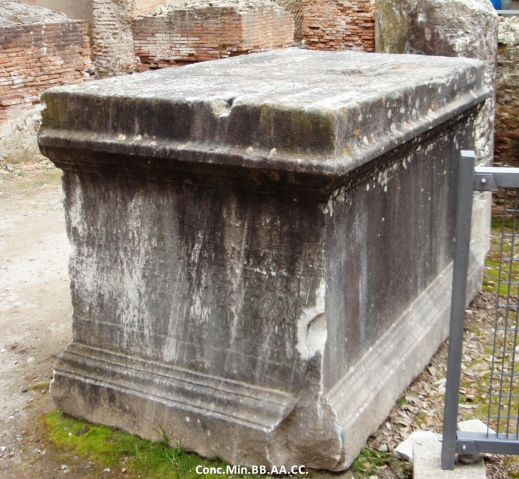
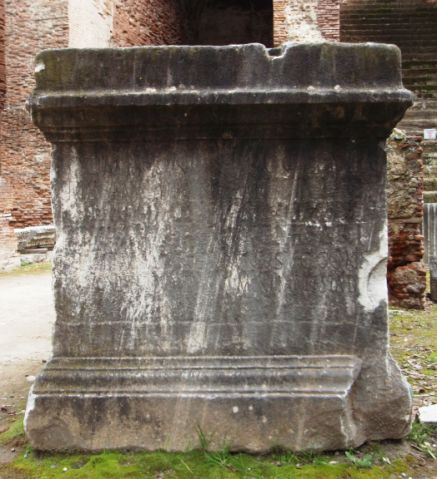
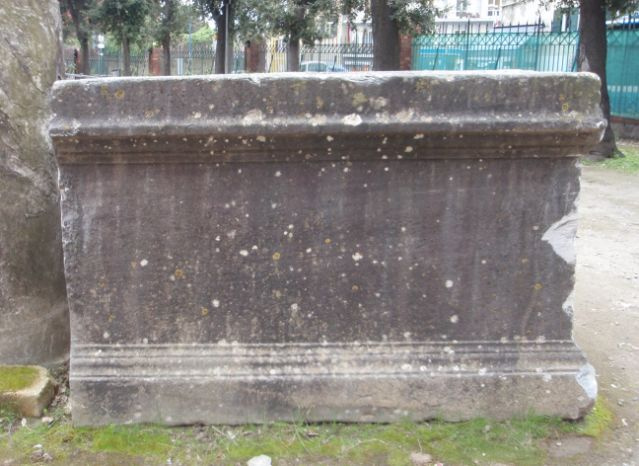
Base for equestrian statue of Crispus, emperor (see also LSA-2464). Puteoli (Campania). 325-326.
Record details
Photographs
Inscription
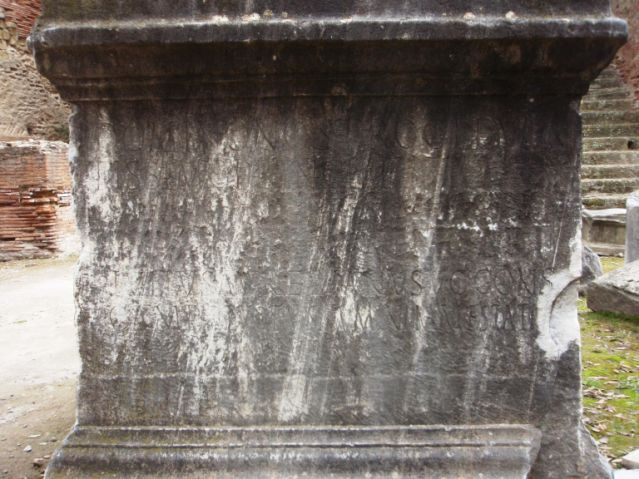
Domino nostro, clemen/tissimo principi [[Fl(avio) Iulio]] / [[Crispo, nobilissimo ac ---]]/[[tissimo (vac.) Caesari,]] / Iulius Aurelianus, v(ir) c(larissimus), cons(ularis) / Camp(aniae), devotus numini maiestati[q(ue)]/ eius.
Inscription translation
To our lord, the most merciful prince Flavius Iulius Crispus, most noble and most (…) Caesar; Iulius Aurelianus, of clarissimus rank, governor (consularis) of Campania, devoted to his divine spirit and majesty, [set this up].
Bibliography
- Camodeca, G. "Ricerche su Puteoli tardoromana (fine III-IV secolo)", Puteoli, 4-5, 1980-1981, 65
- Guadagno, G., Panciera, S. 'Nuove testimonianze sul governo della Campania in età costantiniana.', Atti della Accademia nazionale dei Lincei. Classe di scienze morali. storiche e filologiche. Rendiconti, 8,25, Rome 1970, 111-21
- L'Année épigraphique, , 1969/70, 108; 1983, 194
Discussion
INSCRIPTION
In seven lines:
Domino nostro, clemen/tissimo principi [[Fl(avio) Iulio]] / [[Crispo, nobilissimo ac ---]]/[[tissimo (vac.) Caesari,]] / (5) Iulius Aurelianus, v(ir) c(larissimus), cons(ularis) / Camp(aniae), devotus numini maiestati[q(ue)]/ eius.
’To our lord, the most merciful prince Flavius Iulius Crispus, most noble and most (…) Caesar; Iulius Aurelianus, of clarissimus rank, governor (consularis) of Campania, devoted to his divine spirit and majesty, [set this up].’
Letter height 5-6 cm.
We reproduce the inscription with the completions suggested by Camodeca 1981 (see below, ’Further Discussion’).
DESCRIPTION
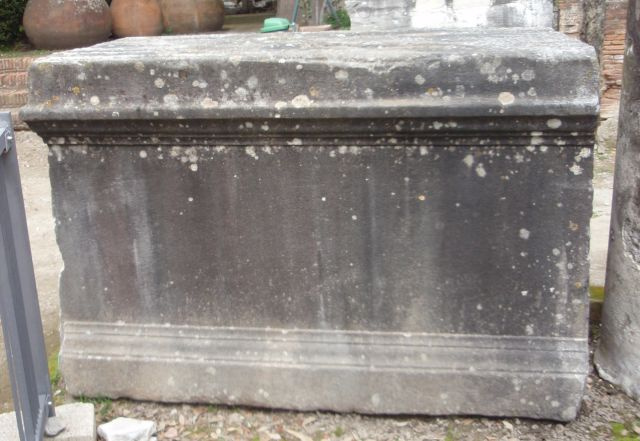
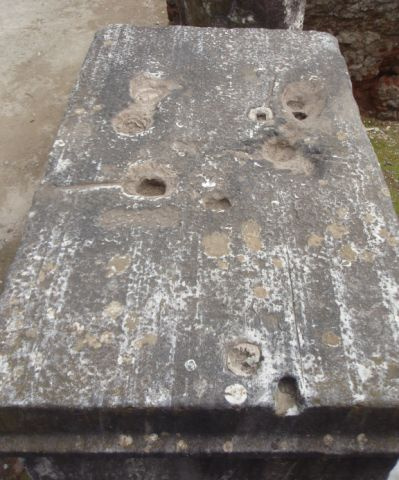
Rectangular marble base with mouldings at top and bottom, H 130, W 125, D 200 cm. Our inscription is carved on one of the small sides; the original surface was slightly cut back to create the epigraphic field. On the top face there are imprints of a bronze equestrian statue; the associated horse was found along with the inscription (LSA-2464).
PROVENANCE AND CURRENT LOCATION
Our inscription was found in Pozzuoli, the location of ancient Puteoli, in the area of modern via Rosini, (WHEN?). This is probably the forum area of Puteoli; in the same area an equestrian statue to Constantine (LSA-1922) and the toga statue of Virius Audentius Aemilianus LSA-41) were found.
The inscription is now in the lapidarium of the amphitheatre in Pozzuoli (without published inv. no.).
HONORAND, AWARDER AND DATE
Crispus, the honorand (full name Flavius Iulius Crispus,a s in our inscription), was the eldest son of Constantine. He became Caesar in 317, but fell from grace and was killed in 326.
Iulius Aurelianus, the awarder, was governor (consularis) of Campania (PLRE I, 130 Iulius Aurelianus 7). The governorship of Campania was upgraded from corrector to the higher rank of consularis in 324; the first governor holding this new rank is Ceionius Iulianus in 324 (the last corrector is Publius Aelius Proculus earlier in the same year). Iulius Aurelianus, our awarder, was probably the immediate successor of Ceionius Iulianus.
FURTHER DISCUSSION
A similar base with similar dimensions was set up in Puteoli to Crispus’ father Constantine (LSA-1922).
Guadagno, the first editor, had a different reading of the imperial name in lines 2-3 (Flavio Iulio Constanti instead of Flavio Iulio Crispo) and referred the inscription to Constantine’s youngest son Constans.
Discussion references
- Jones, A. H. M. et al., The Prosopography of the Later Roman Empire. Vol. I 260-395, Cambridge et al. 1971 (1975)
Cite: Last Statues of Antiquity, LSA-1923.