
LSA-1940
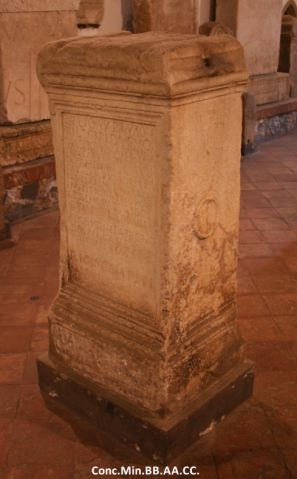
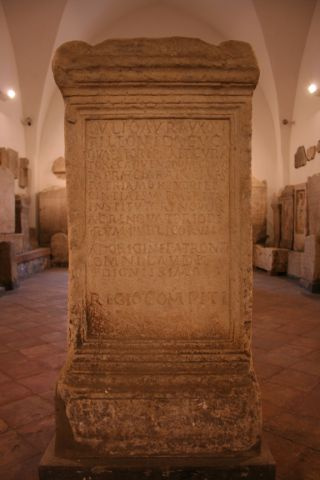
Base for statue of Iulius Aurelius Auxon Leonidas, curator; erected to its patron by a region of Capua. Capua (Campania). Late third to fourth century.
Record details
Photographs
Inscription
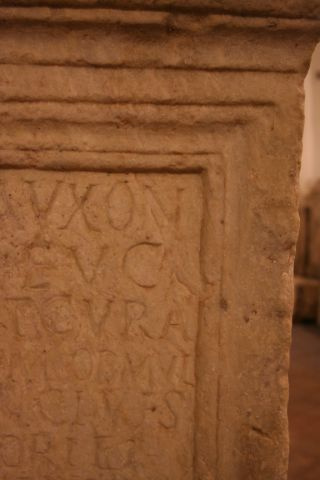
Carradii. / Iulio Aur(elio) Auxon/ti Leonidae, v(iro) c(larissimo), /(4) quaestori, praet(ori), cura/tori Capuensium, ob mul/ta praeclara in cives / patriamq(ue) honorifi/centiae suae merita, / institutori novor(um) /(10) ac renovatori ope/rum publicorum, / ab origine patrono, / omni laude / dignissimo, /(15) Regio Compiti.
Inscription translation
[Statue of] Carradius. To Iulius Aurelius Auxon Leonidas, of clarissimus rank, quaestor, praetor, curator of Capua, on account of the many brilliant services of his office for the citizens and the fatherland, builder of new and restorer of public works, patron by descent, most worthy of every praise; the Region Compiti [set this up]
Bibliography
- Corpus Inscriptionum Latinarum; , X, 3857
- Chioffi, L., Museo Provinciale Campano di Capua. La Raccolta Epigrafica, vol. I, Capua 2005, 110
- Dessau, H., Inscriptiones latinae selectae, Berlin 3rd ed. 1962, 5509
Discussion
INSCRIPTION
In 15 lines:
Carradii. / Iulio Aur(elio) Auxon/ti Leonidae, v(iro) c(larissimo), /(4) quaestori, praet(ori), cura/tori Capuensium, ob mul/ta praeclara in cives / patriamq(ue) honorifi/centiae suae merita, / institutori novor(um) /(10) ac renovatori ope/rum publicorum, / ab origine patrono, / omni laude / dignissimo, /(15) Regio Compiti.
’[Statue of] Carradius. To Iulius Aurelius Auxon Leonidas, of clarissimus rank, quaestor, praetor, curator of Capua, on account of the many brilliant services of his office for the citizens and the fatherland, builder of new and restorer of public works, patron by descent, most worthy of every praise; the Region Compiti [set this up].’
Letter height 2.5 - 4 cm.
DESCRIPTION (from Chioffi 2005, and the published images, and our own images)
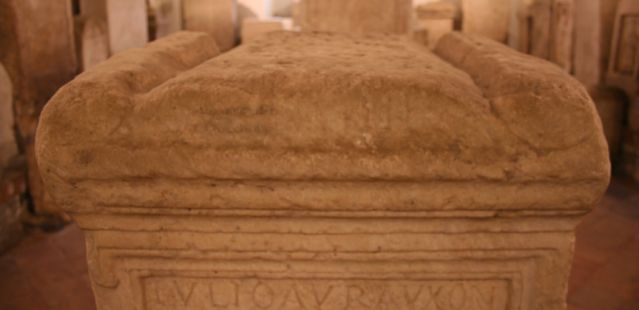
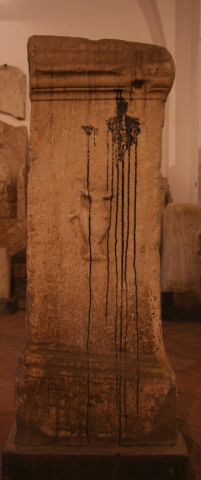
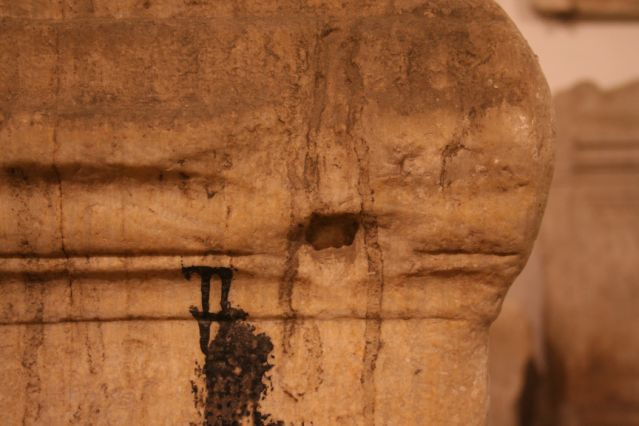
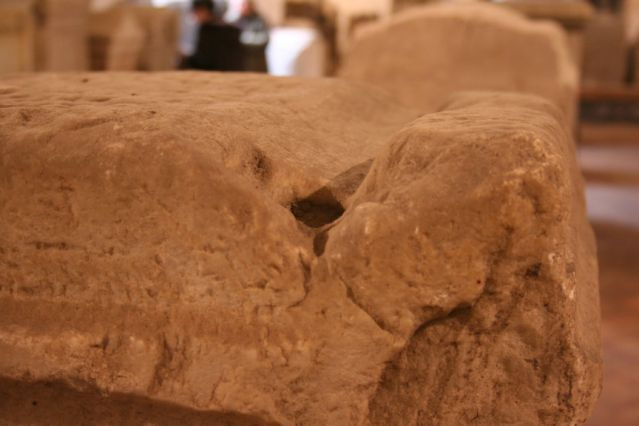
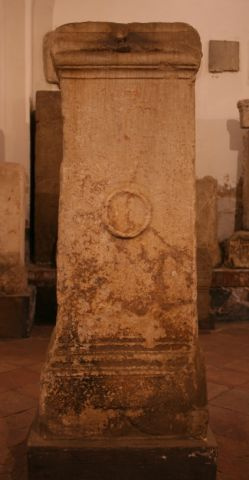
Rectangular limestone base moulded at top and bottom, H 135, W 65, D 46 cm. The signum is carved on the upper moulding. There is a sacrificial bowl (patera) standing proud in relief at the right side (from viewer), and a jug (urceus) at the left side; this suggests that the block was used as a funerary altar in an earlier use, with our inscription carved on the original front face. The back face is flat with the mouldings cut back. There are rectangular holes in various positions of the upper mouldings; these were possibly for clamps to fix a further element or the statue on top of our block.
PROVENANCE AND CURRENT LOCATION
Our inscription was first recorded in Capua by the local scholar and clergyman Fabius de’Vecchioni in the 17th century.
It is now in the Museo Provinciale Campano di Capua, Sala Mommsen no. 205.
HONORAND, AWARDER AND DATE
Iulius Aurelius Auxon Leonidas signo Carradius was of senatorial (clarissimus) rank (PLRE I, 499 Iulius Aur. Auxon Leonidas signo Carradius). He held the senatorial starter offices of quaestor and praetor (line 4) before he became curator rei publicae of Capua (lines 4-5). He was probably a native of Capua (in cives patriamque, lines 6-7); it is well possible that he was one of the local notable who enjoyed senatorial rank (honorati) but did not pursue a carreer in the imperial office. He was patron of the awarding body, styled ‘patron by descent‘ (ab origine patrono, line 12).
The signum suggests a late antique date. We assume that our inscription was not set up after the mid-5th century.
The inscription was set up by a city quarter of Capua, the regio Compiti.
FURTHER DISCUSSION
On city quarters as awarders of honorific statues see LSA-1936, ’Further Discussion’.
Discussion references
- Jones, A. H. M. et al., The Prosopography of the Later Roman Empire. Vol. I 260-395, Cambridge et al. 1971 (1975), 499
Cite: Last Statues of Antiquity, LSA-1940 (preliminary version, discussion added 4/15 (UG)).