
LSA-199
Base for statue of Flavius Palmatus, governor and acting vicar. Aphrodisias (Caria). Later fifth to early sixth century.
Record details
Photographs
Inscription
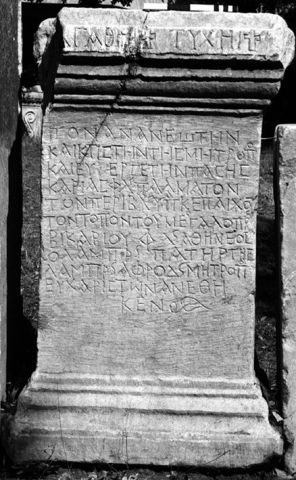
[ cross ] Ἀγαθῆι cross Τύχηι cross / Τὸν ἀνανεωτὴν / καὶ κτίστην τῆς μητροπό(λεως) / καὶ εὐεργέτην πάσης /(5) Καρίας Φλ(άβιον) Παλμᾶτον / τὸν περίβλ(επτον) ὑπα(τικὸν) κ(αὶ) ἐπαίχο(ντα) / τὸν τόπον τοῦ μεγαλοπρ(επεστάτου) / βικαρίου, Φλ(άβιος) Ἀθήνεος / ὁ λαμπρ(ότατος) πατὴρ τῆς /(10) λαμπρ(οτάτης) Ἀφροδ(εισιέων) μητροπό(λεως) / εὐχαριστῶν ἀνέθη/κεν. leaf
Inscription translation
To Good Fortune. The renewer and founder of the metropolis and benefactor of all Caria, Flavius Palmatus, spectabilis consular, also holding the position of the magnificentissimus vicar; Flavius Atheneus, the clarissimus pater of the most splendid (i.e. clarissima) metropolis of the Aphrodisians, set up (this statue of Palmatus) in gratitude.
(Trans: C. Roueché)
Bibliography
- Roueché, C., Aphrodisias in Late Antiquity (Journal of Roman Studies Monograph 5), London 1989, no. 62
Discussion
INSCRIPTION
In twelve lines:
[ cross ] Ἀγαθῆι cross Τύχηι cross / Τὸν ἀνανεωτὴν / καὶ κτίστην τῆς μητροπό(λεως) / καὶ εὐεργέτην πάσης /(5) Καρίας Φλ(άβιον) Παλμᾶτον / τὸν περίβλ(επτον) ὑπα(τικὸν) κ(αὶ) ἐπαίχο(ντα) / τὸν τόπον τοῦ μεγαλοπρ(επεστάτου) / βικαρίου, Φλ(άβιος) Ἀθήνεος / ὁ λαμπρ(ότατος) πατὴρ τῆς /(10) λαμπρ(οτάτης) Ἀφροδ(εισιέων) μητροπό(λεως) / εὐχαριστῶν ἀνέθη/κεν. leaf
'To Good Fortune. The renewer and founder of the metropolis and benefactor of all Caria, Flavius Palmatus, spectabilis consular, also holding the position of the magnificentissimus vicar; Flavius Atheneus, the clarissimus pater of the most splendid (i.e. clarissima) metropolis of the Aphrodisians, set up (this statue of Palmatus) in gratitude.' (Trans: C. Roueché)
Letter height c. 4 cm.
DESCRIPTION
Rectangular base with upper and lower mouldings set on top of block with lower moulding. H (base): 99.5, W (base): 63, D (base): 63 cm. H (lower element): 45, W (lower element) 75, D (lower element): 63 cm. W (top of lower element) 57, D (top of lower element): 48 cm. White marble.
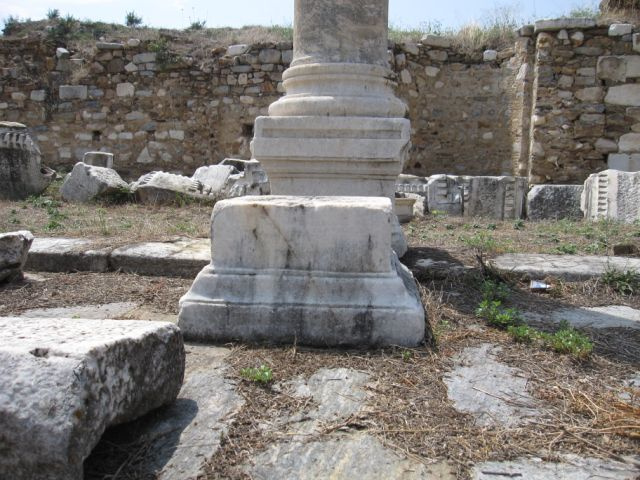
The base consists of two blocks. The lower block is a re-used rectangular element which has been turned upside down. The once upper mouldings are now at the bottom. The upper surface has a small rectangular dowel hole almost centrally located. All of the lateral sides are fully worked.
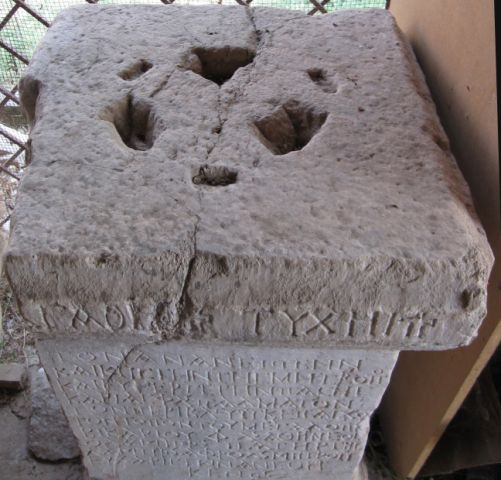
The upper block, bearing the inscription, is missing its upper left front corner. It is also fully worked with upper and lower mouldings on all sides. On the back side is a hanging garland. On the upper surface are six cuttings arranged in a circular fashion. Three large cuttings alternate with three smaller ones. All the cuttings on the top surface pertain to a previous use because they match no cuttings on the statue found in front of it. There are clamp holes on the right and left sides at both bottom and top to fix the base to the element below and an element above.
PROVENANCE
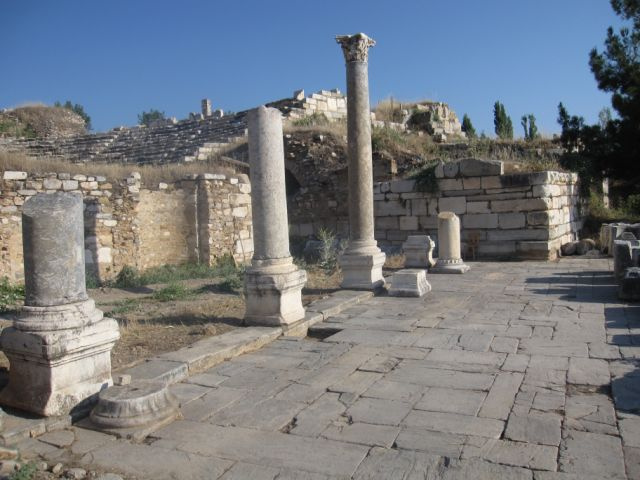
Found on 4 July 1972 in situ in front of the second to northernmost column of the western stoa of the Tetrastoon. The statue LSA-198was found face down in front of the base.
HONORAND AND DATE
The lower element of the statue base was placed on top of the paving of the Tetrastoon. This is unlike the bases for Valens LSA-223 and Julian LSA-197 which are set on the earth and paved around. This gives a secure terminus post quem of 365. The secure terminus ante quem is 535 when Justinian abolished the post of vicar of Asiana (which is here held by the honorand).
The chronological range can be narrowed further. This honorand also held the post of governor as consularis. The shift in the grade of the governorship of Caria from praeses to consularis occured in the fifth century.
The rank spectabilis may suggest an early sixth-century date since a governor of Caria in 518 is also recorded as spectabilis (SEG 52.991 and 55.1509.).
A late fifth or early sixth century date accords well with the re-use of a late fourth or fifth century statue, the unusual construction of the base, and the hairstyle of the separately worked head. See LSA-198.
The inscription names Flavius Palmatus who is also known from another inscription set up by the Carians (LSA-227).
Cite: Last Statues of Antiquity, LSA-199 (J. Lenaghan).