
LSA-201
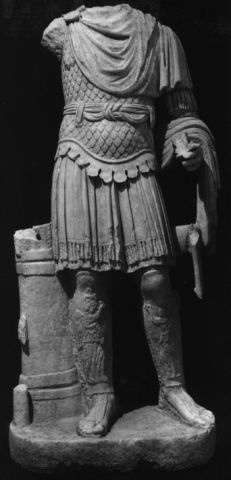
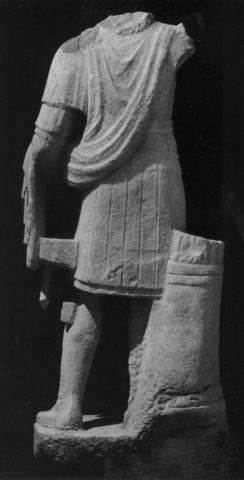
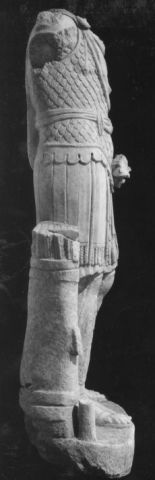
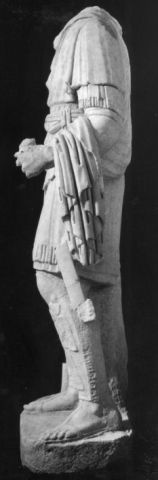
Cuirassed statue of commander (headless). Aphrodisias (Caria). Fourth to fifth century.
Record details
Photographs
Discussion
DESCRIPTION (Object)
Life-size statue with plinth. H: 171, W: 76, D: 43 cm. H (of plinth): 12 cm. Large-grained white marble.
Missing: head, right arm, part of sword.
PROVENANCE
Excavated in 1982 in the Atrium House, north of the Sebasteion, in a small courtyard on the west side of the house. Found with a female statue (LSA-202)
DESCRIPTION (Subject)
The figure wears a tunic, cuirass, cloak, greaves, and sandals. He held a spear (part is preserved on the plinth) in his raised right hand, and a long sword in its scabbard in his left hand. The statue support is a tall quiver with arrows, the feathered flights of which emerge from the top.
The cuirass has a scale pattern on the body and is tied with a commander’s sash. There is a single line of pteryges attached to its lower edge and a skirt of leather straps with fringed ends.
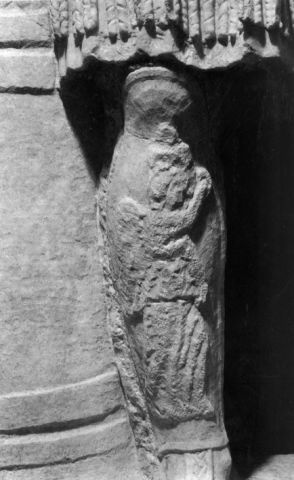
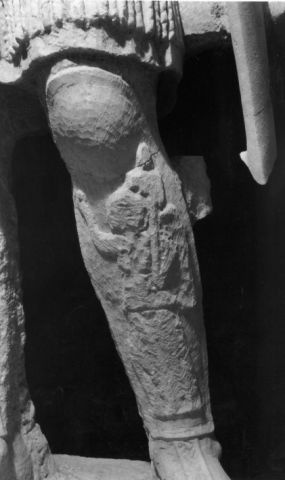
The greaves each carry a roughly-worked relief figure of a Victory who carries a wreath and a vexillum (or trophy?). The sandals have a decorated central tongue.
DATE
The context in the house, the form of the cuirass, and the unusual proportions of the figure all suggest a date in the fourth to fifth century.
HONORAND
The figure was conceivably an owner of the Atrium House at some point in late antiquity, one who had a career as a commander in the Roman army.
Cite: Last Statues of Antiquity, LSA-201 (R.R.R. Smith).