
LSA-2019
Four fragments of marble slab, possibly with honorific inscription to Maximian and Constantius I. Salamis (Cyprus). 293 - 305
Record details
Photographs
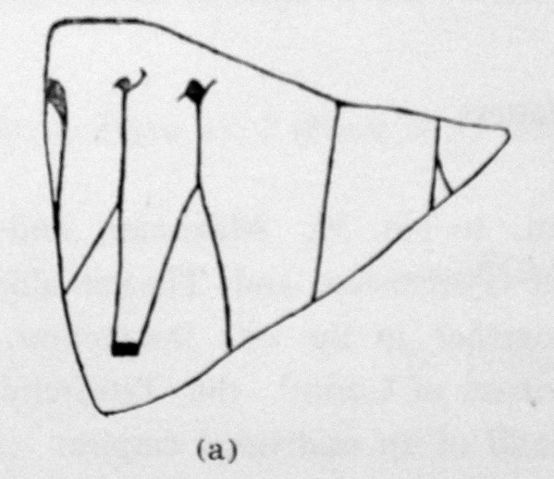
![Fragment d with letters 10, 11 of line 6 and letters 8-14 of line 7. Read: <i>[nobilissi]MO {Caesari] / [Antisti]US SABIN[us ...]](/images/LSA-2019-0-large.jpg)
Inscription
[D]omin[is nostris] / [Maximiano] / [semper Augusto] / [victori vacat et] / (5) [Fl(avio) Constan]tio / [nobilissi]ṃo [Caesari] / [Ant]ịṣṭius Sabin[us v(ir) p(erfectissimus)] / praeses provinciae Cypri] / (9) [d(evotus) n(umini) m(aiestati)q(ue) eorum]
Inscription translation
Antistius Sabinus, of perfectissimus rank, governor (praeses) of the province of Cyprus (set this up to) our Lords Maximian always Augustus victor and Flavius Constantius the most noble Caesar, devoted to their divine spirit and majesty
Bibliography
- Marshall, F. H., The collection of ancient Greek inscriptions in the British Museum. pt.4, sect.2. Supplementary and miscellaneous inscriptions, Oxford 1916, no. 996 (fragment d)
- Mitford, T. B. & I. K. Nicolaou, Salamis Vol. 6. The Greek and Latin inscriptions from Salamis, Nicosia 1974, pp. 63-4 no. 40
Discussion
INSCRIPTION
[D]omin[is nostris] / [Maximiano] / [semper Augusto] / [victori vacat et] / (5) [Fl(avio) Constan]tio / [nobilissi]ṃo [Caesari] / [Ant]ịṣṭius Sabin[us v(ir) p(erfectissimus)] / [praeses provinciae Cypri] / (9) [d(evotus) n(umini) m(aiestati)q(ue) eorum]
'Antistius Sabinus, of perfectissimus rank, governor (praeses) of the province of Cyprus (set this up to) our Lords Maximian always Augustus victor and Flavius Constantius the most noble Caesar, devoted to their divine spirit and majesty'
Letter height of fragment (d) 4. 5 cm (Puilloux et al. 1987 no. 156); not recorded for the other fragments.
We reproduce the inscription as restored and completed by Mitford & Nicolaou 1974, just adapted to our layout standard.
DESCRIPTION (from Mitford & Nicolaou 1974 and the published drawings)
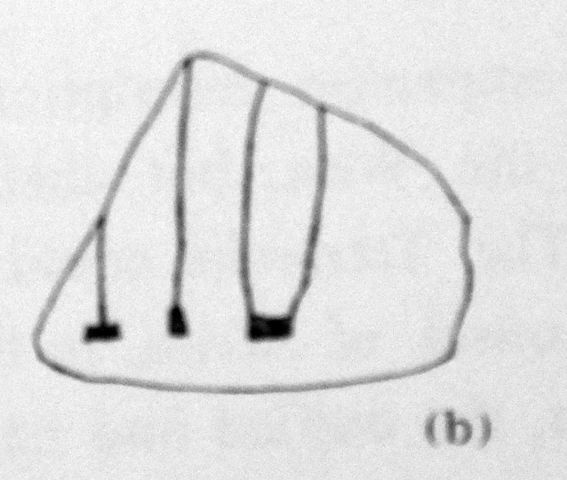
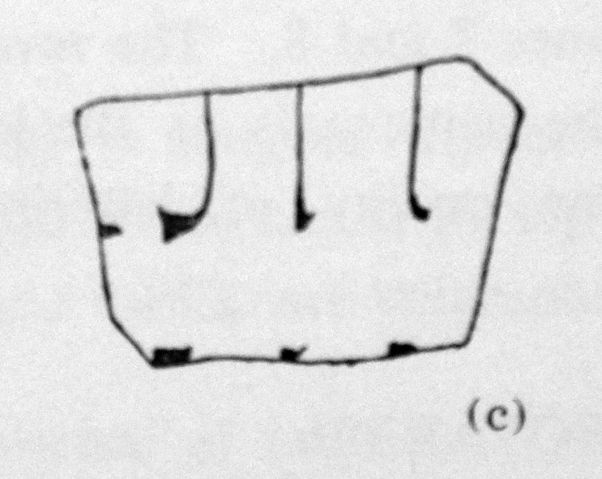
Four isolated fragments (a - d) of a white, grey-streaked marble plaque (D 1.3-1.4 cm). Fragment (a) preserves a bit of the original top margin and letters 2-5 of line 1. H 17 cm, W 15.2 cm. (b): broken on all sides with the last three letters of line 5. H 6.5 cm, W 8.3 cm. (c): broken on all sides, with the bottom of letters 4-7 of line 7 questionably assigned to it. There are the tops of some letters of the following line 8 visible on the drawing given by Mitford and Nicolaou 1974 p. 63. (d): broken on all sides, with letters 10 and 11 of line 6, letters 8-14 of line 7. H 20.5 cm, W 15.4 cm.
PROVENANCE/ LOCATION
The fragments come presumably from the gymnasium (see also LSA-864, LSA-867, LSA-2017, LSA-2018, LSA-2020). Fragments a - c are now in the Famagusta District Museum (without published inv. no.); fragment d, which was excavated in 1891, is in the British Museum, inv. no. 91.8-6.27.
HONORAND, AWARDER, AND DATE
Maximian was Augustus 286-305, Constantius I was Caesar 293-305. If the reconstruction of the inscription by Mitford & Nicolaou is correct, then its date is provided by the common reign of these two emperors.
Antistius Sabinus, governor (praeses) of Cyprus, is securely known from two statue dedications to Galerius and Constantius I (LSA-865 and LSA-866) in the theatre of Salamis (PLRE I, 792 Antistius Sabinus 9). He has been attributed further dedications to emperors of the tetrarchy by Mitford & Nicolaou 1974 (LSA-2017, LSA-2018, LSA-2020) and Pouilloux et al. 1987 (LSA-864, LSA-867), all reconstructed from fragments. On fragment d, and possibly additionally fragment c, of our inscription, the name of Antistius Sabinus is sufficiently preserved.
FURTHER DISCUSSION
The name of the awarder Antistius Sabinus appears sufficiently preserved on fragment d, as documented by Mitford and Nicolaou, as to assume that this governor was involved in an inscription to which the fragments (and, possibly, all or some of the fragments accounted for by Mitford & Nicolaou nos. 39, 42) testify. We are not convinced, though, by the reconstruction of the text as offered by Mitford & Nicolaou. The dedication to Maximian and Galerius is based on the hypothesis that there was another dedication to Diocletian and Galerius (LSA-2018 = Mitford & Nicolaou 1974 no. 39), the reconstruction of which in turn remains highly doubtful.
Whereas it seems very reasonable, that the fragments from the gymnasium testify to at least one inscription set up by Antistius Sabinus for emperors of the tetrarchy, the distribution as proposed by Mitford & Nicolaou is not convincing. We therefore document this proposal only as a possible statue base for the two emperors.
Fragment (d) of our inscription has been accounted for as testimony to a dedication by Antistius Sabinus by Pouilloux et al. 1987 no. 156 without combining it with other fragments (LSA-2020).
Discussion references
- Jones, A. H. M. et al., The Prosopography of the Later Roman Empire. Vol. I 260-395, Cambridge et al. 1971 (1975)
- Pouilloux, J., Roesch, P. & J. Marcillet-Jaubert, Salamine de Chypre XIII. Testimonia Salamina 2, Paris 1987, p. 68 no. 156
Cite: Last Statues of Antiquity, LSA-2019 (Ulrich Gehn).