
LSA-205
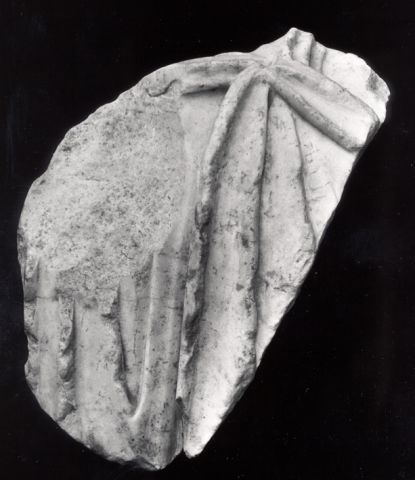
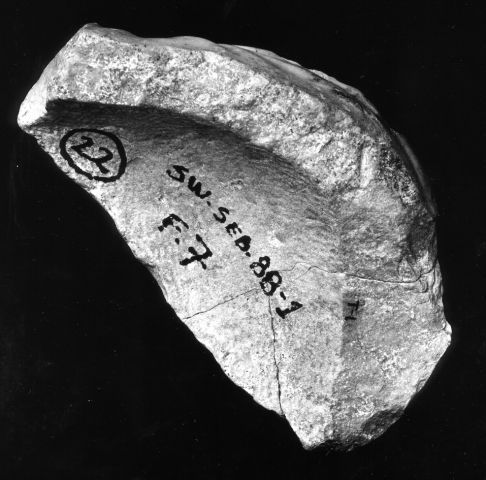
Fragment of portrait bust wearing chlamys. Aphrodisias (Caria). Late fourth to fifth century.
Record details
Photographs
Bibliography
- Smith, R.R.R., S. Dillon, C.H. Hallett, J. Lenaghan, and J. Van Voorhis, Aphrodisias II: Roman Portrait Sculpture at Aphrodisias, Mainz 2006, no. 121
Discussion
DESCRIPTION (Object)
Fragment of life-size bust. H: 29 c, W: 21, D: 11.2 cm. Fine-grained white marble.
The fragment preserves the proper right shoulder and neck line of a life-size bust. The fibula was separately worked and attached by three pin holes (two shallow holes behind a deeper ones). The front surface preserves traces of a high polish. The back has been hollowed out and evenly finished with a claw chisel.
PROVENANCE
Excavated in 1988 to the southwest of the Sebasteion complex.
DESCRIPTION (Subject)
The subject wears a chlamys over a sleeved tunic. The fibula, which fastened the chlamys at the right shoulder, was probably elaborate (attached by three pins) and may have been made of another material.
DATE
The costume is the late antique chlamys and therefore should not date before the late fourth century. The fold patterns and flat linear rendering are similar to a portrait bust from Sebastopolis, LSA-2282.
The marble grain and size are typical of the fourth and fifth centuries at Aphrodisias. The finely worked back is less expected.
Cite: Last Statues of Antiquity, LSA-205 (J. Lenaghan).