
LSA-2118
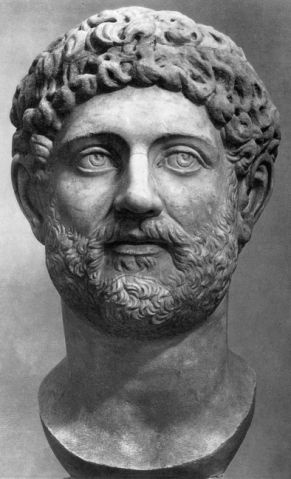
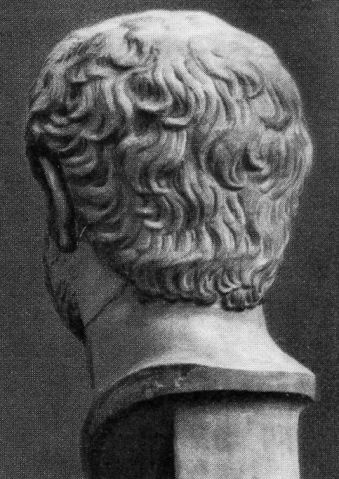
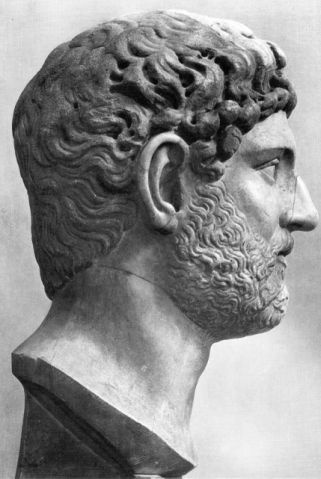
Portrait head of Emperor Hadrian. From Italy. Fourth century?
Record details
Photographs
Bibliography
- Vostchinina, A., Le portrait romain : album et catalogue illustré de toute la collection / Musée de l'Ermitage, Leningrad 1974, 192, no. 77, pls.98-9
Discussion
DESCRIPTION (Object)
Over life-size head set on support. H (total): 63, H (of head): 33 cm. Fine-grained marble.
The neck is a modern restoration. The nose, chin, right ear, and some locks of hair are also restoration.
The hair is carefully rendered on all sides but has drill work only around the face. The beard is carefully engraved. The pupils are U-shaped. The irises are crudely and thickly engraved and do not touch the lower lid.
PROVENANCE
The Russian empress Catherine II purchased the Lyde Browne collection of Wimbleton in 1787. Two catalogues of the Browne's collections, made in 1768 and 1779, show that he acquired his works from collections (for example, Albani Barberini, Giustiniani, Mattei, and Negroni) in Rome. According to Neverov (fn. 97) this head is one of nine objects from the Palazzi Barberini and Verospi and the Villa Mattei.
DESCRIPTION (Subject)
The head is a typologically loose version of the Emperor Hadrian (117-138). The combination of the physiognomy and the general form of hair and beard make the portrait immediately recognizable.
DATE
Eye markings begin to appear in Roman portrait sculpture c. AD 130. The emphatic eye markings on this head are a technique developed in the fourth century AD and are incongruous with the date of the honorand. As many eighteenth century objects on display in Rome, this head may have been refreshed by a contemporary restorer. However, another portrait head of Hadrian (LSA-1559<k) from the area of the Ostia has similarly rendered eyes; a portrait of Antoninus Pius was made for the gallery of herms at Welschbillig at the end of the fourth century; and a statue of Marcus Aurelius (?)(LSA-1133<k) was re-made in the fourth century in Cyrene. These examples make it possible that this head of Hadrian from the Lyde Browne collection was re-worked in late antiquity, possibly in the fourth century.
.
Discussion references
- Neverov, O. 'The Lyde Browne Collection and the History of Ancient Sculpture in the Hermitage Museum', American Journal of Archaeology, vol 88.1, 1984, 33-42, see fn. 97
Cite: Last Statues of Antiquity, LSA-2118 (J. Lenaghan).