
LSA-2223
Base for statue of Constans, emperor. Allegedly from Lepcis Magna (Tripolitania). 337-350
Record details
Photographs
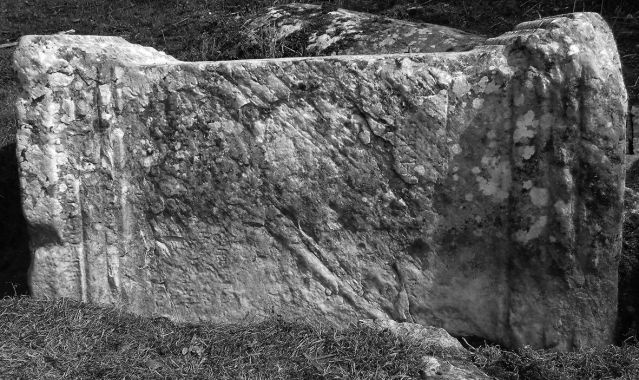
Inscription
Φλ(άουιον) Ἰούλ(ιον) Κωνστάντα Ἀυγοῦστον, τὸν ἑαυτῆς (σ)ωτῆρα, ἡ Λιπ̣θ̣ι̣μ̣ητῶν πόλις. / Τὸ[ν] αὐ[τοκράτωρα---] / ΤO[---] / Φλ(άουιον) Ἰούλ(ιον) [Κωνστάντα ---] / (5) Σεβαστ[ὸ]ν H[---] / Τὸν εἁ(υ)τῆς [---] / ------? /[ ---]ΙΙΛIΚΗ
Inscription translation
To Flavius Iulius Constans, Augustus, her saviour. The city of the Lip… (set this up). To the emperor … Flavius Iulius Constans … emperor … her…
Bibliography
- Reynolds, J. M. & J. B. Ward-Perkins, The Inscriptions of Roman Tripolitania. In collaboration with S. Aurigemma, R. Bartoccini, G. Caputo, R. Goodchild, P. Romanelli, Roma 1952, addenda
- Tantillo, I. and F. Bigi (eds.), Leptis Magna. Una città e le sue iscrizioni in epoca tardoromana, Cassino 2010, 486-7, no. 92, fig. 10.108
Discussion
INSCRIPTION
Partly preserved in seven lines:
Φλ(άουιον) Ἰούλ(ιον) Κωνστάντα Ἀυγοῦστον, τὸν ἑαυτῆς (σ)ωτῆρα, ἡ Λιπ̣θ̣ι̣μ̣ητῶν πόλις. / Τὸ[ν] αὐ[τοκράτωρα---] / ΤO[---] / Φλ(άουιον) Ἰούλ(ιον) [Κωνστάντα ---] / (5) Σεβαστ[ὸ]ν H[---] / Τὸν εἁ(υ)τῆς [---] / ------? /[ ---]ΙΙΛIΚΗ
'To Flavius Iulius Constans, Augustus, her saviour. The city of the Lip… (set this up). To the emperor … Flavius Iulius Constans … emperor … her…'.
Letter height 1.5 – 3.5 cm.
We reproduce the inscription in the reading offered by IRT, save a completion to Τὸν αὐτοκράτορα in line 2.
DESCRIPTION
Monolithic base of proconnesian marble, moulded at top and bottom; H 118.5, W 67 cm. The base is scattered with chips and the surface is worn, particularly the epigraphic field.
The ill state of preservation does not allow for a precise analysis of the mouldings. However, the sequence of mouldings at the top is scarcely testified to in Lepcis Magna, whereas it is widely diffused in Asia Minor and Greece (Tantillo & Bigi 2010 ch. 7.3.12).
PROVENANCE AND CURRENT LOCATION
The inscription was brought to a ‘village in ruins’ at Virginia water (Surrey, England), together with other antique sculptural and epigraphic material; there it is still preserved today. It was traditionally believed to be from Lepcis Magna and was recorded in the addendum of the Inscriptions of Roman Tripolitania (IRT). However, recent analysis of the collection has revealed that beyond material from Lepcis, the collection was provided with antiquities from further, unspecified, locales (Lane 2004, 78). The formal analysis of the base which was made possible by courtesy of Andrew Lane (see above, ‘Description’), and the difficulty to imagine a Greek public dedication set up in Lepcis Magna suggest to assume a different provenance. Because of the ill state of preservation and the impossibility to decipher the inscription (see below, ‘Honorand, Awarder and Date’), however, we decided to include this inscription and to record it in the reading offered by IRT (save our completion in line 2, see above, ‘Inscription’).
HONORAND, AWARDER AND DATE
Constans, the honorand (full name Flavius Iulius Constans, as in our inscription), was Augustus 337-50.
The inscription was set up by the municipal bodies of a city named in line 1 (ἡ Λιπ̣θ̣ι̣μ̣ητῶν πόλις). The authors of IRT believed that the name was a variant of Lepcimagnenses. Unfortunately this name is illegible; it does, as we think, provide strong doubts that this inscription is from Lepcis (see above, ‘Provenance and Current Location’). The position of the city as honorand in our inscription is unparalleled in the epigraphy of Lepcis Magna. Moreover, no other Greek inscription was set up by the cities institution.
Cite: Last Statues of Antiquity, LSA-2223 (Ignazio Tantillo & Francesca Bigi).