
LSA-2239
Base for statue of Galerius, emperor. Cuicul (Numidia). 307
Record details
Photographs
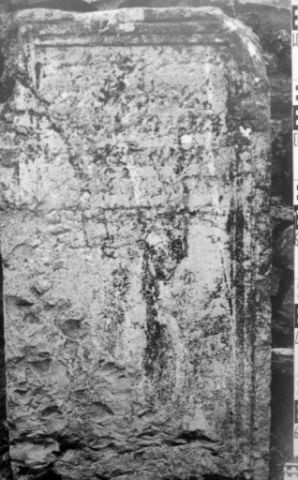
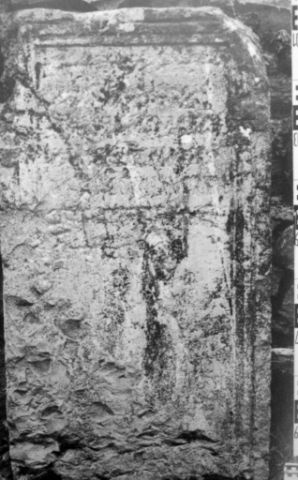
Inscription
[[Imp(eratori) Caesari, C(aio) Galerio / Vale[rio Max]im[i]ano, / [i(nvicto), p(io)], f(elici) Aug(usto), trib(unicia) pot(estate) [XV (or XVI), c]o(n)s(uli) / design[ato V]II, p(atri) p(atriae), [p]roco(n)s(uli)]]; / (5) res p(ublica) Ciuculitanorum, / [[[d]evota num[i]ni maies/[t]atique eius]], / d(ecreto) d(ecurionum) p(ecunia) p(ublica).
Inscription translation
To the emperor Caesar Caius Galerius Valerius Maximianus, unconquered, pious, fortunate Augustus, holding tribunician power fifteen (or sixteen) times, designated consul for the seventh time, father of the fatherland, proconsul. The community (res publica) of the Cuiculitani, devoted to his divine spirit and majesty, [set this up], by decree of the councillors, with public funds.
Bibliography
- Pflaum, H.-G., Inscriptions Latines de l'Algérie. 2. Inscriptions de la confédération cirtéenne, de Cuicul et de la tribu des Suburbures. Vol. 3, Paris 2003, no. 7867
Discussion
INSCRIPTION
In eight lines:
[[Imp(eratori) Caesari, C(aio) Galerio / Vale[rio Max]im[i]ano, / [i(nvicto), p(io)], f(elici) Aug(usto), trib(unicia) pot(estate) [XV (or XVI), c]o(n)s(uli) / design[ato V]II, p(atri) p(atriae), [p]roco(n)s(uli)]]; / (5) res p(ublica) Ciuculitanorum, / [[[d]evota num[i]ni maies/[t]atique eius]], / d(ecreto) d(ecurionum), p(ecunia) p(ublica).
'To the emperor Caesar Caius Galerius Valerius Maximianus, unconquered, pious, fortunate Augustus, holding tribunician power fifteen (or sixteenth) times, designated consul for the seventh time, father of the fatherland, proconsul. The community (res publica) of the Cuiculitani, devoted to his divine spirit and majesty, [set this up], by decree of the councillors, with public funds.'
Letter height : 4 cm
DESCRIPTION (from Pflaum and the published photograph)
Rectangular base, badly damaged: H 102, W 56 cm, Depth unrecorded.
The inscription is framed with a moulding.
PROVENANCE AND CURRENT LOCATION
Found re-used in a wall, 150 metres north of the Capitolium, where it remains.
HONORAND, AWARDER AND DATE
The honorand, Galerius, was Augustus from 306 to 311.
The awarder was the city, as usual for imperial statues in Africa.
Galerius became consul for the seventh time in January 308. As he is 'designated consul for the seventh time', our inscription must have been carved towards the end of 307.
FURTHER DISCUSSION
The erasure of the Galerius' name could be a consequence of Maxentius' rule over Africa in 310-312, as happened to others of his bases in Numidia (see LSA-2261, LSA-2268, LSA-2373, LSA-2374). But in our case, it may have been done by Christians, since other bases in Cuicul, to emperors whom Christians regarded as notorious pagans, were similarly defaced (LSA-2236, LSA-2237, LSA-2238, LSA-2240).
Cite: Last Statues of Antiquity, LSA-2239 (Gabriel de Bruyn).