
LSA-2285
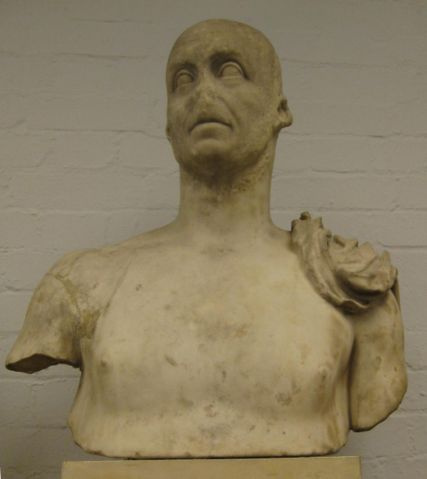
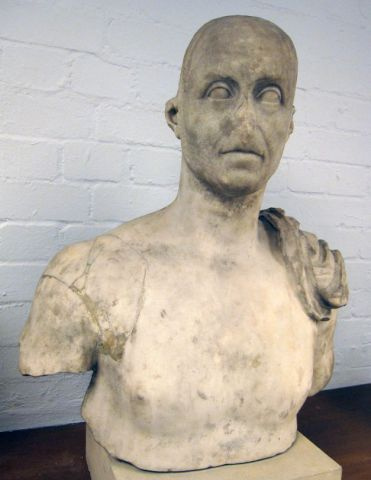
Portrait bust of man with under-chin beard. Unknown provenance. Late third century.
Record details
Photographs
Discussion
DESCRIPTION (Object)
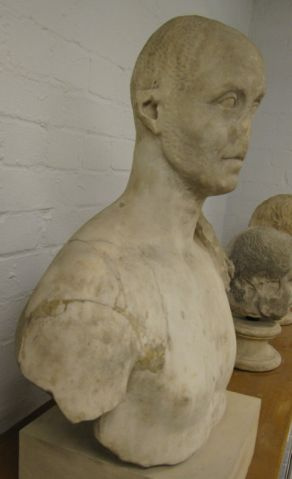
Over life-size bust H: 59.5 cm. White marble.
The bust is mainly preserved. The area of the upper right arm has been restored. There are several cracks and the end of the upper arm is missing.
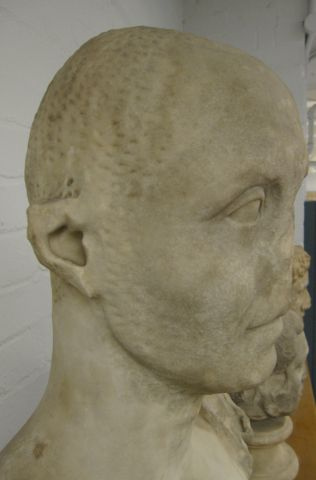
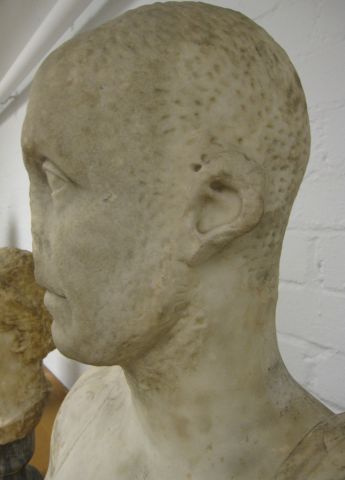
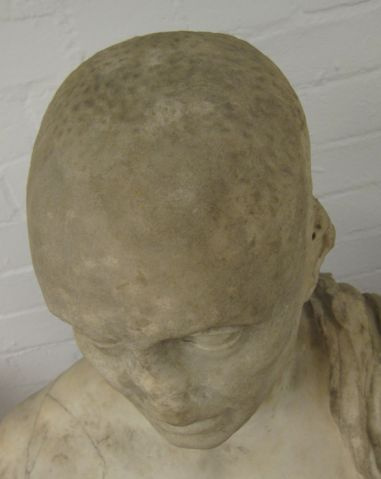
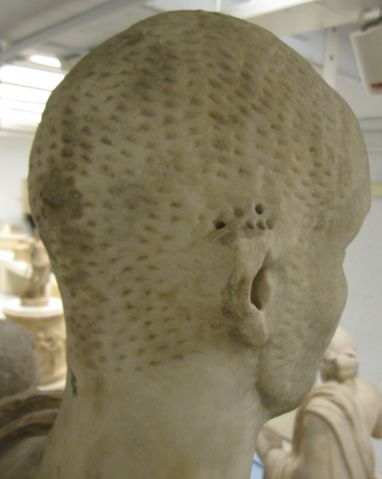
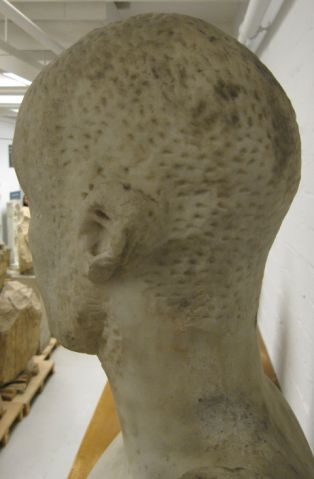
The hair has been rendered with taps of a large flat chisel. The same is true for the beard. The eyeballs are unmarked. The head has been re-cut (see below).
PROVENANCE
The head was purchased from a Frau Marie Hartwig in 1927. Stucco panels from columbaria were purchased by the British Museum from the same woman; they are certainly from Italy.
DESCRIPTION (Subject)
The bust extends to just below the costal arch and includes the upper arms. It is naked with defined nipples and areolae. A cloak is bunched on the left shoulder. The head turns to the right.
The head depicts a mature man with receding short-cropped hair and a short-cropped beard that continues under his chin, down his neck. He has no moustached. He has large eyes with heavy eyelids; deep naso-labial folds; and creases at the corners of his mouth.
The head has been cut down from an earlier portrait. It is generally too small for the bust. The tops of the ears, once covered by hair, are missing. Furthermore behind the left ear is a large mass of marble. Traces of longer hair can be seen in the beard beneath the chin and around the jawline.
DATE
The original bust belongs to the Antonine period. Both the large format and the traces of long hair and long beard suggest this. The second use of the portrait should belong no earlier than the middle of the third century and possibly as late as the early fourth century.
The balding man with short cropped beard and hair on a recut bust recall a portrait from the Via Cassia in Rome, LSA-2135, the date of which is equally difficult to pinpoint.
Cite: Last Statues of Antiquity, LSA-2285 (J. Lenaghan).