
LSA-239
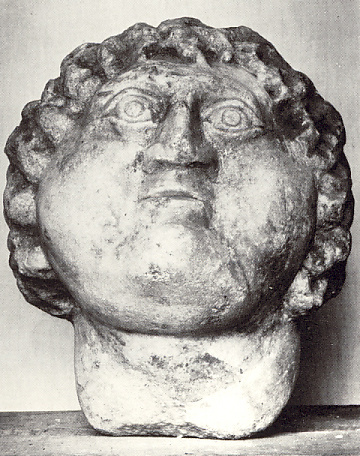
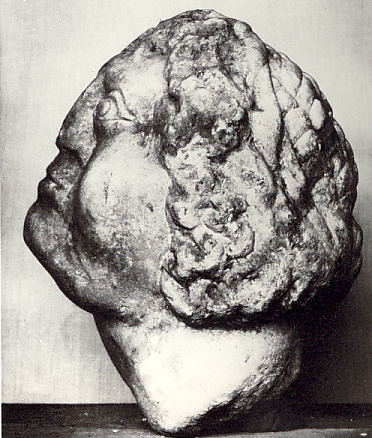
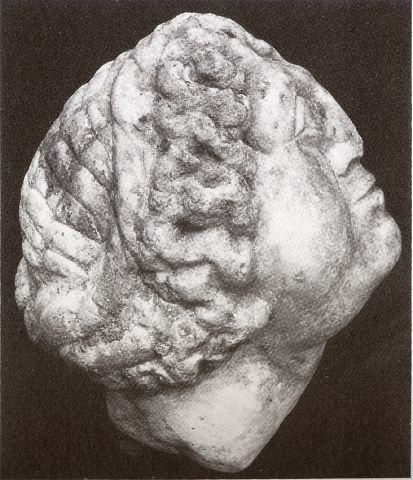
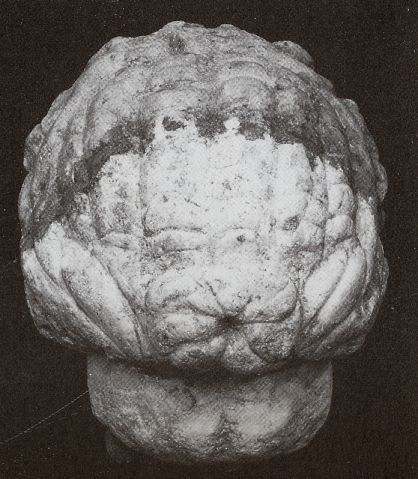
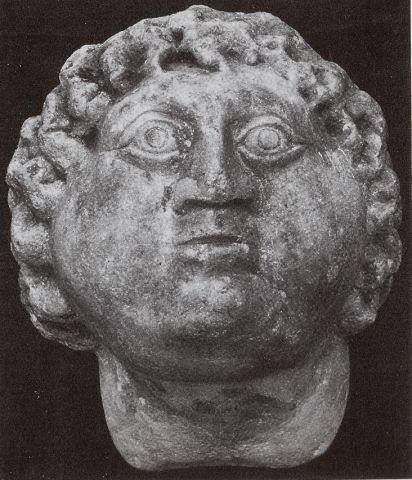
Female head, looking up. From Asia Minor. Fifth to sixth century.
Record details
Photographs
Bibliography
- Fıratlı, N., La sculpture byzantine figurée au Musée archéologique d'Istanbul, Paris 1990, 16, no. 26, pl. 12
- Inan, J. & E. Alföldi-Rosenbaum, Römische und frühbyzantinische Porträ̈tplastik aus der Türkei : neue Funde, Mainz 1979, 300, no. 296, pl. 270.5-6
- Schade, K., Frauen in der Spätantike--Status und Repräsentation, Mainz 2003, 225-6, no. I 65
Discussion
DESCRIPTION (Object)
Life-size head. H: 27. 9 cm. H (chin to crown): 22 cm. White large-grained marble.
The head is broken through the neck. The nose is chipped, and the surface is worn. The genre of the original monument is unclear since the obtuse angle (almost 180 degrees) made by the chin and the neck is inconceivable for a standing statue. The inner eyes are marked by an engraved circle denoting the iris.
PROVENANCE
Purchased by the Istanbul Archaeological Museum in 1963.
DESCRIPTION (Subject)
The head depicts an unusual physiognomy with a female hairstyle. The cheeks and chin are rounded. The mouth, nose, and eyes are tightly spaced in comparison with the swollen expanse of the cheeks and chin, and they are set under a low brow. The skin is loose under the jawline; the mouth is tightly pursed and small; and the eyeballs bulge under engraved upper eyelids. The hair, framing the brow, is curly and conceals the ears. Above this is a band of hair, and at the back of the head are braids in a 'melonfrisur' style.
The most striking detail is the angle at which the head is set on the neck. If the neck is set vertically, the head looks straight up which is not possible for a statue. Most likely the head was set on a shield or an architectural element from which it protruded, horizontal to the ground. Possibly the distorted lower part of the head was more withdrawn from the viewer than the upper part.
DATE
The date has created difficulties for scholars because of the unconventional technical work and because of the hairstyle which finds no exact parallels. Schade considers the hairstyle to belong to the sixth century and compares it to a head now in New York (LSA-465). The two works however are significantly different, in general aspect, in the rendering of the eyes, and even in the arrangement of the hair. Fıratlı places it no earlier than the sixth century and compares it to a male head LSA-412. Inan and Rosenbaum conclude that it cannot be dated.
COMMENT
The head cannot have been set on a standing statue. The angle of the head and neck make this impossible. Thus, despite Fıratlı's security that size and hairstyle indicate a portrait, it may not depict a contemporary woman.
Cite: Last Statues of Antiquity, LSA-239 (J. Lenaghan).