
LSA-247
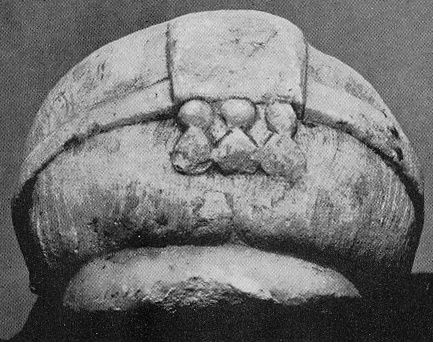
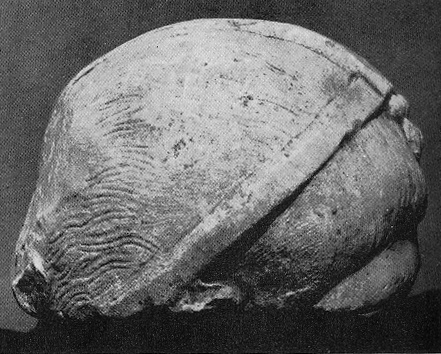
Upper part of diademed head of imperial family member (?). Side (Pamphylia). Later fourth to fifth century.
Record details
Photographs
Bibliography
- Inan, J., Antalya bölgesi Roma devri portreleri. Römische Porträts aus dem Gebiet von Antalya , Ankara 1965, no. 36, pl 18.1-2
- Inan, J. and E. Rosenbaum, Roman and Early Byzantine Portrait Sculpture in Asia Minor, Oxford 1966, 90, no. 67, pl. 42.3-4
Discussion
DESCRIPTION (Object)
Fragment of over (?) life-size portrait head. H: 11.3, W: 16.4 cm. Fine-grained white marble.
The head is broken horizontally through the forehead and above the ears.
The surface of the face is finely polished. The hair is carefully engraved with fine claw chisels.
PROVENANCE
Precise findspot unknown.
DESCRIPTION (Subject)
The fragmentary head would be over life-size for a child and life-size for an adult. It wears an unusual headdress is made of a flat fillet which passes above the ears and a broad band that runs from front to back. The broad band ends in three pendants which consist of a round jewel attached to a tear-shaped one. The gender of the honorand is difficult to determine. The hair between the brow and the fillet is straight and combed forward; it has a small central parting. The hair behind the fillet is long and combed backward and downwards.
DATE
Inan compared the head to portraits of the Theodosian period (see LSA-337) because of the fine polish of the skin and the precise engraving of the hair. The longer hair on the side of the head is particularly comparable to another head from Side, LSA-252. Without comparanda for the headdress, this technical argument is the best evidence for the date.
HONORAND
To this author there seem two possibilities which have not been discussed. 1) The honorand may have been a female member of the imperial house. This would be the only explanation for the two different directions of the hair and the headdress. 2) The honorand may have been related to LSA-252, either a child or wife, and may simply be in a ceremonial religious dress.
Cite: Last Statues of Antiquity, LSA-247 (J. Lenaghan).