
LSA-2525
Base for statue of Constantius II, emperor. Sagalassus (Pisidia). 354-361
Record details
Photographs
Inscription
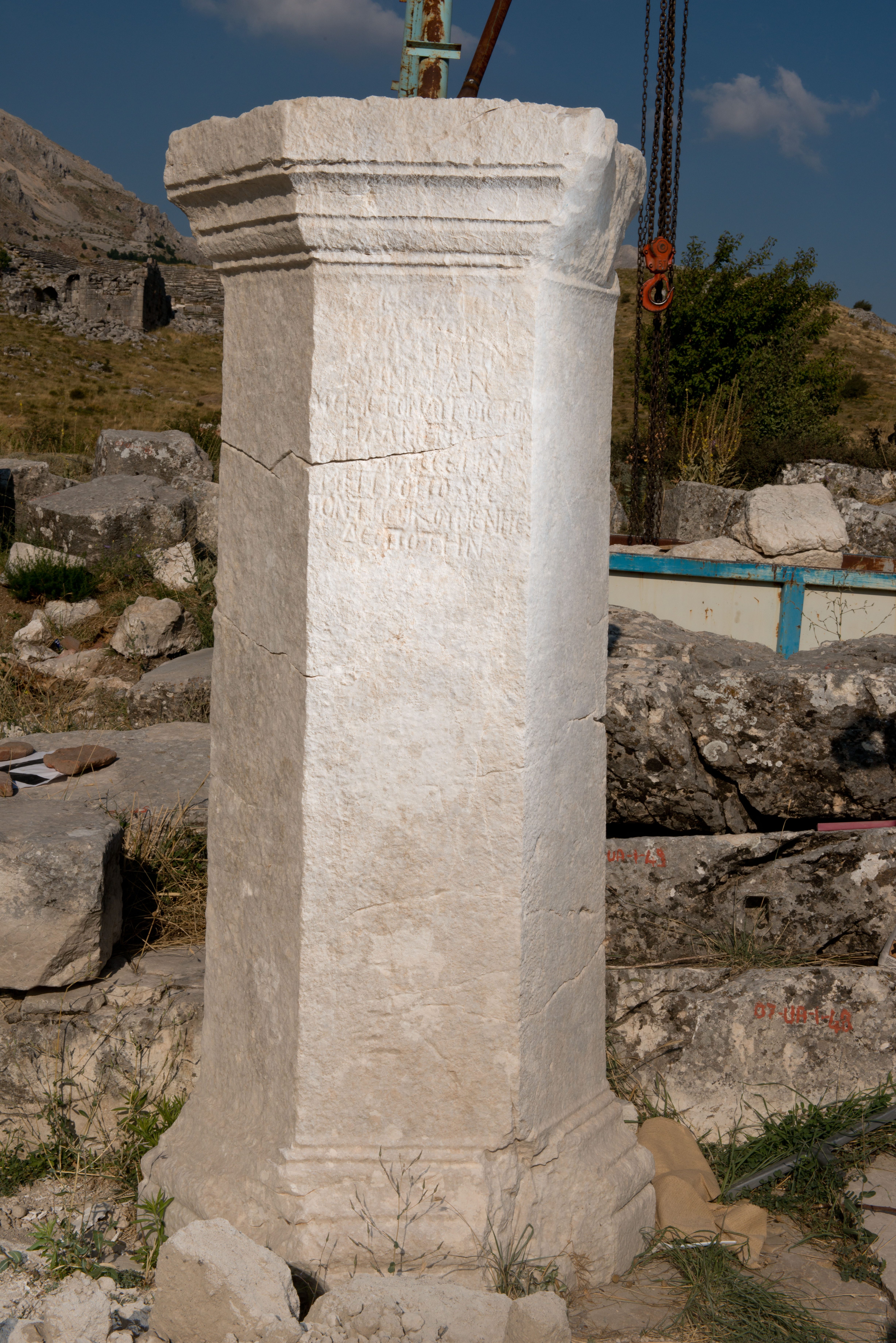
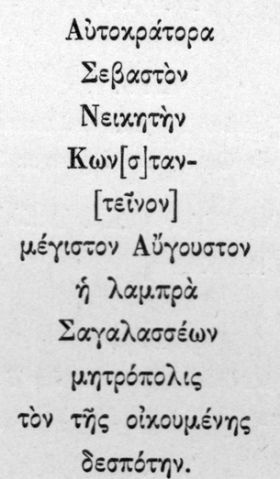
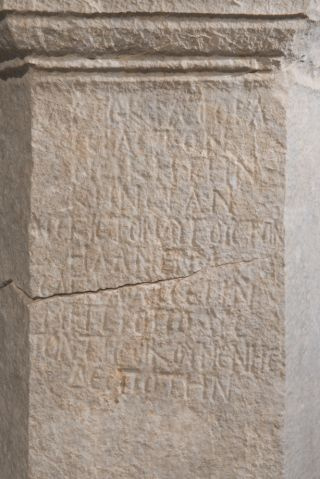
[Αὐτοκρ]ά̣τ̣ο̣ρ̣α̣ / [Σεβ]α̣σ̣τ̣ὸ̣ν̣ / [Νεικ]ητὴν / Κωνσταν[τίον] /(5) μ̣ε̣γ̣ι̣στον ̣̣ Αὔγουστ̣ον ̣̣ / ἡ λ̣α̣μ̣π̣ρ̣̣ὰ̣ / [Σαγαλασς]έ ̣ω̣ν̣ / [μ]ητρόπ[ολις] / τὸ[ν τῆς οἰκουμένης] /(10) δεσπότην.
Inscription translation
To the emperor Augustus, victor, Constantius, most powerful Augustus. The shining Metropolis of the Sagalassians [set this up to] the ruler of the civilised world.
Bibliography
- Devijver, H. & M. Waelkens, Roman Inscriptions from the Upper Agora at Sagalassos, Sagalassos III. Report on the Fourth Excavation Campaign of 1993, ed. By M. Waelkens and J. Poblome, 115-25, Leuven 1995, p. 117 no. 3
- L'Année épigraphique, , 1995, 1545
- Lanckoronski, K., Städte Pamphyliens und Pisidiens. II. Band. Pisidien. Unter Mitwirkung von G. Niemann und E. Petersen, Wien 1892, p. 229 no. 213 (Petersen)
Discussion
INSCRIPTION
In ten lines:
[Αὐτοκρ]ά̣τ̣ο̣ρ̣α̣ / [Σεβ]α̣σ̣τ̣ὸ̣ν̣ / [Νεικ]ητὴν / Κωνσταν[τίον] /(5) μ̣ε̣γ̣ι̣στον ̣̣ Αὔγουστ̣ον ̣̣ / ἡ λ̣α̣μ̣π̣ρ̣̣ὰ̣ / [Σαγαλασς]έ ̣ω̣ν̣ / [μ]ητρόπ[ολις] / τὸ[ν τῆς οἰκουμένης] /(10) δεσπότην.
'To the emperor Augustus, victor, Constantius, most powerful Augustus. The shining metropolis of the Sagalassians [honours] the ruler of the civilised world.'
Letter height 3 - 3.5 cm.
We reproduce the text here with the completions proposed by Devijver & Waelkens 1995. Petersen, the first editor (in Lanckoronski 1892), completed the imperial name in line 4 to Κω[ν]σταν/[τεῖνον] (see below, 'Honorand, Awarder and Date').
DESCRIPTION (from Devijver & Waelkens 1995, and the published photos)
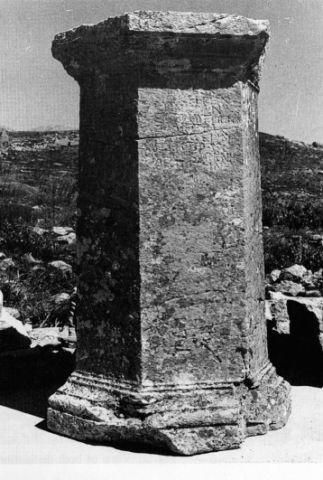
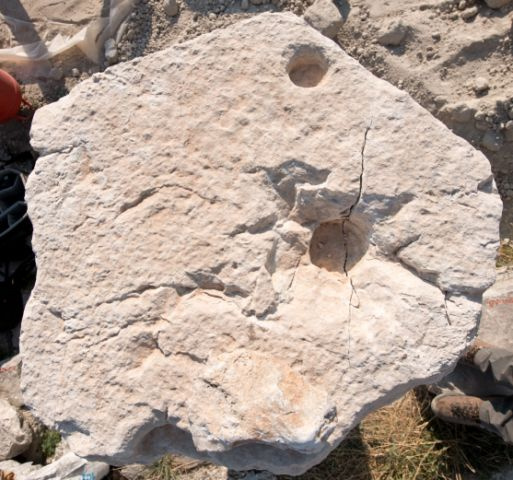
Hexagonal limestone base with mouldings at top and bottom: H 180; W (maximum at top) 84.5; (each side) 36 cm. All sides are plain; on the top face there are the traces of the fixings for a bronze statue. The surface is weathered, rendering parts of the inscription difficult to read.
PROVENANCE AND CURRENT LOCATION
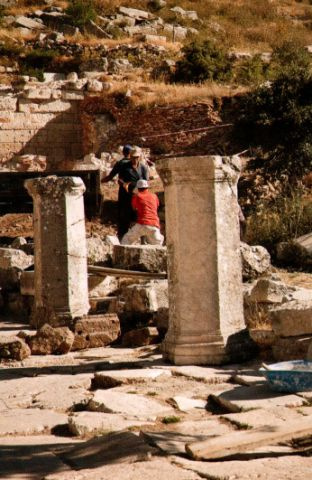
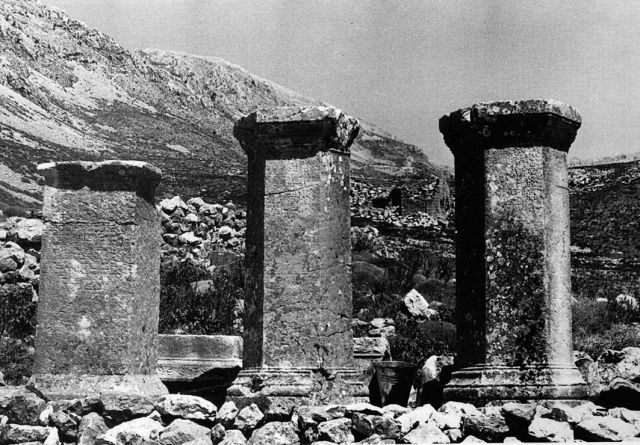
The inscription was found at the eastern edge of the upper agora in Sagalassus; this was possibly its original position. In 1993, an almost identical base with an identical inscription (LSA-2524) was discovered lying adjacent to it. Today the two inscriptions stand next to each other on the Upper Agora..
HONORAND, AWARDER, AND DATE
Constantius II, the honorand, was Augustus 337-61. The epithet τὸν τῆς οἰκουμένης δεσπότην ('the ruler of the civilized world', lines 9-10) indicates a date after the defeat of Magnentius in 353, and the execution of Constantius’ co-emperor Constantius Gallus in 354, when Constantius assumed efective rule over the whole empire (Nollé 1993, 326; and see, for two other examples LSA-264 and LSA-2524).
The inscription was set up by the city of Sagalassus, styling itslef 'metropolis' (line 8), and thereby claiming the most elevated rank among the cities of the province of Pisidia.
FURTHER DISCUSSION
The presence side by side of two identical bases, with identical inscriptions, both to Constantius II (and, for all we know, once with identical statues on top of them), shows very clearly one of the major differences between the statue habit of the ancients, and that of today. In Roman times, it was entirely acceptable, indeed desirable, to repeat an identical gesture of loyalty to the emperor.
Discussion references
- Nollé, J. , Side im Altertum : Geschichte und Zeugnisse (Inschriften griechischer Städte aus Kleinasien ; Band 43), Bonn 1993
Cite: Last Statues of Antiquity, LSA-2525 (Ulrich Gehn).