
LSA-2526
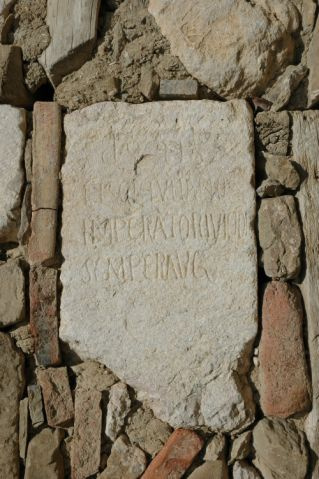
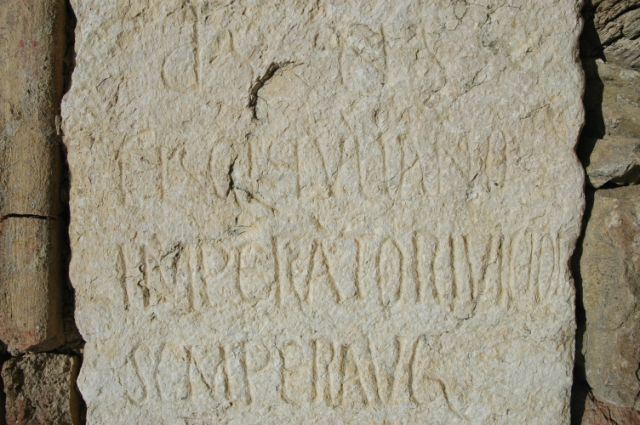
Base for statue of Julian, emperor. Sagalassus (Pisidia). 361-363.
Record details
Photographs
Inscription
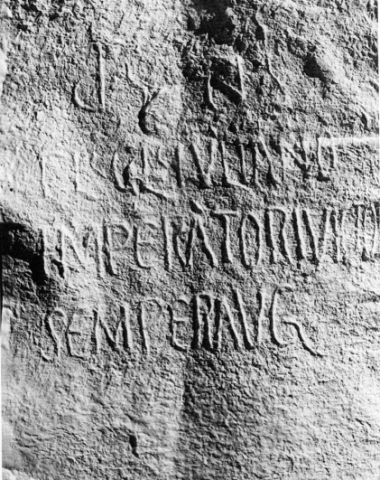
D(omino) n(ostro) / Fl(avio) Cl(audio) Iuliano / Imperator(i) victo(ri) e[t] / semper Aug(usto)
Inscription translation
To our lord Flavius Claudius Iulianus, emperor, victor and eternal Augustus.
Bibliography
- Devijver, H. & M. Waelkens, Roman Inscriptions from the Upper Agora at Sagalassos, Sagalassos III. Report on the Fourth Excavation Campaign of 1993, ed. By M. Waelkens and J. Poblome, 115-25, Leuven 1995, pp. 119-20 no. 8
- L'Année épigraphique, , 1995, 1550
Discussion
INSCRIPTION
In four lines:
D(omino) n(ostro) / Fl(avio) Cl(audio) Iuliano, / imperator(i), victo(ri) e[t] / semper Aug(usto)
'To our lord Flavius Claudius Iulianus, emperor, victor and eternal Augustus.'
Letter height 5 cm.
DESCRIPTION (from Devijver & Walekens 1995)
Small rectangular base of white limestone, broken at the top: H 44, W 32 cm.
PROVENANCE AND CURRENT LOCATION
The inscription was first recorded by Devijver & Walekens 1995, built into the exterior wall of the house of Fahrettin Ok, Çanakkale Sokağı 40, in the Kıreç Mahallesi in Ağlasun, where it remains. It certainly comes from Sagalassus, and was perhaps originally set up on the Upper Agora, where a number of late antique imperial monuments were erected.
HONORAND, AWARDER AND DATE
Julian, the honorand (full name Flavius Claudius Iulianus, as in our inscription) was Augustus 360-3, but only recognised as such in the East from 361.
No awarder is named; but this was almost certainly the city itself.
Cite: Last Statues of Antiquity, LSA-2526 (Ulrich Gehn).