
LSA-2561
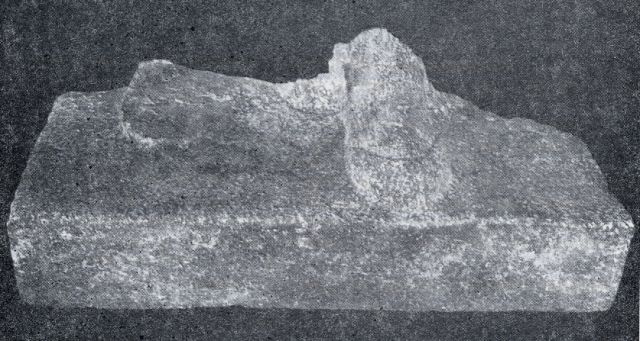
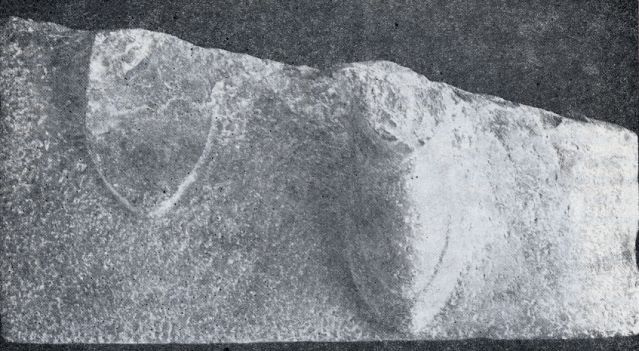
Plinth of porphyry statue, preserving feet in campagi. Alexandria (Aegyptus). Late third to earlier fourth century.
Record details
Photographs
Bibliography
- Kiss, Z. 'Une sculpture en porphyre d’Alexandrie' , Études et Travaux 13, Warsaw 1983, 185-191, figs.1-2
- Tkaczow, B., The topography of ancient Alexandria (An archaeological map), Warsaw 1993, 287-8, no. 274, with fig., map A.D.
Discussion
DESCRIPTION (object)
Front part of a rectangular plinth with two feet on it, the back is broken.
Of the right foot only the outline has remained, the left foot is preserved unto the ancle, the end of the heel seems to be missing. The foot seems slightly unfinished and its surface is rough and not polished, as is the surface of the base. Base: 55 x 30 x 9 cm (Kiss); 80 x 30 x 15/20cm (Tkazow) l. of left foot (without end of heel?): 19 ?cm
PROVENANCE
Found 20.6.1973 at a rescue excavation caused by the enlargement of a school at Horreya Street outside of the north-west border of the Polish excavation licence at Kom el Dikka , which is slightly south of road L 1(Via Canopica) and between R 4 and R 5 (Tkaczow 1993, 287 no. 274, map A. D), not far from the find-spot of LSA-1007.
The fragment is now in a store room of the Egyptian Antiquities administration for the Polish Kom el-Dikka excavations.
DESCRIPTION (subject) AND DATE
The left foot is oriented to the front; the right foot is drawn back its tip turning slightly outward. They indicate a contraposto stance with the weight on the left leg. On the left foot a campagus can be identified. Campagi are seen for the first time in tetrarchic monuments ( f.e. the tetrarchs in the group of Venice (LSA-4, LSA-439), they form a terminus post quem.
Z. Kiss calculated from the length of the foot, that the whole statue measured ca.1,50 m., Tkaczow mentions a life-size measure. Kiss proposed that the base belongs to the under life-sized statue of an emperor wearing a chlamys in Berlin (LSA-1007 ), which was found in 1909 in the grounds of the then German consulate, which is roughly the region of the rescue excavation of 1973. The difference between the polished surface of the chlamydatus and the slightly rough and probably unfinished surface of the foot may indicate, that the base belongs to still another porphyry statue once erected in the region.
Cite: Last Statues of Antiquity, LSA-2561 (Marianne Bergmann).