
LSA-258
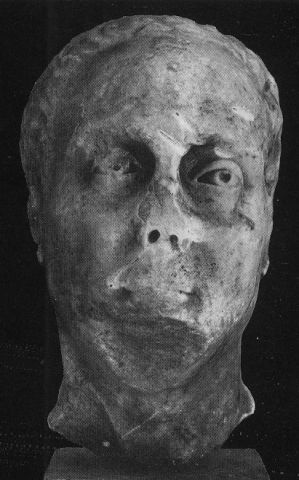
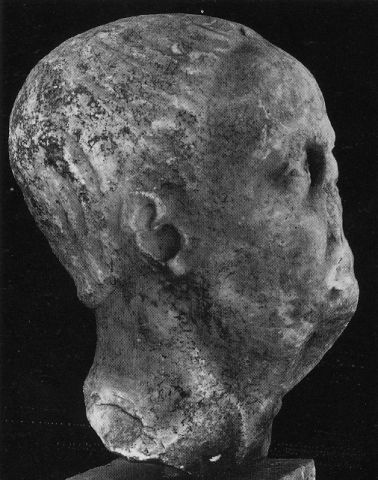
Portrait head of clean-shaven man with short hair (re-cut). Perge (Pamphylia). Fourth century.
Record details
Photographs
Bibliography
- Inan, J. & E. Alföldi-Rosenbaum, Römische und frühbyzantinische Porträ̈tplastik aus der Türkei : neue Funde, Mainz 1979, 257, no. 236, pl. 174.1-2
Discussion
DESCRIPTION (Object)
Under life-size head. H: 24. 8, W: 20.8 cm. H (chin to crown): 14.6 cm. Fine-grained white marble.
The head is broken around the base of the neck. The left side and the back left side of the head are missing. The rims of the ears, nose, and chin are broken. The eyebrows, right eye, and lips are chipped.
The hair has been crudely worked with a broad flat chisel. It ends in an abrupt but regular arch high over the brow. This workmanship suggests that this was re-cut from an earlier portrait which had more voluminous hair that fell lower on the brow. The irises are engraved semi-circles made with a flat chisel. The pupils are drilled out in large, rounded, heart-shapes. A drill channel over the upper lid makes the eyes seem more deeply set and gives them more emphasis.
PROVENANCE
Found in a buttress wall on the north side of the Theatre
DESCRIPTION (Subject)
The small head depicts a clean-shaven older man who looks down and to his right. The sterno-cleido mastoids are defined and skin beneath the chin sags. The face itself is a long oval with loose cheeks. The brow is tall, rounded, and bald. The hair is short and combed forward in straight ridges which are given almost no representational detail. Only over the brow are a few C-shaped locks discernable
DATE
The pronounced and large heart-shaped pupils are a technical detail that does not date before the third century. The short, straight hairstyle and lack of beard is a fashion which does not appear after the third century until the time of Constantine. Thus Inan and Rosenbaum have concluded that the head is a portrait of a Constantinian man. They compare the rendering of the eyes and the hairstyle to a head from neighbouring Perge, LSA-252.
COMMENT
The head probably came from a bust. It is small, was originally made in one piece with its support, and has an emphatic turn. Moreover, the bare skin around the base of the neck would best suit a loose fitting garment and/or some nudity, and more busts than statues show men wearing only a himation or as bare-chested.
Cite: Last Statues of Antiquity, LSA-258 (J. Lenaghan).