
LSA-263
Lost base for statue of empress Helena, mother of Constantine I. Side (Pamphylia). 324-328
Record details
Photographs
Inscription
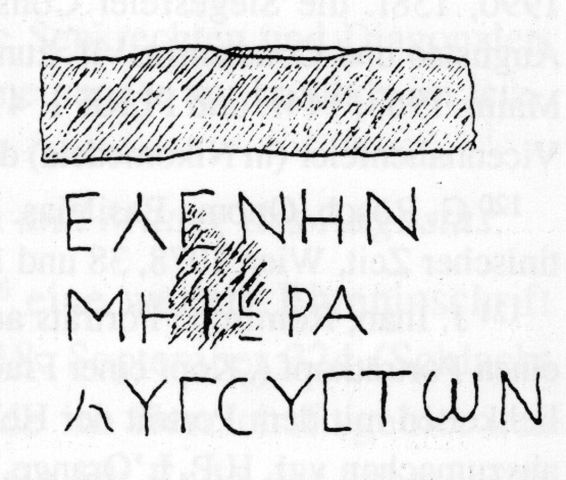
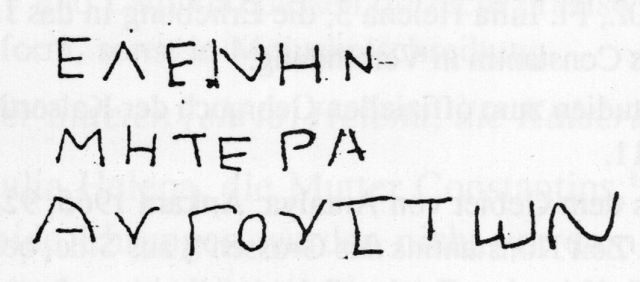
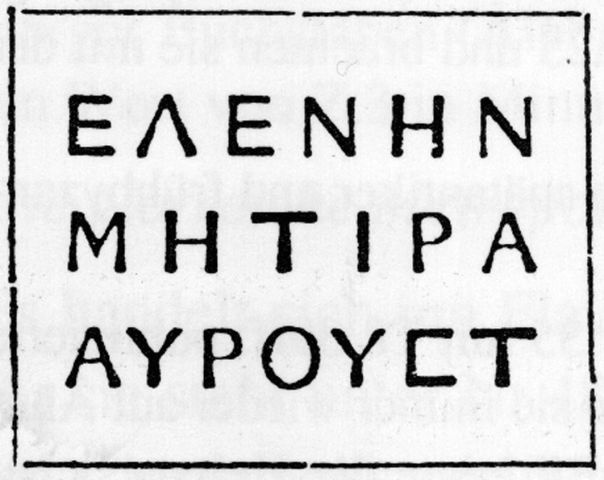
[[....]] / Ἑλένην, / μητέρα / Αὐγούστων.
Inscription translation
Helena, the mother of the Augusti.
Bibliography
- Corpus Inscriptionum Graecarum; , 4349
- Nollé, J. , Side im Altertum : Geschichte und Zeugnisse (Inschriften griechischer Städte aus Kleinasien ; Band 43), Bonn 1993, vol. 43, no. 48
Discussion
INSCRIPTION
In three recorded lines:
[[....]] / ῾Ελένην, / μητ ̣̣έ ̣̣ρα /Αὐγο ̣̣ύστων.
'[To] Helena, the mother of the Augusti.'
Letter height 6 cm.
DESCRIPTION
White marble base: H 145, W 53, D 54 cm. The inscription was carved over the erasure of an earlier one. Copies of the inscription, after drawings by the architect C. R. Cockerell (made in the early 19th century) are the only known images.
PROVENANCE AND CURRENT LOCATION (from Nollé 1993)
The base was found in the southern corner of the theatre. It had been built into a vault, probably during restoration work in the mid 5th century, and had fallen when the ceiling collapsed (Nollé 1993, 324). Nollé 1993, 321 argues that it was set up on the great colonnaded street, along with tother 4th century dedications to emperors (LSA-261, LSA-262, LSA-264, LSA-265, LSA-266, LSA-276).
The inscription is today lost.
HONORAND AND DATE
The honorand, Flavia Iulia Helena, was the wife of Constantius I, and mother of Constantine I (PLRE I, 410-11, Helena 3).
The terminus post quem for the erection of this statue is Constantine’s victory over Licinius on 18 September 324, since Side lay in Licinius’ territory. The terminus ante quem is Helena’s death in 328/9 (Nollé 1993, 322-3 with n. 118). Helena assumed the title of Augusta in 326, and its absence here perhaps lowers the terminus ante quem to that year (but see below, 'Further Discussion', and LSA-262).
FURTHER DISCUSSION
The plural 'Αὐγούστων, of the Augusti' can not be taken literally, since Constantine I was Helena's only child and reserved the title of Augustus for himself until his death. The inscription nonetheless subsumes Constantine's sons, all Caesars at the time, thereby styling Helena the mother of the whole dynasty (Nollé 1993, 325).
Helena was honoured with two further statues in Side (LSA-262, LSA-2098). As Nollé 1993, 323 points out, this could be an indication that she visited the city on her journey to Jerusalem in 326/7 (but see above, 'Honorand and Date', for an indication of an earlier date). Helena is known to have demonstrated care for her subjects on that journey, in particular in the regions once under Licinius’ rule. Nollè thinks it is possible that the dedication to Ἀνατροφὴ ᾿Αυγ(ούστα) (LSA-276) is likewise connected to Helena's presence in Side (Nollé 1993, 323).
Discussion references
- Jones, A. H. M. et al., The Prosopography of the Later Roman Empire. Vol. I 260-395, Cambridge et al. 1971 (1975)
Cite: Last Statues of Antiquity, LSA-263 (Ulrich Gehn).