
LSA-2661
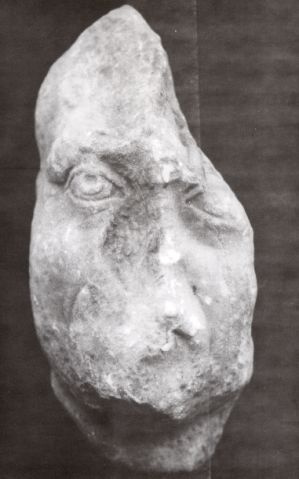
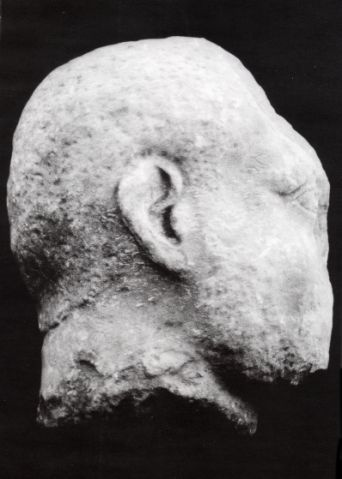
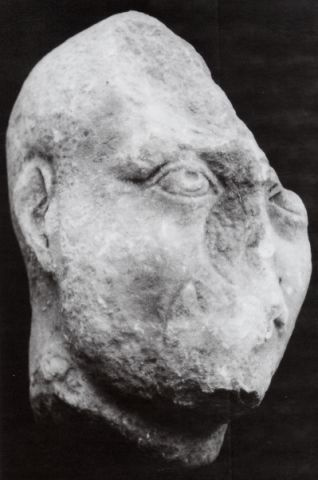
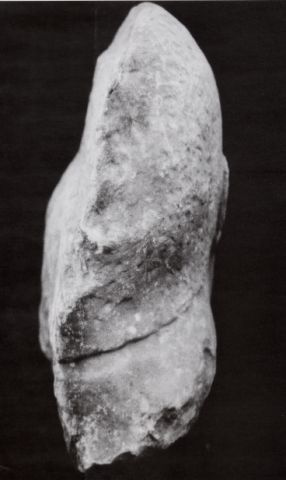
Portrait of man with short-cropped hair and beard. Patara (Lycia). Later third century.
Record details
Photographs
Bibliography
- Işkan, H. 'Ein römisches Porträtfragment aus Patara’, Essays in Honour of Cevdet Bayburtluoğlu, Istanbul 2001, 132-8 (Tetrarchic)
Discussion
DESCRIPTION (Object)
Over (?) life-size head. White fine-grained marble.
The head has broken around the base of the neck. It is missing most of the proper left side of the head, though the eye and cheek are partially preserved. The nose is also missing.
The head has been re-cut from an earlier portrait. The original hair has been taken down and only slashes of the chisel now denote hair. The extant right now almost embedded in the head.
The hair of the head and beard are indicated by marks of a pointed chisel. The pupils and inner canthi are have been drilled out. The line of the iris is also engraved and broad. There are small lines above and below the eyes.
PROVENANCE
In the vicinity of the Baths of Vespasian at Patara.
DESCRIPTION (Subject)
The head shows a mature man with a short beard and short-cropped hair. The hair is indicated on a raised cap-like surface. The eyes are large and have wrinkles at the outer corners and above and below. The naso-labial folds were deep. The head seems to have turned to its right.
DATE
The fashion style of hair and beard place this head between 260 and 315. In this case, the preservation makes it difficult to narrow this range. H. Işkan believes that it is closest to Tetrarchic period portraits. There are numerous examples of such re-cut portrait heads from all over the Empire: for example, from the West, LSA-310, LSA-852; from Syria LSA-254; and from Asia MinorLSA-244 , LSA-250, LSA-309, LSA-312, LSA-387 and LSA-643.
Cite: Last Statues of Antiquity, LSA-2661 (J. Lenaghan).