
LSA-269
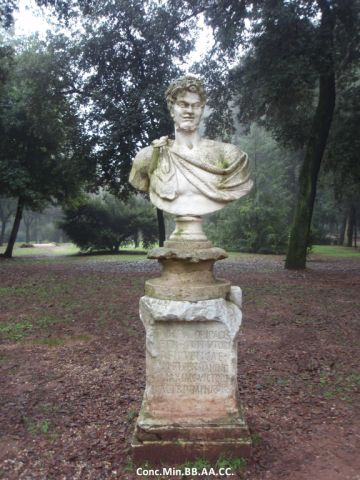
Base for statue of Constantine I, emperor. Rome. 324-337
Record details
Photographs
Inscription
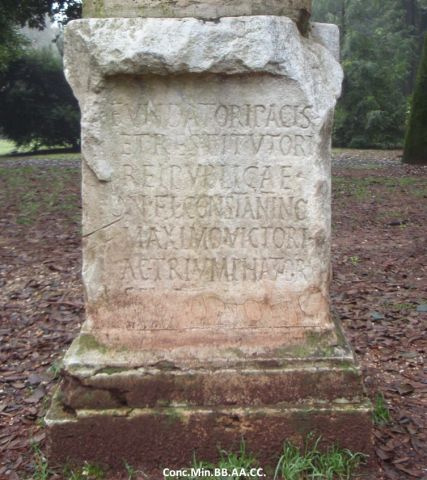
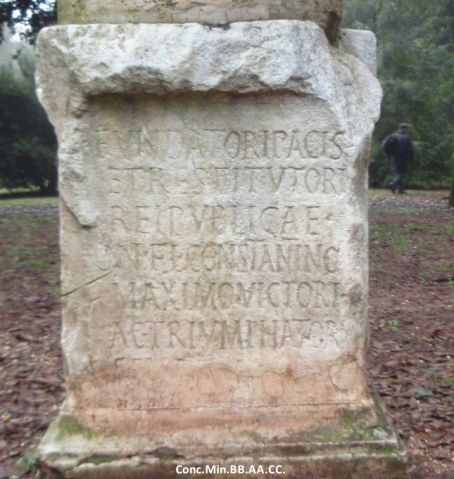
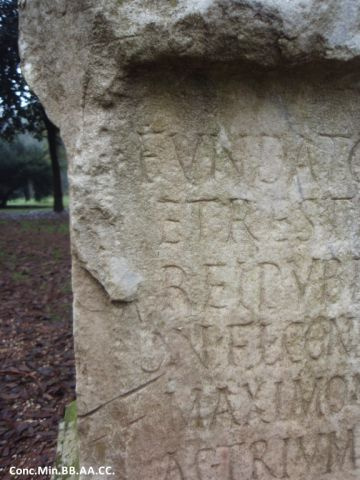
Fundatori Pacis / et restitutori / Rei Publicae, / D(omino) N(ostro) Fl(avio) Constantino / maximo, victori / ac triumphatori, / ṣẹṃper Aug(usto).
Inscription translation
To the founder of peace and restorer of the commonwealth (res publica), our lord Flavius Constantinus the greatest, victorious and triumphant, forever Augustus.
Bibliography
- Corpus Inscriptionum Latinarum; , VI, 1146 (+p.4329)
Discussion
INSCRIPTION:
In seven lines, in epigraphic field measuring 53 x 54 cm. Letters measure 4.5-5 cm.
Fundatori Pacis / et restitutori / Rei Publicae, / D(omino) N(ostro) Fl(avio) Constantino / maximo, victori / ac triumphatori, / ṣẹṃper Aug(usto).
'For the founder of peace and restorer of the republic, our lord Flavius Constantinus the greatest, victorious and triumphant, forever Augustus.'
DESCRIPTION (based on personal inspection):
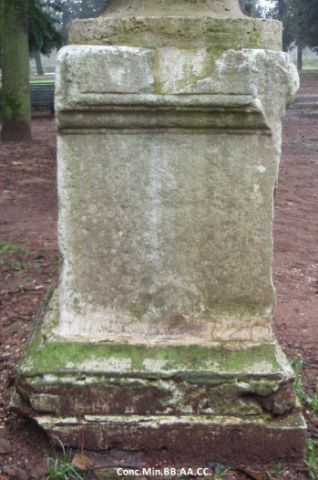
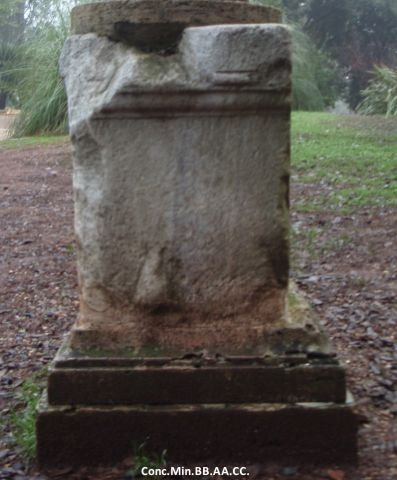
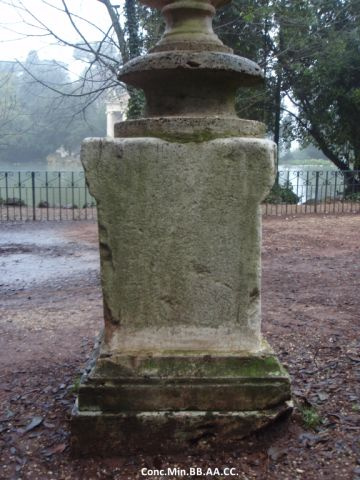
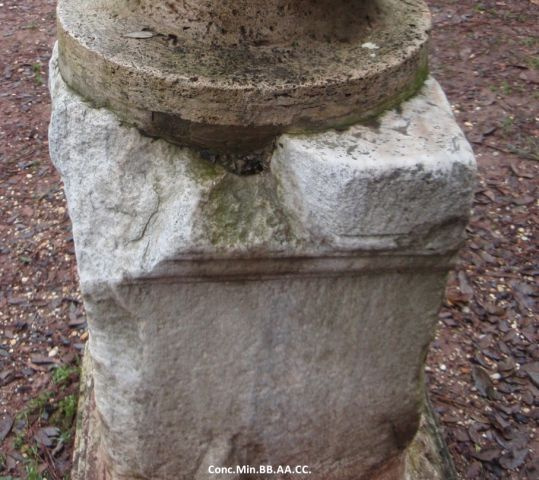
Marble base, broken at the bottom and placed on top of a pedestal. The last line of the inscription is partly covered with mortar and now barely legible. The moulded frame is damaged on sides and top. The back of the base is only roughly worked. The epigraphic field is rough, indicating erasure of previous inscription. This is confirmed by the presence of an urceus and patera on sides. In re-use, the base was turned upside down, as shown by position of decoration on the sides. A post-renaissance bust now stands on the base, but a dowel hole, perhaps for a bronze statue, can still be seen on the top, towards the front-right corner.
PROVENANCE AND LOCATION:
The base was discovered in 1715, in the monastery of S. Clemente, on via di S. Giovanni in Laterano, on the Caelian hill. The same area was the findspot of a series of inscriptions set up by different officials related to the Roman mint, including CIL VI, 42, 43, 44, 239, 298, and 791 (Lanciani 1998, 163; 2000, 17). These inscriptions might support the identification of the large building underneath the basilica as the Roman Moneta (Coarelli 2008, 218-9), and this would provide a suitable context for Constantine's statue. This identification remains controversial however (see also Guidobaldi 1978, 7).
HONORAND AND AWARDER:
Constantine is identified as the sole emperor, a position he reached after his victory over Licinius. The identity of the awarder is not recorded, a practice that is common in Roman dedications to emperors.
DATE:
The base is datable to the period between 324, when Constantine defeated Licinius and became sole emperor (hence the reference to his accomplishments and position: 'Fundatori Pacis et restitutori Rei Publicae (...) ṣẹṃper Aug(usto)'), and 337, when he died. The most likely date would be the closing of his Vicennalia celebrations in 326, when he was in Rome for the last time.
Discussion references
- Coarelli, F., Roma (Guide Archeologiche Laterza), Roma 2008, 218-219
- Guidobaldi, F., Il complesso archeologico di San Clemente, Rome 1978, 7
- Lanciani, R., Storia degli scavi di Roma e notizie intorno le collezioni romane di antichità, vol. 3 (1550-1565), Rome 1998, 163
- Lanciani, R., Storia degli scavi di Roma e notizie intorno le collezioni romane di antichità, vol. 6 (1700-1878), Rome 2000, 17
Cite: Last Statues of Antiquity, LSA-269 (Carlos Machado).