
LSA-2874
Base for statue of emperor, name erased (Severus, Licinius, or Maximinus Daia). Seleucia ad Calycadnum (Isauria). 306-313
Record details
Photographs
Inscription
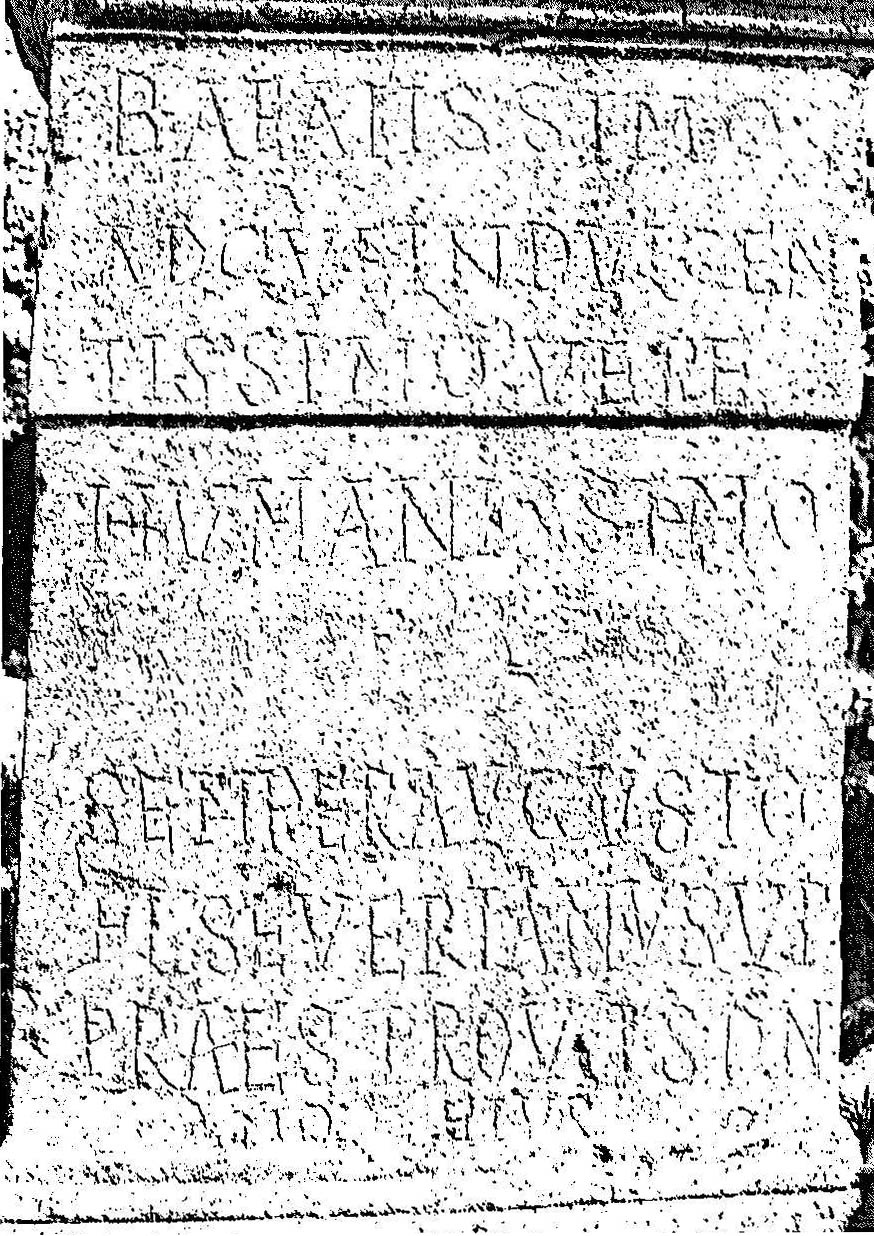
Beatissimo / adque (sic) indulgen-/tissimo, vere / humanissimo, / (5) [[d(omino) n(ostro) Maximino]] / semper Augusto, / Fl(avius) Severianus, v(ir) p(erfectissimus), / praes(es) prov(inciae) Is(auriae), d(evotus) n(umini) / m(aiestati)q(ue) eius.
Inscription translation
To the most blessed and kindest, indeed most humane, our lord Maximinus, forever Augustus; Flavius Severianus, of perfectissimus rank, governor (praeses) of the province of Isauria, devoted to his divine spirit and majesty [set this up].
Bibliography
- L'Année épigraphique, , 1991, 1548
Discussion
INSCRIPTION
In nine lines:
Beatissimo / adque (sic) indulgen/tissimo, vere / humanissimo, / (5) [[d(omino) n(ostro) Maximino]] / semper Augusto, / Fl(avius) Severianus, v(ir) p(erfectissimus), / praes(es) prov(inciae) Is(auriae), d(evotus) n(umini) / m(aiestati)q(ue) eius.
’To the most blessed and kindest, indeed most humane, our lord Maximinus, forever Augustus; Flavius Severianus, of perfectissimus rank, governor (praeses) of the province of Isauria, devoted to his divine spirit and majesty [set this up].’
Letter height 4.5 – 5.5. cm.
DESCRIPTION (from Supplementum Epigraphicum Graecum (SEG) 41, and Année Épigraphique (AE) 1991)
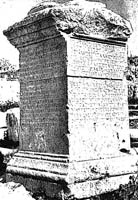
Rectangular statue base of reddish-beige marble, moulded at top and bottom; H 160, W 62, D 52 cm. On the top face there are remains of lead to fix a bronze statue.
The block has three inscriptions; our inscription is from a second use, while the other two both belong to its first use. They are a prose honorific inscription to the wrestler Titus Aelius Aurelius Maron, a local man, on the original front face (set up AD 161/80); on the original right lateral face there is a verse epigram to the same man (Hagel and Tomaschitz 1998 nos. Seleukeia 147 a. b).
PROVENANCE AND CURRENT LOCATION
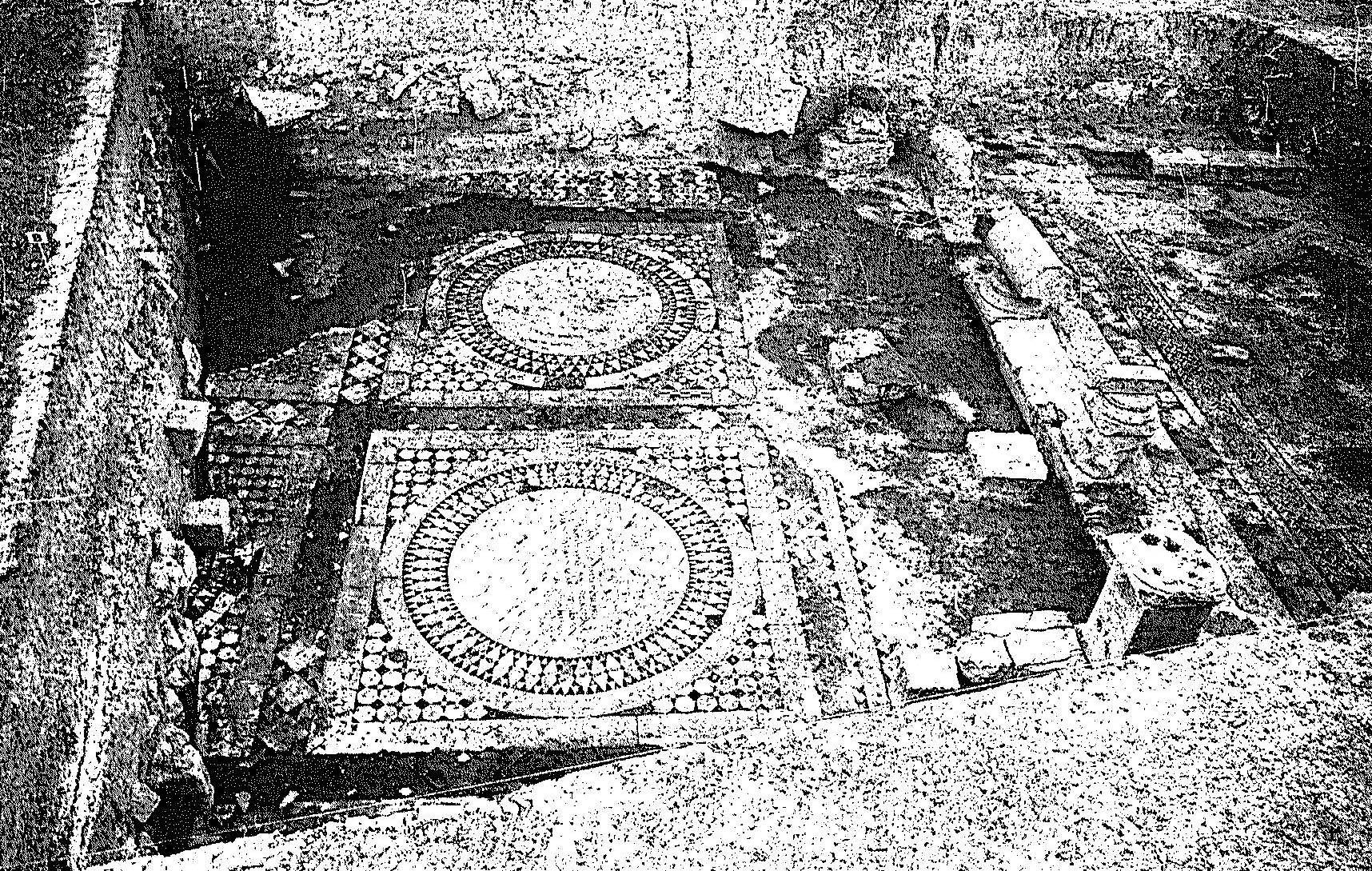
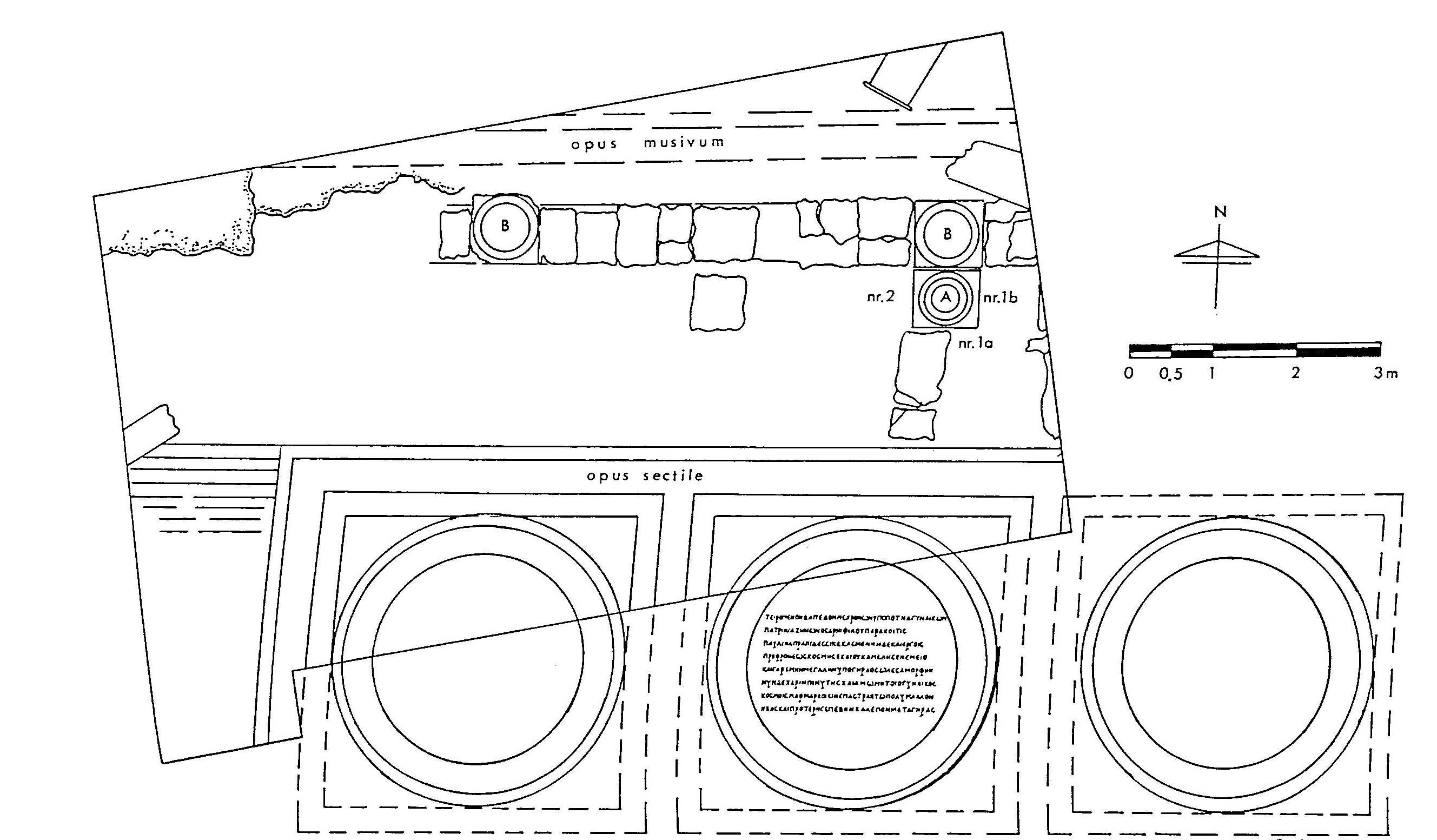
The inscription was found during excavations in the centre of Silifke, the location of ancient Seleucia, c. 500 m west of the so-called ’Temple of Zeus’, in 1982/5. The excavations unearthed a colonnaded street, flanked by a monumental building with a lavishly decorated opus sectile floor (Şahin 1991, 139-42 and pl. 20). Our inscription was found standing in front of a column of the colonnaded street. When the block was found, all three inscriptions were visible; our inscription was on the left lateral face (from viewer; see drawing Şahin 1991, 140 fig. 1).
From the same area as our inscription is LSA-2873 which, like our block, still carries an inscription to a famous athlete from its original use in the 2nd century.
Our inscription is now in the Silifke museum (without published inv. no.).
HONORAND, AWARDER AND DATE
The awarder, Flavius Severianus, was hitherto unknown; he has no entry in PLRE and cannot be identified with any of the men of his name recorded there (see also below, ‘Further Discussion‘). Severianus was of equestrian (perfectissimus) rank; he was provincial governor (praeses) of Isauria. He set up another inscription in Seleucia, to Galerius when he was Augustus, in 305/11 (LSA-2873).
The name of the honorand in line 5 is erased on our inscription and has left no traces (see also below, next paragraph). However, it is secure that he was an Augustus (line 6) who fsuffered damnatio memoriae. He was almost certainly a co-Augustus of Galerius in 305-11. Galerius in his six years of reign had six co-Augusti. Of these, Constantius I in 305/6 is excluded because he never fell to damnatio memoriae; this raises the terminus post quem of our inscription, and probably also for LSA-2873, slightly, to 306. For the same reason Constantine is excluded, who was recognized as Augustus in the East after 310. Maxentius was proclaimed Augustus in 306 and ruled Italy and Africa until 312, but was never recognized by his imperial colleagues. The remaining three were all recognized, and fell all to damnatio memoriae; each of them is therefore possibly our honorand: Severus (Augustus 306-7); Licinius (Augustus 308-24); or Maximinus Daia (Augustus 310-13). It is unlikely that our inscription was set up after 313 (see below, ’Further Discussion’).
Şahin 1991, 150 suggested Maximinus Daia to be the honorand. However, as Şahin states, the imperial name is efficiently erased and nothing of it is legible (“gründlich eradiert“); I can see no evidence that speaks in favour of Maximinus as against any one of the other possible candidates.
FURTHER DISCUSSION
It is likely that our inscription was set up together with the dedication to Galerius, LSA-2873, by the same provincial governor Flavius Severianus. However, it cannot be completely excluded that Severianus held office in 311 and the following one or two years, and that our inscription is from another dedication than LSA-2873. Both inscriptions style the emperor honoured humanissimo (line 4) (this might speak in favour of a common dedication); however, they are both striking in their use of idiosyncratic formulae for each emperor.
Flavius Severianus is one of three formerly unknown governors of Isauria recorded on statue bases to emperors which were unearthed in Seleucia by recent excavations. They are all of the early 4th century; this is a remarkable addition to the fasti of this province which are still strikingly incomplete (see PLRE I, 1109 Fasti).
Discussion references
- Supplementum Epigraphicum Graecum, , 41, 1407 (only 1st-use inscriptions)
- Hagel, S. and K. Tomaschitz, Repertorium der westkilikischen Inschriften (Ergänzungsband zu den Titulia Asiae Minoris Nr. 22), Vienna 1998, 376-7 Seleukia nos. 147 a. b
- Jones, A. H. M. et al., The Prosopography of the Later Roman Empire. Vol. I 260-395, Cambridge et al. 1971 (1975), 1109
- Şahin, S., Inschriften aus Seleukeia am Kalykadnos, Epigraphica Anatolica 17, Bonn 1991, 139-66
Cite: Last Statues of Antiquity, LSA-2874 (Ulrich Gehn, added 5/15).