
LSA-301
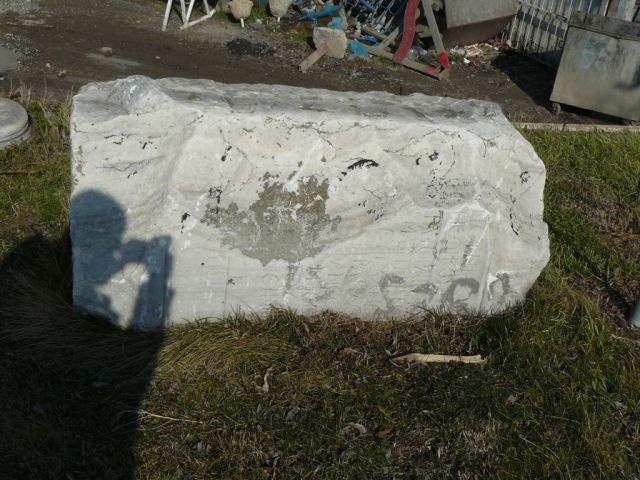
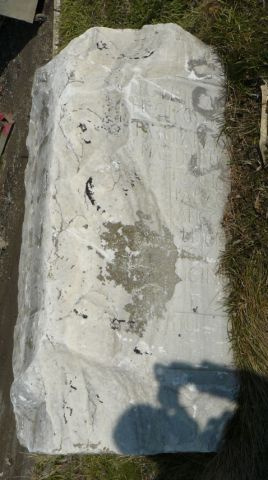
Base for statue of Maximian. Heraclea Perinthus (Europa). 293-305
Record details
Photographs
Inscription
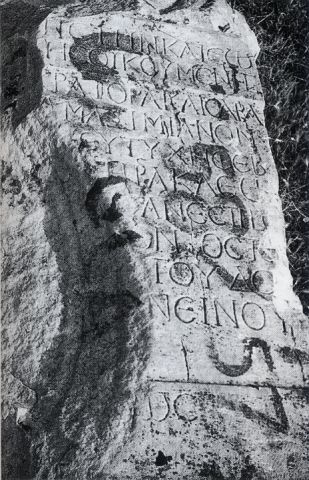
[Ἀγαθῆι Τύχηι] / [τὸν κ]τίστην καὶ σω/[τῆρα τ]ῆς οἰκυμένης / [Αὑτο]κράτορα Καίσαρα / [Μ. Αύρ. Οὐαλ.] Μαξιμιανὸν / [Εὐσεβῆ] Εὐτυχῆ Σεβ(αστὸν) / [ἡ λαμρὰ] Ἡρακλεω/[τῶν πόλι]ς ἀνέστησε[ν] / [ἡγεμονεύ]οντος το[ῦ] / [διασημοτά]του Δο/[μιτίου Δομ]νείνου / εὐτυχῶς
Inscription translation
To Good Fortune. The founder and saviour of the civilised world, the emperor, Caesar Marcus Aurelius Valerius Maximianus, pious, fortunate Augustus; the splendid city of Heraclitans set [him] up in the governorship of Domitius Domninus, of perfectissimus rank. With good fortune.
Bibliography
- Hamdi Sayar, M. , Perinthos-Herakleia (Marmara Ereğlisi) und Umgebung, Vienna 1998, 198-9, no. 15, pl. 13 fig. 46
Discussion
INSCRIPTION
In twelve lines:
[Ἀγαθῆι Τύχηι] / [τὸν κ]τίστην καὶ σω/[τῆρα τ]ῆς οἰκυμένης / [Αὑτο]κράτορα Καίσαρα / [Μ. Αύρ. Οὐαλ.] Μαξιμιανὸν / [Εὐσεβῆ] Εὐτυχῆ Σεβ(αστὸν) / [ἡ λαμρὰ] Ἡρακλεω/[τῶν πόλι]ς ἀνέστησε[ν] / [ἡγεμονεύ]οντος το[ῦ] / [διασημοτά]του Δο/[μιτίου Δομ]νείνου / εὐτυχῶς
'To Good Fortune. The founder and saviour of the civilised world, the emperor, Caesar Marcus Aurelius Valerius Maximianus, pious, fortunate Augustus; the splendid city of Heraclitans set [him] up in the governorship of Domitius Domninus, of perfectissimus rank. With good fortune.'
Letter height 4 - 5 cm.
Although much of the inscription is lost on the left side, it can be securely completed on the basis of another inscription from the same group, LSA-686.
PROVENANCE AND CURRENT LOCATION
Found in the orchestra of the Theatre of Heracleia Perinthus. See also: LSA-284, LSA-403, and LSA-686. It is now in the 'open air museum' of Marmara Ereglisi.
DESCRIPTION (from Hamdi Sayar and the published photo)
Rectangular marble statue base with upper and lower mouldings: H 151, W 82, D 80 cm. Badly damaged on the left side, with much of the left side of the inscribed panel missing.
The inscribed panel has a central square-rectangular recess which seems to have been designed to contain the inscription. The current inscription runs, however, both above and below it. This same, rather particular, form was used for the bases for Diocletian and Constantius I also from the Theatre (LSA-686, and LSA-284) and for a base for Septimius Severus (Hamdi Sayar no. 10). It is possibly a sign of re-use.
HONORAND, AWARDER AND DATE
The honorand was the Emperor Maximian. It is part of a group of four virtually identically-shaped and worded bases found at the Theatre. The other three honoured Diocletian (LSA-686), Constantius I (LSA-284), and Galerius (LSA-403). This combination of honorands indicates a date after 21 May of 293, when Galerius became Caesar, and before 305, when Diocletian and Maximian abdicated.
The awarder was the city of Perinthus whose name was officially changed to Heraclea by Diocletian in 286. Domitius Domninus, governor of Europa when the statue was erected, is known only from this group of inscriptions (PLRE I, 266, Domitius Domninus 6 ).
FURTHER DISCUSSION
A base from Hadrianopolis in Pisidia (LSA-537) and one from Dorylaeum in Phrygia Salutaris (LSA-542) honour Maximian in very similar terms.
Cite: Last Statues of Antiquity, LSA-301 (J. Lenaghan).