
LSA-310
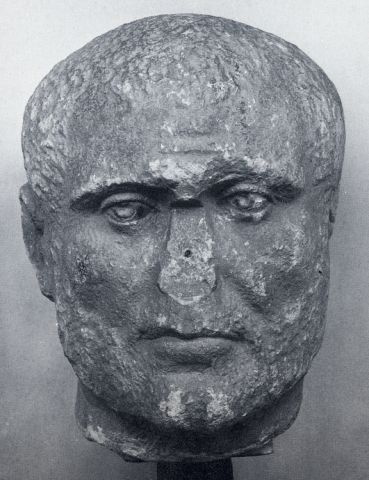
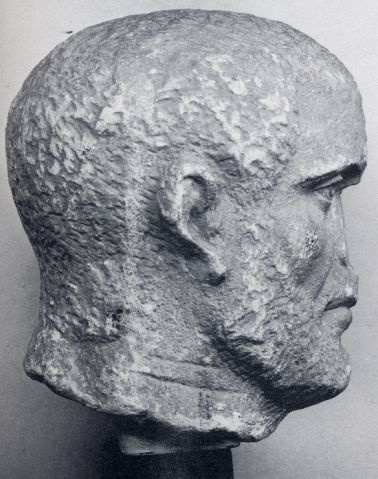
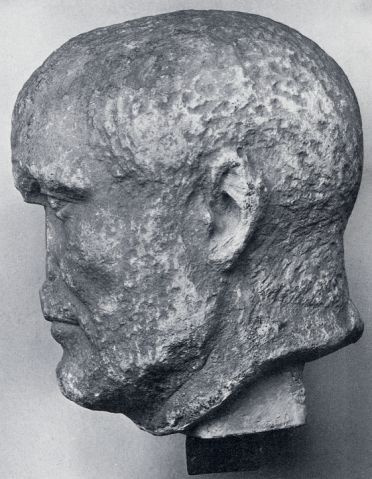
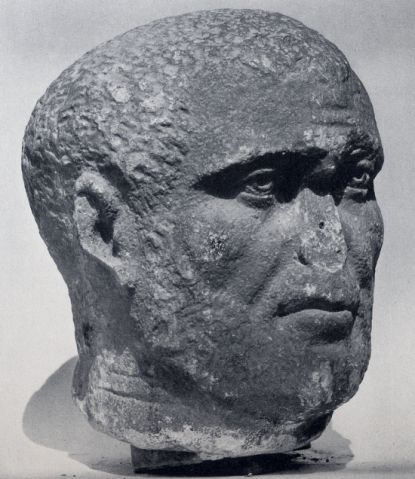
Portrait head of man with short-cropped hair and short beard. From Patavium. Late third century.
Record details
Photographs
Bibliography
- Ghedini, F., Sculture greche e romane del Museo civico di Padova. Collezioni e musei archeologici del Veneto ; 12 , Rome 1980, 52-3, no. 19
Discussion
DESCRIPTION (Object):
Over life-size head. H: 29 cm. H (from chin to crown): 27, W: (from ear to ear): 18.5 cm. Grey marble.
The head is broken through the middle of the neck. The nose was restored in antiquity by a small pin, the hole for which is still preserved. There are traces of colour in the eyes.
The head has been re-worked from an earlier head. The original fuller hair has been taken down with a chisel; at the back the new head shape indents above the nape. This is particularly visible behind the ears and on the earlobes which the original hair probably touched. The beard also seems to have been taken down but it is difficult to judge because of the extant state. The original beard seems to have extended on to the neck. The broad and overhanging brow also remain from the original portrait; the two short lines across the brow have however been added.
The pupils are drilled but seemingly slightly differently from one another. The irises are engraved.
Provenance
The head was found in the garden of the house of Manfredini at Este which is southwest of Padua.
DESCRIPTION (Subject):
The head depicts a short-haired man with a short-beard who turns to his right as the lines on the right side of the neck indicate. The hair recedes at the temples. The face is broad and square in shape. The brow projects over the eyes and is marked by two short creases. The cheekbones protrude. The naso-labial folds are indicated but not deep. The mouth is wide; the upper lip dips at its centre and is narrow (once covered by a full moustache). The jaw line is also broad but is set back from the projection of the brow.
DATE
The head has been re-cut from a full bearded, second- or third-century portrait. The short hair and beard style of its secondary use continued from the mid-third century through most of the fourth century. Technically, the more traditional eye-markings and the slashing linear use of the flat chisel to render hair might suggest a date earlier rather than later within that time frame.
Ghedini compared it to two other LSA-250 and LSA-37. These are also re-cut works which fall probably between the later third and later fourth century.
Cite: Last Statues of Antiquity, LSA-310 (J. Lenaghan).