
LSA-356
Base for bronze statue of Constantine I, emperor. Tegea (Achaea). 306-310
Record details
Photographs
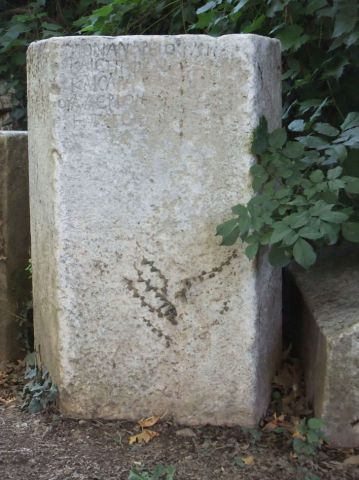
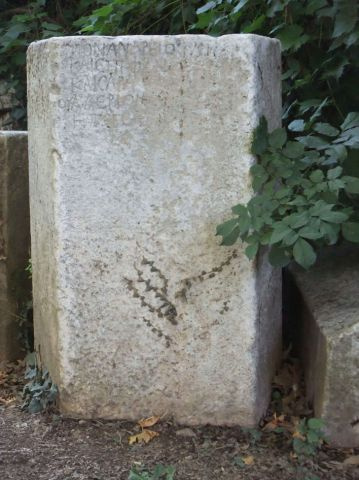
Inscription
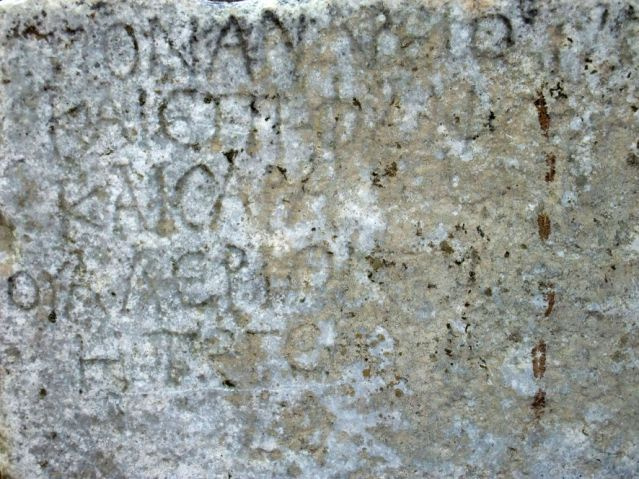
τὸν ἀνδρειότατον / καὶ ἐπιφαν(έστατον) / Καίσαρα / [Φλάβιον] / Οὐαλέριον [Κωνσταντεῖνον], / ἡ Τεγεα[τῶν πόλις].
Inscription translation
To the bravest and most noble Caesar [Flavius] Valerius [Constantinus], the [city of the] Tegeans.
Bibliography
- Inscriptiones Graecae, V,2, 139
Discussion
INSCRIPTION
In five lines:
τὸν ἀνδρειότατον / καὶ ἐπιφαν... / Καίσαρα.. ./ Οὐαλέριον... / ἡ Τεγεα...
The inscription is today partly illegible, leaving name and title of the emperor incomplete, but Hiller von Gaertringen 1913 (for IG V, 2) was able to record a more complete text:
τὸν ἀνδρειότατον / καὶ ἐπιφανέστατον / Καίσαρα Φλάβιον / Οὐαλέριον Κωνσταντεῖνον, / ἡ Τεγεατῶν πόλις.
'To the bravest and most noble Caesar Flavius Valerius Constantinus, the city of the Tegeans.'
Letter height: 3-4 cm.
DESCRIPTION
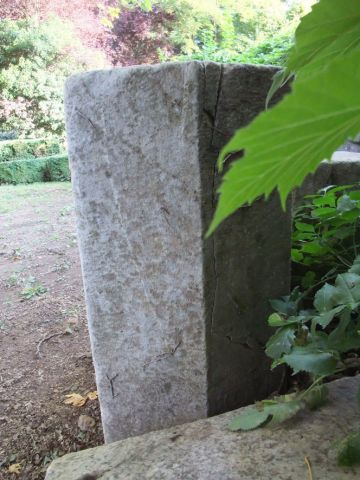
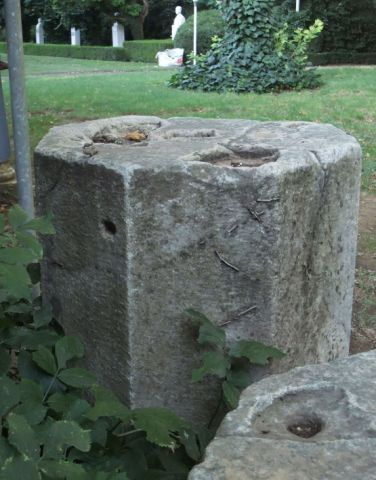
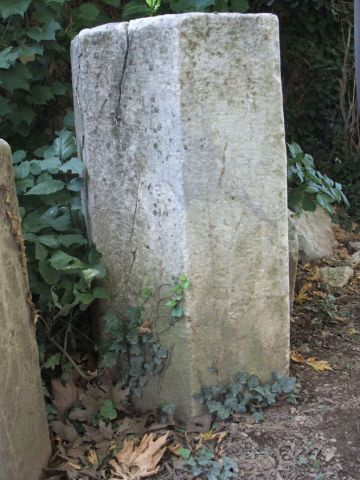
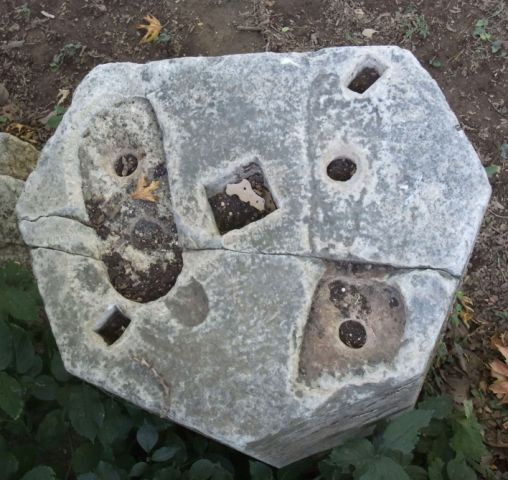
Marble base made from an octagonal column drum, the square dowel hole for joining this to another drum is clearly visible on the top. Partly covered by earth: visible height 102 cm (IG V, 2, which presumably saw it in full, recorded a height of 125 cm). The block is now of slightly irregular heptagonal shape, because the eighth corner has been roughly cut back with a point to create the epigraphic field, which has been finished with a claw. All other sides are smoothly finished with a claw. On the top, a central square shaped dowel-hole (10 cm across) and two smaller rectangular holes date from the first use of the block as a column drum. The top surface is finished with a claw. There are two pairs of imprints for the feet of bronze statues, from a first and from a second reuse, both worked with a point.
LOCATION
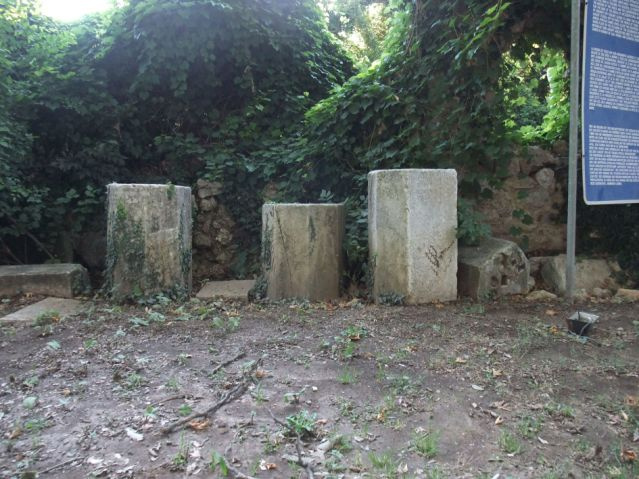
Our base, first published by Bérard (1893, p. 10 no. 12), is now one of a group of five blocks of the same type in the park behind the Episkopi-church in Tegea, an area that approximates to that of the ancient forum (IG V, 2: 'olim in foro').
All five blocks in this park are partly covered with earth. One of the other blocks bears an inscription for Constantius I (LSA-355). The third bears traces of the setting for a bronze statue, but the epigraphic field belonging to this use has been erased. The fourth block bears traces of a similar setting, with an epigraphic field that has been only partially worked back, leaving traces of the inscription still legible (IG V, 2 no. 155; Bérard 1893 p. 11 no. 14). The fifth block lies on the side that probably bears an inscription; its visible top bears the settings for two successive bronze statues.
HONORAND AND DATE
The honorand is Constantine I. The inscription dates to his reign as Caesar (which began in 306), before he became Augustus. Constantine titled himself Augustus as early as 307, but was still considered a Caesar until 310 by Galerius, Augustus in the East and the ruler of Tegea (Kienast 1996, 298-9).
FURTHER DISCUSSION
There are five dedications to emperors of the Constantinian dynasty known from Tegea (LSA- 354, LSA-355, our base LSA-356, LSA-570, LSA-571). All are similar in the sober prose formula they use, and all, where the name of the dedicant is preserved (as here), were dedicated by the city.
Discussion references
- Inscriptiones Graecae; , V(2) no. 139
- Bérard, E., Tégée et la Tégéatide, Bulletin de correspondance hellénique XVII, 1-24, Paris 1893
- Jones, A. H. M. et al., The Prosopography of the Later Roman Empire. Vol. I 260-395, Cambridge et al. 1971 (1975)
- Kienast, D., Römische Kaisertabelle. Grundzüge einer römischen Kaiserchronologie, Darmstadt (2)1996, 298-9
Cite: Last Statues of Antiquity, LSA-356 (Ulrich Gehn).