
LSA-360
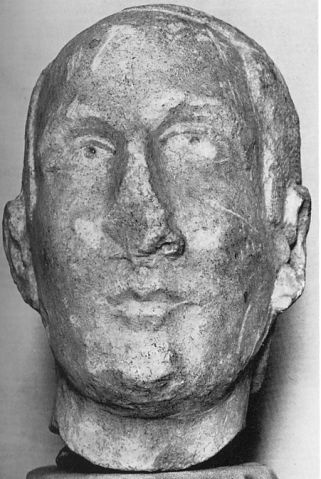
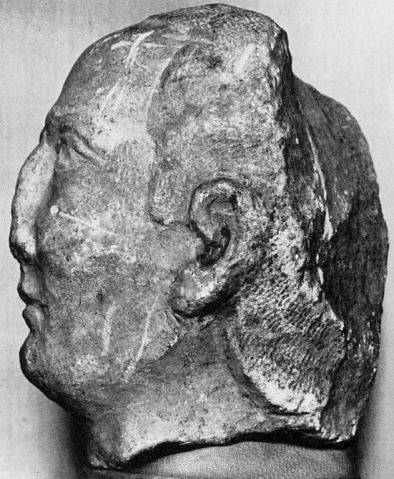
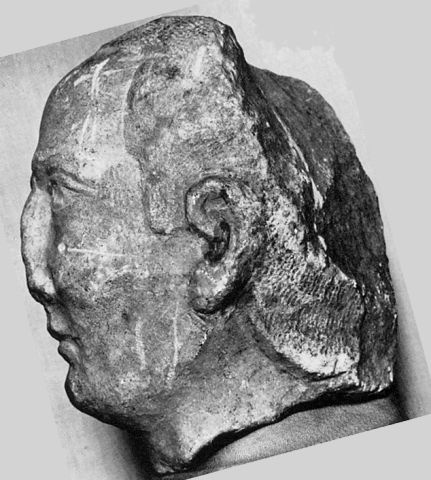
Portrait head of clean-shaven man with long face. From Corum. Fourth century.
Record details
Photographs
Bibliography
- Inan, J. & E. Alföldi-Rosenbaum, Römische und frühbyzantinische Porträ̈tplastik aus der Türkei : neue Funde, Mainz 1979, 146, no. 92, pl. 81.1-2
Discussion
DESCRIPTION (Object)
Over life-size portrait head. H: 28, W: 18.8 cm. H (from chin to crown): 24 cm. Medium-grained white marble.
The head is broken unevenly through the middle of the neck. An area of the back of the head is missing. The nose and chin are chipped. There are minor abrasions on the cheeks and brow.
The head has been re-cut from an earlier portrait. The finely-engraved surface of the hair, the material attached to the back of the earlobes, the different sizes of the ears, the uneven surface around the chin, and the unusual proportions of the face (long but shallow, especially from chin to neck) indicate this.
The hair is cut back to a uniform volume and is defined by parallel lines of a claw-chisel. The irises are not indicated, and the pupils are deep round drill holes.
PROVENANCE
From Çorum.
DESCRIPTION (Subject)
The head represents an older man with short, fine hair, and a long clean-shaven face. The hair is rendered as a cap of uniform height and consists of fine short hair. It recedes above the temples and in any case begins far back on the brow. In contrast it is long at the nape.
The unusual articulation of the face and the features produce a stylized image. The brow is tall and balding; the eyes are long and narrow; and the nose long and aquiline. The cheeks are rounded, especially around the end of the nose, and the mouth has bow-shaped lips which are sharply defined.
DATE
Inan notes that the head has been re-worked which makes it difficult to date. She suggests that the original head belonged to the second half of the first century and was then re-used (in the Hadrianic-Antonine period). She concludes that the re-working was unfinished; the conclusion is presumably based on the awkwardness of the image.
There seems to this author no reason to believe that the re-working was unfinished. The final effect is a mannered elegant man. His clean-shaven fashion combined with the deeply drilled eyes suggests a date in the fourth century.
Cite: Last Statues of Antiquity, LSA-360 (J. Lenaghan).