
LSA-374
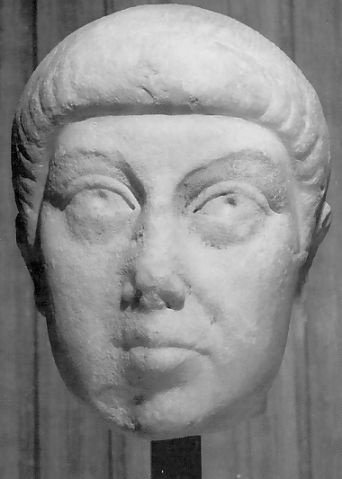
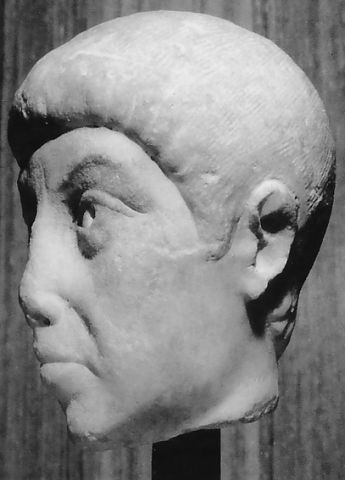
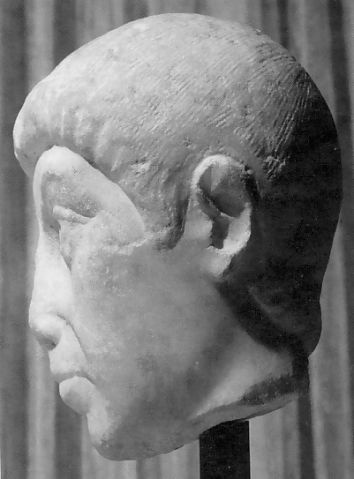
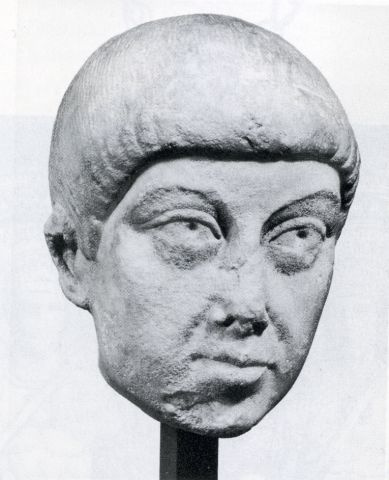
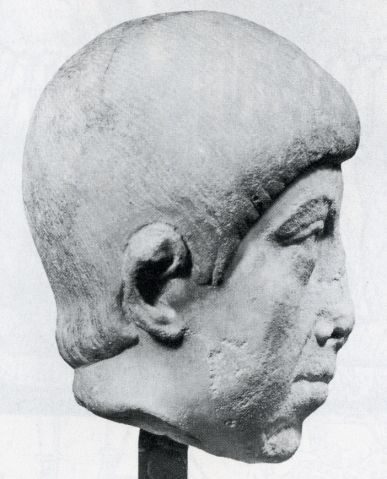
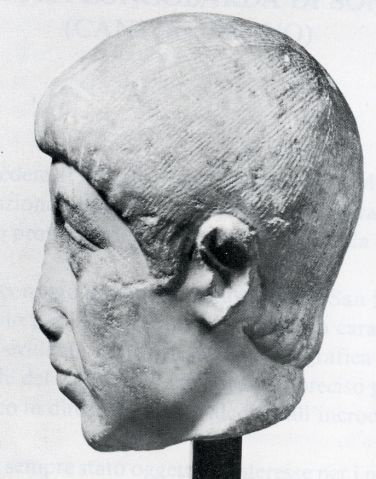
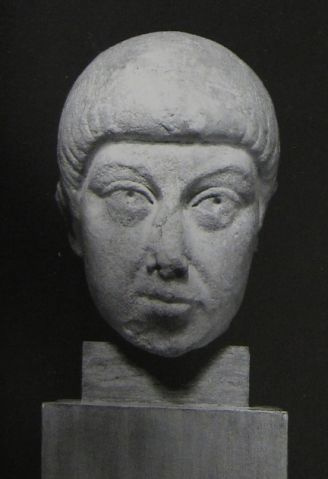
Portrait head of clean-shaven man. From Asia Minor (?). Late fourth to early fifth century .
Record details
Photographs
Bibliography
- Giuliano, A. 'Princeps corusco sidere pulchrior', Quaderni Ticinesi di Numismatica e Antichità Classiche 19, Lugano 1990, 277-281, figs. 4-7
Discussion
DESCRIPTION (Object)
Over life-size portrait head. H (chin to crown): 22.9 cm. Fine-grained white marble, possibly Docimium.
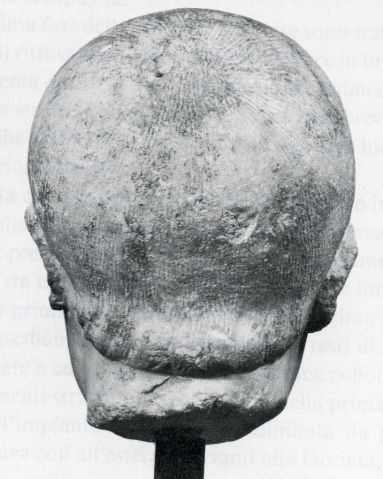
The head is broken through the neck under the chin. The tip of the nose and the rims of the ears are chipped. There is a hole in the crown of the head.
The hair of the head has been mainly engraved with a claw chisel. Around the temples and behind the ears, large locks are indicated with broad but shallow channels of a flat chisel. The iris is not marked, and the pupils are large hollows.
PROVENANCE
It was purchased from the art market; lot 193 of the Sothebys London 10th to 11th July 1989 sale. The marble type and the relative newness of the head suggest that it came from Asia Minor. Giuliano compares the handling of the marble to the fragments found at church of Saint Polyeuktos in Saraçhane.
DESCRIPTION (Subject)
The head is larger than life-size and turns to its left. The age of the clean-shaven honorand is difficult to judge but the distinctive physiognomy argues against a child.
The face is long with heavy jowls. The brow is low but the eyebrows have a high arch. The eyes themselves are narrow. The nose is long, and the naso labial folds are deep. The mouth is large, thick-lipped, and has creases at the corners. The chin recedes.
The hair, which is brushed forward, covers the head like a cap of regular volume. It indents slightly at the base of the skull. The individual strands are long and fine. Over the temples larger locks and behind the ears larger locks, consisting of the fine strands, have been indicated. At the temples these locks turn inwards.
DATE
The fashion style of hair is attested in the portraits of the sons of Constantine (for example, LSA-559) and continues through to the portraits of the Theodosian period (for example, LSA-337). Stylistically the head seems to come closer to the abstraction of the Theodosian portraits.
HONORAND
Giuliano identified the head as Honorius on the basis of the physiognomical similarity to the young man on the Diptych of Probus. Meischner thought the head followed the same type as the portrait found near Aleppo, LSA-754. The head, however, preserves no imperial attributes, and there are similar private portraits, for example, LSA-444LSA-451.
Discussion references
- Meischner, J. 'Studien zur spätantiken Kaiserikonographie', Jahrbuch des Deutschen Archäologischen Instituts 110, Berlin 1995, 433, 440-446, figs. 8, 10, 14 (first decade of fifth century, Arcadius)
Cite: Last Statues of Antiquity, LSA-374 (J. Lenaghan).