
LSA-381
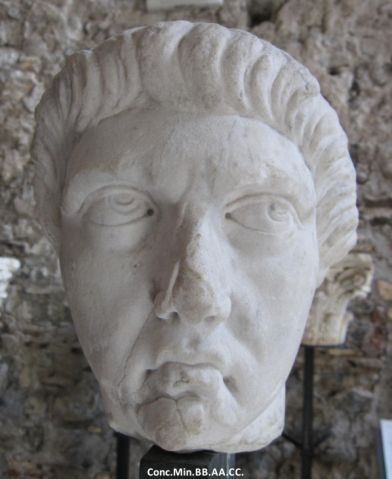
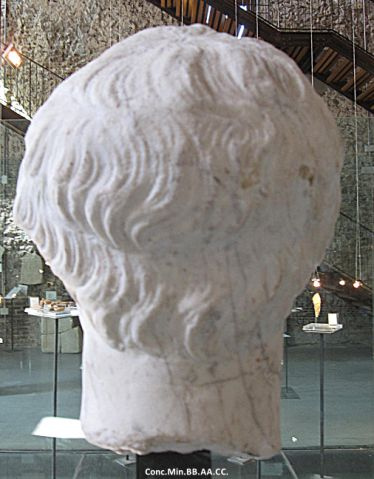
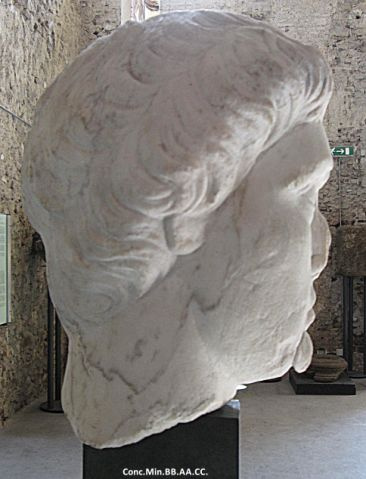
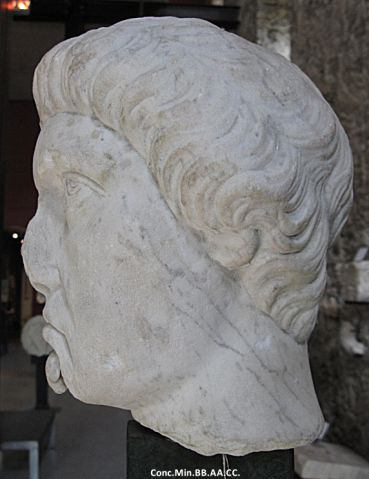
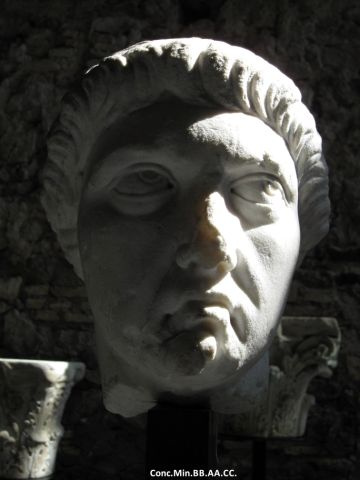
Re-cut portrait head of clean-shaven man. From Tusculum? Fourth century.
Record details
Photographs
Discussion
DESCRIPTION (Object):
Life-size head. H: c. 25 cm. White marble.
The head is broken through the neck. The chin is cracked and has been repaired in modern period. The tip of the nose is missing. The surface is heavily water-worn.
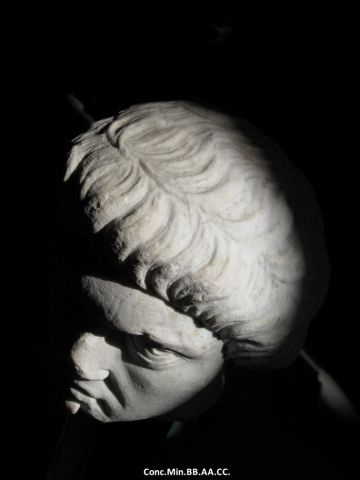
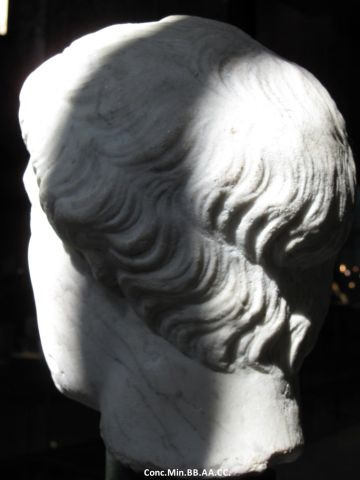
The portrait has been worked out of an earlier head. The back of the head carries medium to long locks in three tiers which are based on Polykleitan schemes and which were used in the portraits of heroicizing young men of the high-imperial period. Ears have been cut into the locks of hair on both sides. The locks appear to have been terminated evenly over the brow and around the face. An indentation runs around the entire head; the locks over the brow in particular respond to this which suggests that the head once wore a crown or wreath.
The eyes are marked by two parallel, broad U-shaped, engraved lines that indicate the iris and the edge of the pupil. These do not touch the lower lid. Another small drill hole denotes the pupil itself.
PROVENANCE
Most of the objects on display in the museum were excavated at Tusculum.
DESCRIPTION (Subject):
The head depicts a clean-shaven male with full hair who turns to his left. He probably wore some sort of crown, diadem, or wreath. The hair is brushed forward and parts slightly over the inner corner of the right eye. The face is broad at the cheekbones and tapers and recedes to the chin. The nose is hooked; the mouth short and down-turned; and the chin small and recessive. This lattermost detail, however, is due mainly to the cutting-back of the entire frontal plane of the original face.
HONORAND AND DATE
The markings of the eyes are certainly improbable before the fourth-century . The clean-shaven but mature face in combination with the indentation for headgear suggests that an emperor was intended. The hooked nose and hairstyle relate to the images of Constantine, and it is tempting to see this as one of his sons. Two other imperial portraits (to be sure, seemingly of younger men) (LSA-440 and LSA-560) show small parting in the locks over the right eye.
Cite: Last Statues of Antiquity, LSA-381 (J. Lenaghan).