
LSA-383
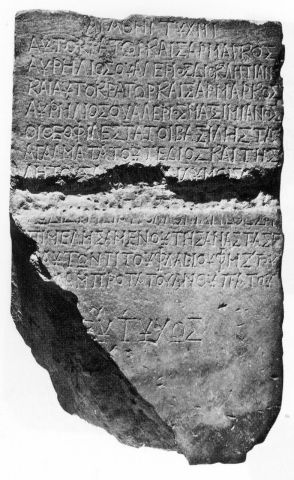
One of two bases (see also LSA-564) honouring the gods Zeus and Leto, erected by emperors Diocletian and Maximian. From Didyma (Caria). 286-293.
Record details
Photographs
Inscription
ἀγαθῆι τύχηι./ Αὐτοκράτωρ Καῖσαρ Μᾶρκος / Αὐρήλιος Οὐαλέριος / Διοκλητιαν[ὸς], / (5) καὶ Αὐτοκράτωρ Καῖσαρ Μᾶρκος / Αὐρήλιος Οὐαλέριος Μαξιμιανὸς, / οἱ θεοφιλέστατοι βασιλῆς, τὰ/ ἀγάλματα τοῦ τε Διὸς καὶ τῆς / Λητοῦς, ἅμ[α τ]οῖς διδύμοις θεοῖς, / (10) [σύν ταῖς βάσεσιν καὶ τοῖς βωμοῖς], / τῷ Διδυμεῖ Ἀπόλλωνι ἀνέθεσαν, / ἐπιμελησαμένου τῆς ἀναστάσε/ως αὐτῶν, Τίτου Φλαβίου Φήστου, / τοῦ λαμπροτάτου ἀνθυπάτου./ εὐτυχῶς
Inscription translation
To Good Fortune. The emperor Caesar Marcus Aurelius Valerius Diocletian and the emperor Caesar Marcus Aurelius Valerius Maximian, rulers most beloved by the gods, set up statues of Zeus and Leto, together with the gods of Didyma, [with their bases and altars], for Apollo of Didyma. Overseeing the erection was Titus Flavius Festus, of clarissimus rank, governor (proconsul). Good luck.
Bibliography
- Filges, Axel with W. Günther, Skulpturen und Statuenbasen vond der klassischen Epoche bis in die Kaiserzeit: Didyma III, 5, Mainz 2007, 149-50, no. 137, pl. 36.1-2
- Wiegand, Th., Didyma: Zweiter Teil; Die Inschriften, von Albert Rehm, herausgegeben von Richard Harder, Berlin 1958, no. 89
Discussion
INSCRIPTION
In 15 lines:
ἀγαθῆι τύχηι./ Αὐτοκράτωρ Καῖσαρ Μᾶρκος / Αὐρήλιος Οὐαλέριος / Διοκλητιαν[ὸς], / (5) καὶ Αὐτοκράτωρ Καῖσαρ Μᾶρκος / Αὐρήλιος Οὐαλέριος Μαξιμιανὸς, / οἱ θεοφιλέστατοι βασιλῆς, τὰ/ ἀγάλματα τοῦ τε Διὸς καὶ τῆς / Λητοῦς, ἅμ[α τοῖς] διδύμοις θεοῖς, / (10) [σύν ταῖς βάσεσιν >u>καὶ τοῖς βωμοῖς], / τῷ Διδυμεῖ Ἀπόλλωνι ἀνέθεσαν, / ἐπιμελησαμένου τῆς ἀναστάσε/ως αὐτῶν, Τίτου Φλαβίου Φήστου, / τοῦ λαμπροτάτου ἀνθυπάτου./ εὐτυχῶς
'To Good Fortune. The emperor Caesar Marcus Aurelius Valerius Diocletianus and the emperor Caesar Marcus Aurelius Valerius Maximianus, rulers most beloved by the gods, set up statues of Zeus and Leto, together with the gods of Didyma, [with their bases and altars], for Apollo of Didyma. Overseeing their erection was Titus Flavius Festus, of clarissimus rank, governor (proconsul). Good luck.'
Letter height 3 cm, with a final line of taller letters (5 cm high). The inscription runs from edge to edge, except in the first and last lines. The underlined passages were restored from the fragmentarily preserved pendant LSA-564 (Filges & Günther 2007, 150).
DESCRIPTION (from Filges & Günther 2007 and the published image)
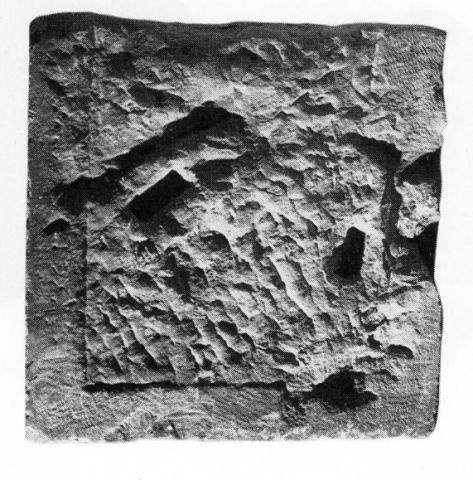
Rectangular block of fine-grained, grey-blue marble: H 93.3, W 55.1, D 57.7 cm. The lower left corner is broken and lost, and the middle of the front surface has a band of damage, probably related to its later re-use. The right side has traces of a repair. All sides of the base are worked, the front and right sides more finely than the back and left. The top face is rough, but with a finely finished band along its three front edges, and with cuttings for the attachment of the feet of a bronze statue.
PROVENANCE AND CURRENT LOCATION
The base was excavated in 1924 within the Temple of Apollo. It was in the adyton, re-used in the floor of the Byzantine church on the temple site.
Today in the Staatliche Museen, Antikensammlung, of Berlin, inv. no. IvDidyma 89.
HONORAND, AWARDERS AND DATE
The base is one of a pair from Didyma (this one, and the very fragmentary LSA-564) The inscription on each base is the same and records a dedication of two statues (one of Zeus and one of Leto) to Apollo by the emperors Diocletian and Maximian.
Because neither of the junior members of the tetrarchy is mentioned, the bases can be dated between April 286, when Diocletian raised Maximian to the status of Augustus, and March 293, when two new Caesars were appointed. The man in charge of overseeing the project, Flavius Festus is known from other inscriptions at Didyma (PLRE I, 335, T. Flavius Festus 7) which can not, however, provide a narrower date.
FURTHER DISCUSSION
Notwithstanding the preservation of both bases, there is still textual dispute about the restoration of line 9 (perhaps: 'σύν ταῖς βάσεσιν καὶ τοῖς βωμοῖς, with their bases and altars'), and a lack of clarity about the meaning of 'ἅμα' in line 8, Leto ‘together’ with the gods of Didyma, her children.
The upper surface of the base also presents an interpretative problem. It is rough in the centre but finely finished around its three front edges, which suggests that our block was the middle section of a composite base with separate upper moulding. Yet it also has cuttings for the feet of a statue. This suggests that it was a re-used piece.
Discussion references
- Jones, A. H. M. et al., The Prosopography of the Later Roman Empire. Vol. I 260-395, Cambridge et al. 1971 (1975), 335, T. Flavius Festus 7
Cite: Last Statues of Antiquity, LSA-383 (J. Lenaghan).