
LSA-388
Base, probably for statue, with dedication to Galerius, emperor. Alexandria Troas (Hellespontus). 303-305.
Record details
Photographs
Inscription
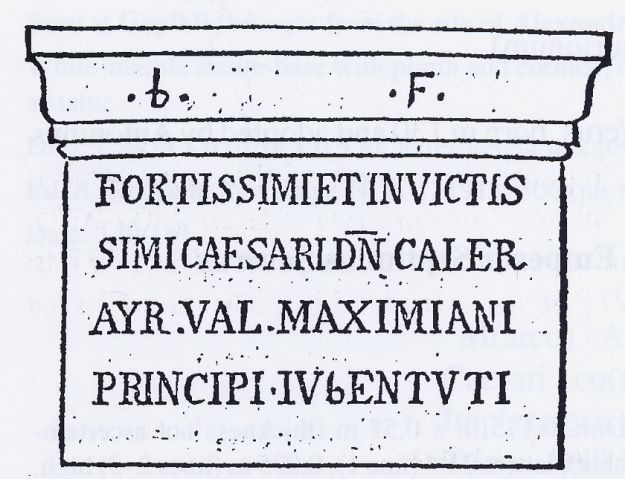
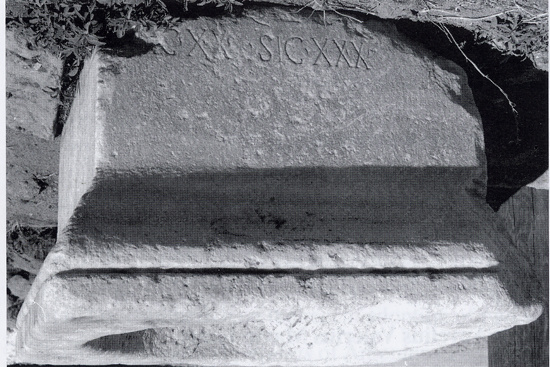
B(onae) F(ortunae). / Fortissimi et invictis/simi Caesari<s>, d(omini) n(ostri) Galer(ii)/ Aur(elii) Val(erii) Maximiani, / principi<s> iubentuti<s>./ [Si]c XX sic XXX (leaf)
Inscription translation
To good fortune. For the bravest and most unconquered Caesar, our lord, Galerius Aurelius Valerius Maximianus, prince of youth. With vows accomplished for 20 years and undertaken for 30.
Bibliography
- Ricl, M. (ed.), The Inscriptions of Alexandreia Troas (Inschriften griechischer Städte aus Kleinasien, bd. 53), Bonn 1997, 61-2, no. 26 and at 100-101, no. 74
Discussion
INSCRIPTION
In six lines:
(On the moulding): B(onae) F(ortunae).
Fortissimi et invictis/simi Caesari d(omini) n(ostri) Galer(ii) / Aur(elii) Val(erii) Maximiani, / principi iubentuti. / [Si]c XX sic XXX (leaf)
'To good fortune. For the bravest and most unconquered Caesar, our lord, Galerius Aurelius Valerius Maximianus, prince of youth. With vows accomplished for 20 years, and undertaken for 30.'
Letter height (final line) 4.5-5 cm.
The text mixes genitives (fortissimi, invictissimi, Maximiani) and datives (Caesari, principi, iubentuti), which can only be explained by a lack of familiarity with the language.
DESCRIPTION (from Ricl 1997 and the published images)
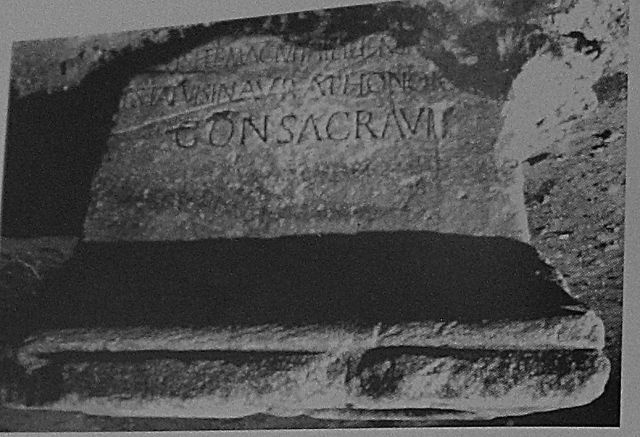
White marble base, with upper and lower mouldings on all sides. It is a re-used piece, with an older Latin inscription on the opposite face to ours, recording a dedication to the Genius Populi by a Caius Iulius Iunianus in the 1st century AD (Ricl 1997 no. 74). At an unknown date, the base was broken unevenly into two: the larger upper half is now missing; the extant lower half (H 58, W 67, D 78 cm) has been used as a mortar, with its bottom hollowed out.
PROVENANCE AND CURRENT LOCATION
Originally recorded complete at the village of Koçalı on the site of Alexandria Troas, but then broken and brought to Çannakale. The upper section went to England and was sold to B. Holmes for his house in Dorset (Ricl 1997, 61); it is now lost. The lower section (which preserves only the final line of our inscription) is currently set up in the village of Tavaklı.
HONORAND AND DATE
The honorand, Galerius, was Caesar, 293-305. However, the final line of the inscription refers to the vows made at the vicennalia of 303, celebrating 20 years of rule by Diocletian and Maximinian and hoping for another ten to follow. This dates our monument to 303 or shortly after.
FURTHER DISCUSSION
The shape of the block, and partial use of the dative for the honorand suggest that this was a base. It is, however, unusual for a statue base not to mention an awarder and to include vows for the imperial well-being.
Cite: Last Statues of Antiquity, LSA-388 (Ulrich Gehn).