
LSA-455
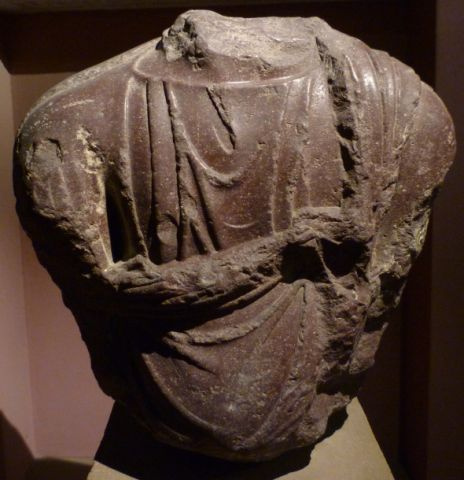
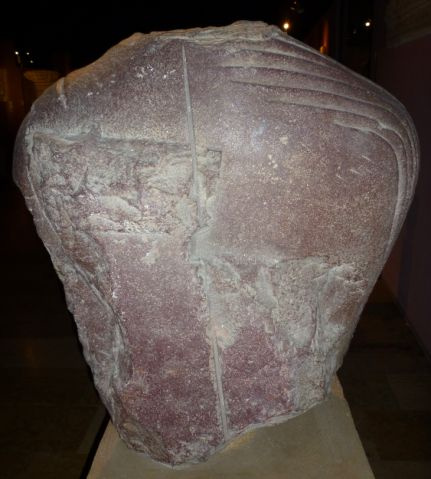
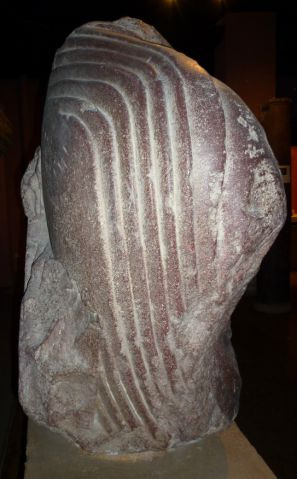
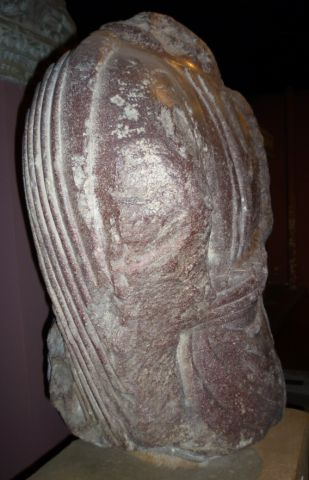
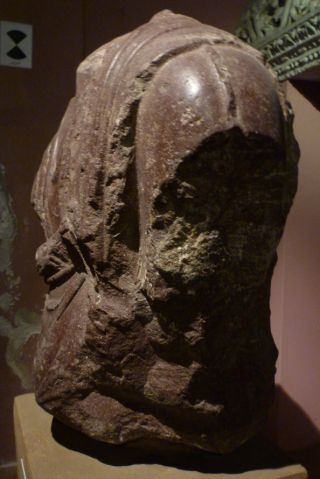
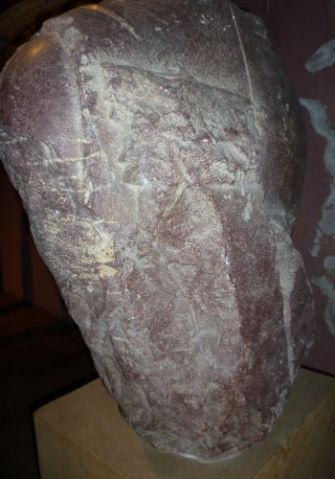
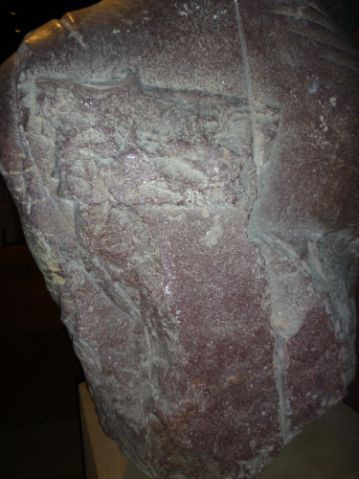
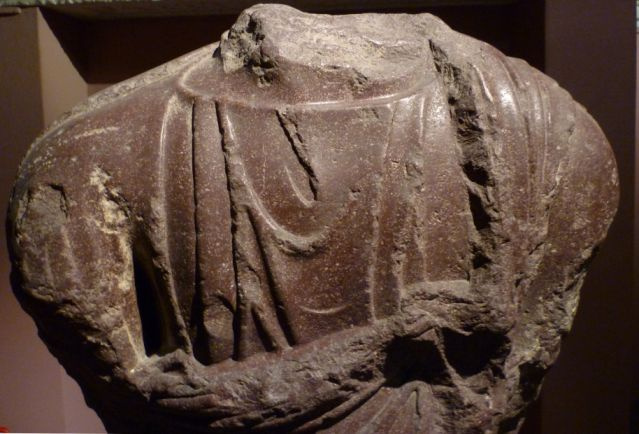
Upper half of colossal porphyry statue of emperor wearing toga and seated on throne. From Hadrianopolis (Haemimontus). Late third to early fourth century.
Record details
Photographs
Bibliography
- Delbrueck, R., Antike Porphyrwerke. Studien zur spätantiken Kunstgeschichte, vol. 6, Berlin 1932, 98-9, fig. 36
- Fıratlı, N., La sculpture byzantine figurée au Musée archéologique d'Istanbul, Paris 1990, 7-8, no. 6, pl. 2
Discussion
DESCRIPTION (object)
Upper part of a togate statue, replica of LSA-1003 in Alexandria. H: 91, W: 86, D: 39 cm. Porphyry.
The head, the main parts of the arms, the lower body, and the throne are missing. The slightly protruding belly proves that the statue was seated. Protruding stone masses with a broken surface on the back -- lower on the right half, higher at the left-- may have connected the body to the upright of the throne. The surface is polished.
PROVENANCE
From Hadrianopolis, situated on the road from Serdica to Byzantion.From 1837 -1901 attested in the Yildirim-Beyazit Mosque at Edirne (Hadrianopolis). Since 1901 in the Archaeological Museum of Istanbul
DESCRIPTION (subject)
The fragment is a replica of the seated togate statue in Alexandria LSA-1003, with only minute differences of workmanship and – according to Delbrueck - slightly smaller. It has to be reconstructed with a throne adorned with gems.
INTERPRETATION
For the type of statue, the toga and the historical interpretation of the statue, which need not represent the same emperor as the one in Alexandria, see the discussion under LSA-1003. According to Delbrueck:’ this replica shows, that statues of this kind were produced in series for the centers of the provinces’.
Discussion references
- Smith, R. R. R., Sculptured for eternity : treasures of Hellenistic, Roman and Byzantine art from Istanbul Archaeological Museum, Istanbul 2001, pl. 144
Cite: Last Statues of Antiquity, LSA-455 (Marianne Bergmann).