
LSA-53
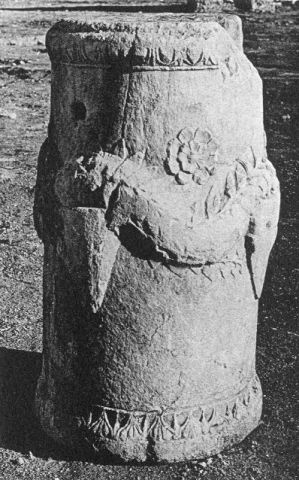
Base (a re-used altar) for statue of Constans,emperor. Corinth (Achaea). 337-350
Record details
Photographs
Inscription
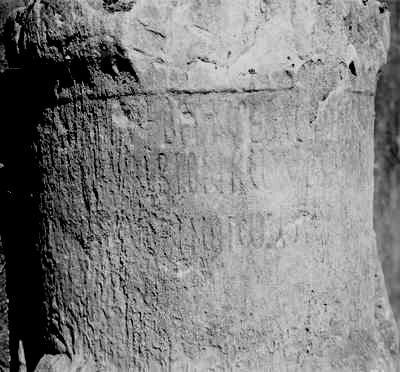
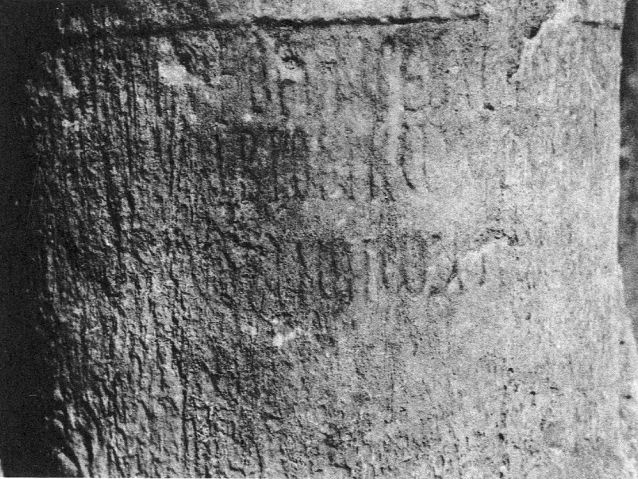
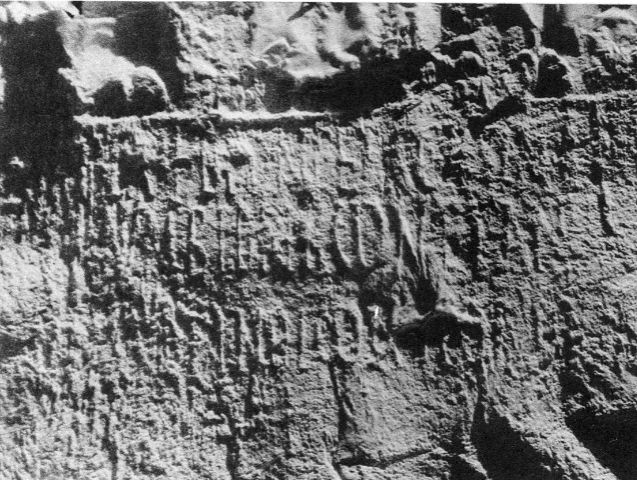
[Ν]ι̣κ̣ηφόρον Σεβαστὸν / [Φ]λάβιον Κωνσ̣ταν, / [ἡ] Κ̣ορινθίων πόλις.
Inscription translation
To the victorious Augustus Flavius Constans, the city of the Corinthians.
Textual evidence
[Ν]ικεφορον Σεβαστον
[Φ]λαβιον Κωονσταν
[η] Κορινθιων πολις
Translation
The city of the Corinthians [erected this statue in honour of] the victorious Augustus Flavius Constans
Bibliography
- Kent, J. H., The inscriptions, 1926-1950: Corinth VIII, 3, Princeton 1966, nr. 510
- Scranton, R. L., Monuments in the Lower Agora and North of the Archaic Temple (Corinth I.3), Princeton 1951, 147 pl. 67, 3
Discussion
INSCRIPTION
In two lines:
[Ν]ι̣κ̣ηφόρον Σεβαστὸν / [Φ]λάβιον Κωνσ̣ταν, / [ἡ] Κ̣ορινθίων πόλις.
'To the victorious Augustus Flavius Constans, the city of the Corinthians.'
DESCRIPTION (from Kent and the published photos)
A cylindrical altar of white marble which was turned upside down to be re-used as a statue base. Original top decorated with egg and dart moulding, original base with Lesbian leaf. Around the middle a heavy garland with boucrania in high relief; above it rosettes. In the top of the base (the original bottom) cuttings for the feet of a bronze statue, and three dowel holes from the original use. The inscription is enclosed within an incised rectangular border; it is cut above the boucrania. The surface is badly weathered.
PROVENANCE AND LOCATION
Found in 1937 in the north central area of the Agora of ancient Corinth; now in the Agora, north of the Bema.
HONORAND AND DATE
While its original editors considered the monument a dedication to the emperor Constans II (641-68), awarded him after the deliverance of the Corinthians from the domination of the Bulgars in 642 (Kent 1966), Constans I, a son of Constantine I, must be the true recipient - an honour of this kind for an emperor by a provincial city in the 7th century would be unparalleled. Constans II is anyway only popularly known as 'Constans', his real name being Heraclius Constantinus. It is also known that the forum of Corinth was abandoned as a place of business during the 6th century, and given over to burials in the 7th and 8th (Sanders 2003).
Constans I was Augustus 337-50, and Achaea was subject to him throughout this period.
Discussion references
- Feissel, D. & Philippidis-Braat, A., Inventaires en vue d’un recueil des inscriptions historiques de Byzance, 3. Inscriptions du Péloponnèse, (à l’exception de Mistra)., Travaux et mémoires, 9, Paris 1985, 267-395, 271 no. 3
- Martindale, J. R., The Prosopography of the Later Roman Empire. Volume III A. D. 527-641, Cambridge 1992, 333 Constans 2
- Sanders, G. D. R., Recent Developments in the Chronology of Byzantine Corinth, Corinth. The Centenary (Corinth XX) (ed. Williams, C. K. & N. Bookidis), Athens 2003, 385-399, 395-6
Cite: Last Statues of Antiquity, LSA-53 (Ulrich Gehn/ Amelia Brown).