
LSA-546
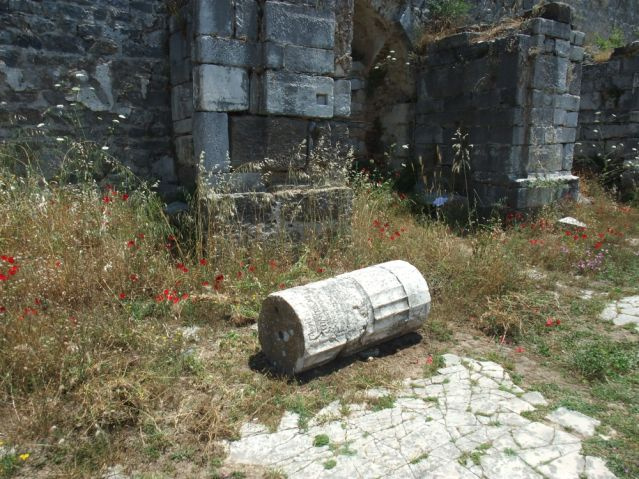
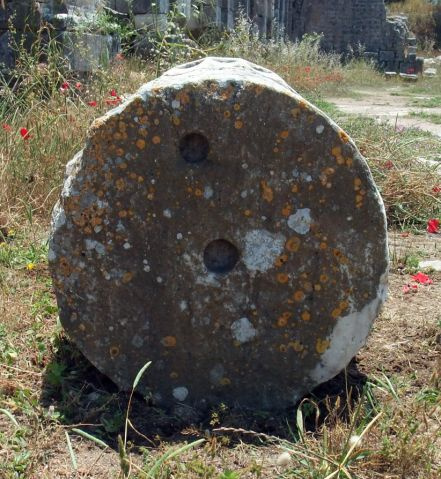
Columnar base for statue of Tatianus, probably governor of Caria. Miletus (Caria). Late third to mid fourth century
Record details
Photographs
Inscription
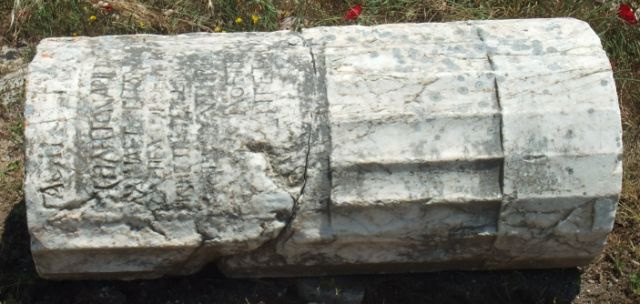
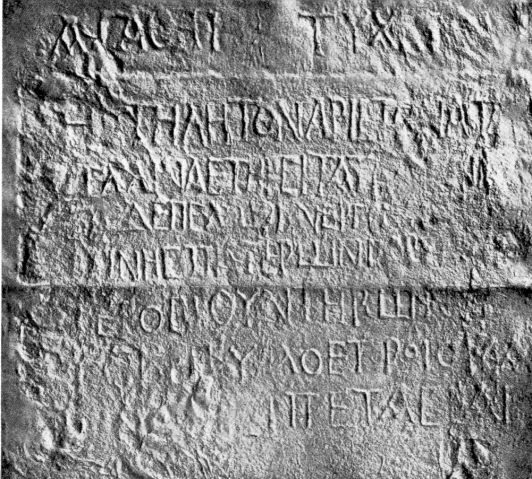
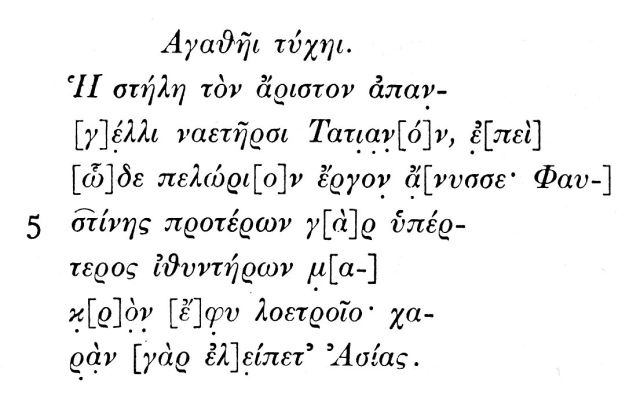
Ἀγαθῇ τύχηι. / Ἡ στήλη τὸν ἄριστον ἀπαν/[γ]έ̣̣λλι ναετῆρσι Τατι̣α̣ν̣[ό]ν, ἐ̣[πεὶ] /(4) [ὧ]δε πελώρι[ο]ν ἔργον̣ ἄ̣[νυσσε· Φαυ]/στίνης προτέρων γ[ὰ]ρ ὑπέρ/τερος ἰθυντήρων μ̣[α/κ̣[ρ]ὸ̣ν̣[ἔ]φ̣υ λοετροῖο· χα/ρ̣ὰ̣ν [γὰρ ἐλ]ε̣ίπετ’ Ἀσίας.
Inscription translation
To Good Fortune. This stele bears tidings of the noble Tatianus to the inhabitants, since he completed such an immense work. For, nobler than earlier governors, he left the baths of Faustina as a great joy to Asia.
Bibliography
- Gerkan, A. v. & F. Krischen, Thermen und Paläste (Milet I, 9), Berlin 1928, pp. 166-7 no. 340
- Rehm, A., and P. Herrmann, Inschriften von Milet, Teil I (Milet VI, 1), Berlin 1997, VI, 1. no. 340
Discussion
INSCRIPTION
In eight lines:
Ἀγαθῇ τύχηι. / Ἡ στήλη τὸν ἄριστον ἀπαν/[γ]έ̣̣λλι ναετῆρσι Τατι̣α̣ν̣[ό]ν, ἐ̣[πεὶ] /(4) [ὧ]δε πελώρι[ο]ν ἔργον̣ ἄ̣[νυσσε· Φαυ]/στίνης προτέρων γ[ὰ]ρ ὑπέρ/τερος ἰθυντήρων μ̣[α/κ̣[ρ]ὸ̣ν̣[ἔ]φ̣υ λοετροῖο· χα/ρ̣ὰ̣ν [γὰρ ἐλ]ε̣ίπετ’ Ἀσίας.
'To Good Fortune. This stele bears tidings of the noble Tatianus to the inhabitants, since he completed such an immense work. For, nobler than earlier governors, he left the baths of Faustina as a great joy to Asia'.
Letter height: 3 - 5.5 cm ( with one tiny omikron in λοετροῖο, line 7).
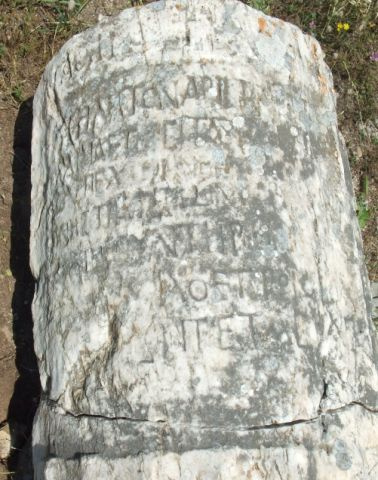
We reproduce the inscription with the completions proposed by Rehm and Herrmann 1997. In summer 2011 we were able to read the text as follows:
ΑΓΑΘ̣Η ΤΥ̣ [ΧΗ] / [Η Σ]Τ̣̣ΗΛΗ ΤΟΝ ΑΡΙΣ̣̣Τ[ΟΝ Α]Π̣̣ [ΑΝ] / [Γ]Ε̣̣ΛΛΕΙ Ν̣̣ΑΕΤ[ΗΡ]ΣΙ ΤΑΤΙ̣̣Α̣̣ [ΝΟΝ ΕΠΕΙ] / [--Ο]Δ̣̣Ε̣̣ Π̣̣Ε̣̣Λ̣̣Ω̣̣Ρ̣̣Ι̣̣ [ΟΝ ΕΡΓΟΝ ΑΝΥΣΣΕ ΦΑΥ] / (5)ΣΤΙΝΗΣ ΠΡ̣̣ [Ω]ΤΕ[ΡΩ]Ν̣̣ [ΓΑΡ ΥΠΕΡ] / [ΤΕΡ]Ο̣̣Σ Ι̣̣ [Θ]Υ̣̣Ν̣̣Τ̣̣Η̣̣Ρ̣̣Ω̣̣ [Ν ΜΑ] / [ΚΡΩΝ ΝΕΟΥ] / ΛΟΕΤΡΟΙΟ [ΧΑ] / [ΡΑΝ ΓΑΡ ΕΛΕ]Υ̣̣ΠΕΤ ΑΣ̣̣Ι̣̣Α̣̣Σ̣̣.
The word στήλη ('stele') in line 2 could refer specifically to the base itself (and its inscription), but could also be used for the entire monument, including the statue. Our translation of the word ἰθυντήρ in line 6 as 'governor' is discussed below (under 'Honorand and Date').
DESCRIPTION (from Rehm and Herrmann 1997)
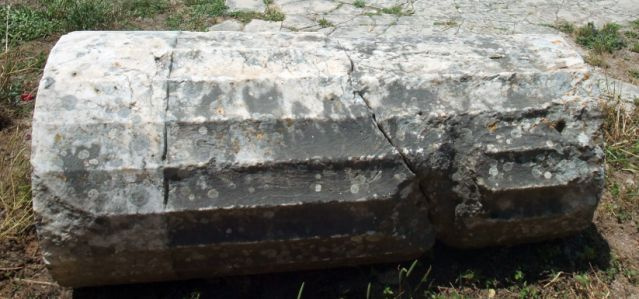
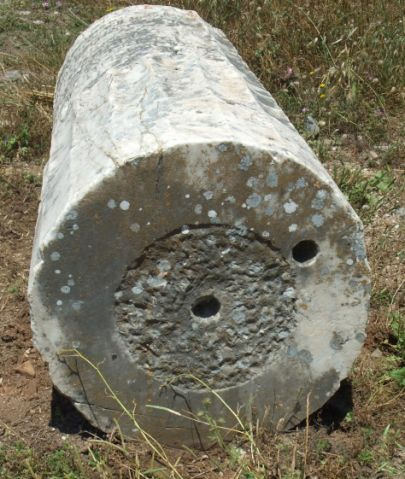
Column of Docimium marble (pavonazetto): H 128, diameter at top 54, at bottom 59 cm. The epigraphic field is slightly indented: H 53, W 58 cm. The surface is badly worn, making the inscription difficult to read. There are two clamp holes at the top edge of the column, to the left and right of the epigraphic field, presumably for fixing the plinth of a statue above.
PROVENANCE AND CURRENT LOCATION
The base was found in 1906 in situ by the long eastern wall of the main hall (apodyterium) of the baths of Faustina in Miletus (http://www.trismegistos.org/place/1375). It is today lying in front of the east wall of the apodyterium, on the right hand side when entering from the frigidarium; Miletus inv. no. 1010.
HONORAND AND DATE
Tatianus, the honorand, was almost certainly a provincial governor (PLRE I, 875 Tatianus 2; Martindale 1980). He is called ἰθυντήρ in line 6 of our inscription, which literally translates as 'guide' or 'pilot' - hence 'nobler than earlier pilots (προτέρων γὰρ ὑπέρτερος ἰθυντήρων)' in lines 5-6. This is not an unusual way to describe governors in late antique honorific epigrams (Robert 1948, 86-7). In another epigram from Miletus (Rehm and Herrmann 1997 no. 339 c), a Tatianus - probably our honorand - is qualified as 'δικασπόλος, 'judge in the city'. This, too, is a formula used for governors and their justice in late antique honorific inscriptions (Robert 1948, 39 and 63-4).
He is, however, more difficult to date with confidence. The first editors of our inscription (Rehm and Herrmann 1997 no. 339 c, and p. 113) argued, on reasonable grounds, that it was contemporary with epigrams to the 'Asiarch' Macarius, inscribed in the same baths of Miletus, which can be reliably dated to the late 3rd century (see also Robert 1948, 129 n. 4). Martindale 1980, however, proposed to identify Tatianus with the governor of Caria, Antonius Tatianus, known from two honorific inscriptions to Julian and Valens in Aphrodisias (LSA-197, LSA-223), whose governorship can therefore be securely dated within the period 360-5. We have left the precise date open, between the late 3rd century and 365. It would be reasonable to follow Martindale and argue that two governors of Caria of the period c. 280-365, both called Tatianus, must actually be one and the same man; but it is also possible that they were two men, one in the late 3rd century, the other in the mid 4th. (The evidence for Tatianus' identity and dates is fully discussed by Roueché http://insaph.kcl.ac.uk/ala2004/narrative/sec-III.html#III.13).
Discussion references
- Jones, A. H. M. et al., The Prosopography of the Later Roman Empire. Vol. I 260-395, Cambridge et al. 1971 (1975)
- Martindale, J. R., Prosopography of the Later Roman Empire: addenda et corrigenda to Volume I, Historia. Zeitschrift für alte Geschichte 29, 1980, 474-97, p. 494 Antonius Tatianus
- Robert, L., Epigrammes du Bas-Empire (Hellenica IV), Paris 1948
- Roueché, C., Aphrodisias in Late Antiquity (Journal of Roman Studies Monograph 5), London 1989
- Roueché, C., Rome, Asia and Aphrodisias in the third century, Journal of Roman Studies 71, 1981, 103-120
Cite: Last Statues of Antiquity, LSA-546 (Ulrich Gehn).