
LSA-551
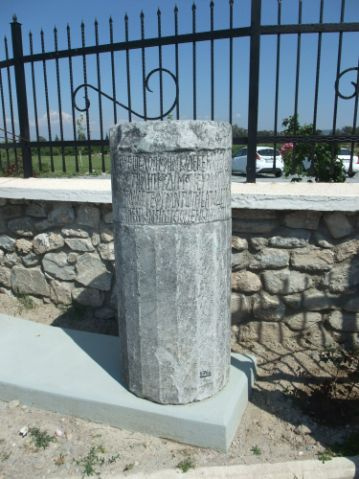
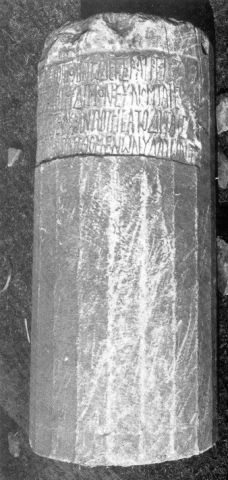
Base for statue of Vitianus, governor of Caria. Miletus (Caria). Later fifth century.
Record details
Photographs
Inscription
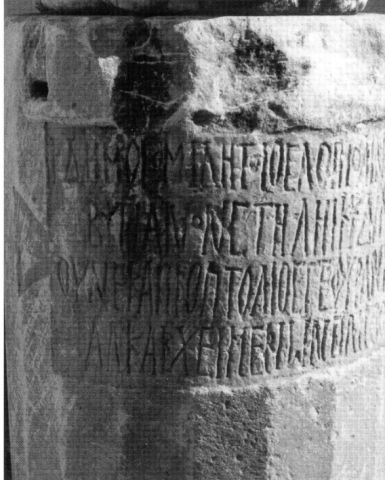
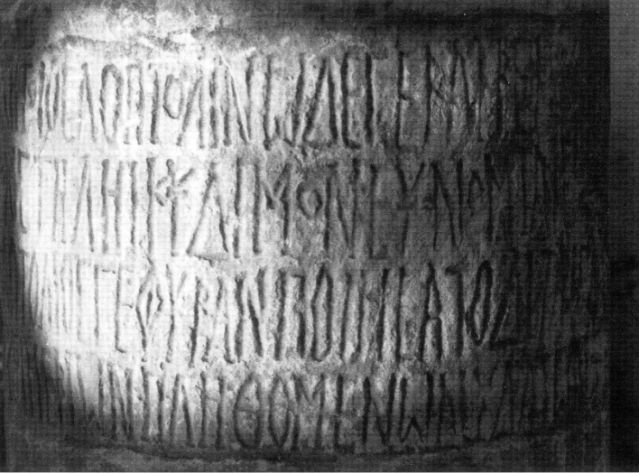
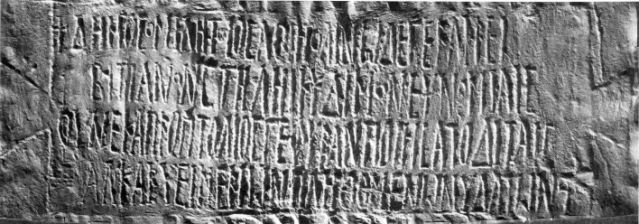
(cross) Δῆμος ὁ Μιλήτοιο σαόπτολιν ὧδε γεραίρει, / Βιτιανὸν στήληι κύδιμον εὐνομίαις, / οὕνεκα πρὸ πτόλιος γέφυραν ποιήσατ’ ὀδίταις, / ἄλκαπ χειμερίων πληθομένων ὑδάτων. (cross)
Inscription translation
The people (demos) of Miletos (= mythical founder of the city) honour thus Vitianus with this statue, the guardian of the city, warden of justice; because he had made a dyke for travellers in front of the city, a protection against the swollen wintry waters.
Bibliography
- Herrmann, P., Günther, W., and N. Erhardt, Inschriften von Milet, Teil 3 (Milet VI, 3), Berlin 2006, pp. 81-2 no. 1129
Discussion
INSCRIPTION
Verse inscription of two distichs laid out in four lines. Each verse occupies one line; the pentameters are indented:
(cross) Δῆμος ὁ Μιλήτοιο σαόπτολιν ὧδε γεραίρει, /
Βιτιανὸν στήληι κύδιμον εὐνομίαις, /
οὕνεκα πρὸ πτόλιος γέφυραν ποιήσατ’ ὀδίταις, /
ἄλκαπ χειμερίων πληθομένων ὑδάτων. (cross)
'The people (demos) of Miletos (= mythical founder of the city) honour thus Vitianus with this statue, the guardian of the city, warden of justice; because he had made a dyke for travellers in front of the city, a protection against the swollen wintry waters.'
Letter height 6 - 7.5 cm.
DESCRIPTION
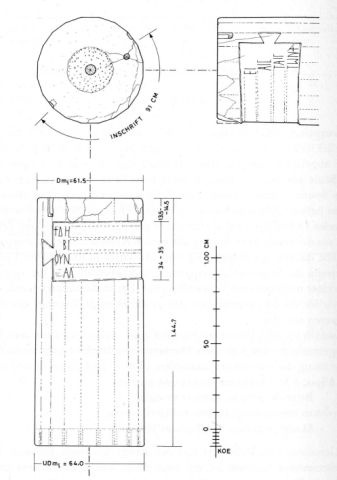
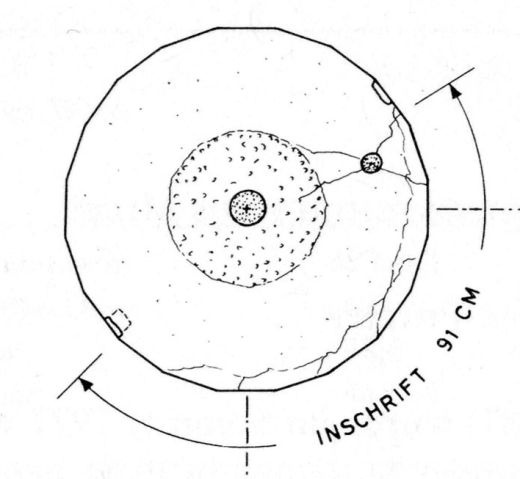
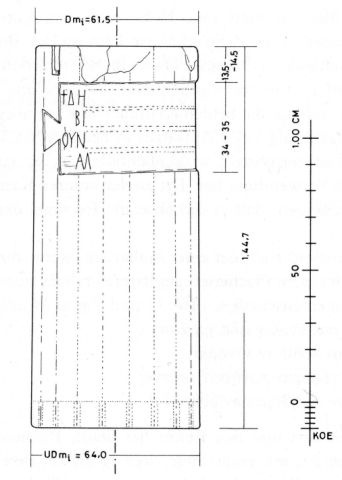
Re-used drum of a marble column: H 147, diameter (at top) 61.5, (at bottom) 64 cm. On the top face there is a central dowel hole to join this drum to another one (for its original use). On either side, at the top of the shaft, are clamp holes for fixing a plinth above, on which the statue of Vitianus would stand. On the bottom face there are traces of mortar, possibly from an even later re-use The inscription is carved in an epigraphic field of 91 cm x 34 cm framed by a tabula ansata.
PROVENANCE AND CURRENT LOCATION
The inscription was found in 1977 in the area west of the museum of Miletus. It is now in the courtyard of the Miletus museum, to the right of the entrance gate, inv. no. 1129.
HONORAND, AWARDER AND DATE
The status of Vitianus, the honorand, is not entirely evident from our inscription, though it is clear that he exercised a protective and judicial role over Miletus, that would be entirely in keeping with the office of provincial governor. That he was indeed a governor of Caria is confirmed by an inscription at Aphrodisias (LSA-229), where he is styled 'λαμπρότατος σχολαστικὸς καὶ ὑπατικὸς, scholasticus and governor (consularis) of clarissimus rank' (Roueché 1989, 106-8 no. 65; Roueché, http://insaph.kcl.ac.uk/ala2004/inscription/eAla065.html).
The statue was set up by the people of Miletus; Μιλήτοιο (line 1) refers to the mythical founder hero of the city (Philipp 1981, 187).
Vitianus' governorship can be dated to the mid or later fifth century, because he was a 'clarissimus' and a consularis, the highest rank of governor; before this period, Caria had been governed by praesides. The change is generally assumed to have taken place in the mid-5th century; the only secure terminus post quem, however, is provided by an inscription in Aphrodisias from 405/14 testifying to a praeses (LSA-224), and the terminus ante quem is provided by milestones from the age of the emperor Anastasius (491-518) testifying to consulares (for the date of the change see also: http://insaph.kcl.ac.uk/ala2004/narrative/sec-IV.html#IV.16 (with references to the milestones)).
Discussion references
- Philipp, H., Eine spätantike Ehreninschrift aus Milet, Istanbuler Mitteilungen 29, 1979, 199-203
- Philipp, H., Nachtrag zur spätantiken Ehreninschrift in Milet, Istanbuler Mitteilungen 31, 1981, 187-9
- Roueché, C., Aphrodisias in Late Antiquity (Journal of Roman Studies Monograph 5), London 1989
Cite: Last Statues of Antiquity, LSA-551 (Ulrich Gehn).