
LSA-59
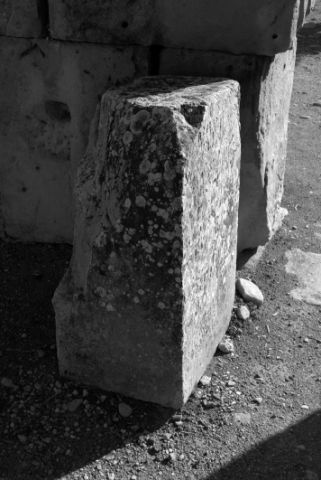
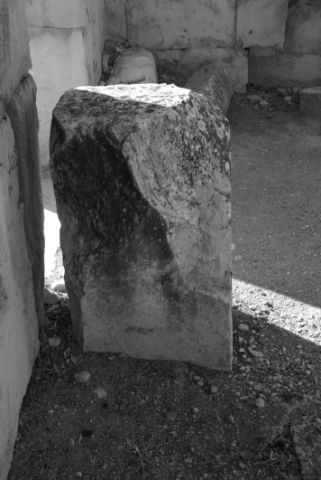
Base for statue, with dedication to Diocletian and Maximian, emperors. Gortyna (Creta). 286-297
Record details
Photographs
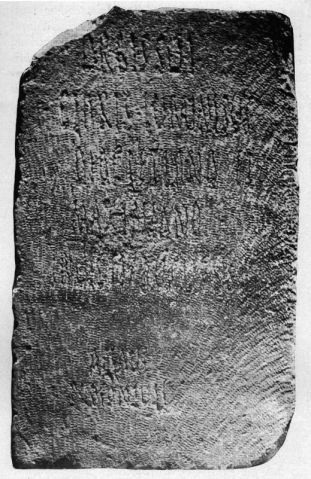
Inscription
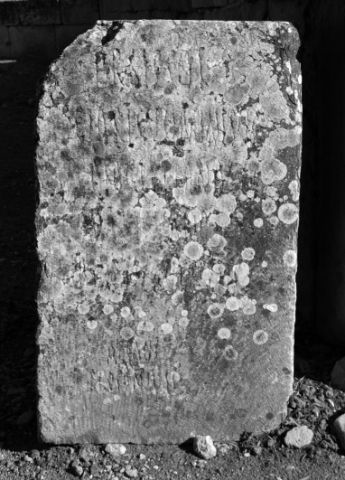
Orbis sui / claris luminibus / Diocletiano et / Maximiano / invictis Augustis / Aglaus / proconsule.
Inscription translation
Aglaus [set this up] to the shining lights of his world, Diocletianus and Maximianus the unconquered Augusti, while he held the office of governor (proconsul).
Bibliography
- Guarducci, M., Inscriptiones Creticae. Vol 4. Tituli Gortynii, Roma 1950, p. 321 no. 281
Discussion
INSCRIPTION
In seven lines:
Orbis sui / claris luminibus / Diocletiano et / Maximiano /(5) invictis Augustis / (space) / Aglaus / proconsule
'Aglaus [set this up] to the shining lights of his world, Diocletianus and Maximianus the unconquered Augusti, while he held the office of governor (proconsul).'
Letter height 7 - 8.5 cm.
DESCRIPTION (from Guarducci 1950 and the published photo)
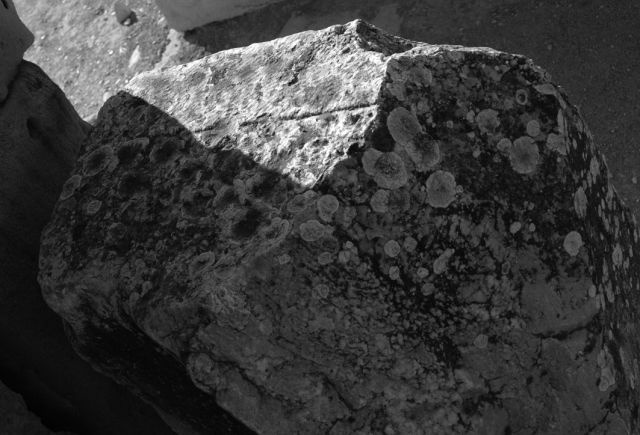
Rectangular block of limestone, upper left corner broken, and chipped at lower right corner: H 91, W 56, D 44 cm. The surface of the front has been worked over with a claw chisel at a later date.
PROVENANCE AND CURRENT LOCATION
The inscription was first recorded close to the church of Hagios Titos in Gortyna when Guarducci compiled the Inscriptiones Creticae in 1950. It is today standing on the archaeological site at Gortyna.
HONORAND, AWARDER AND DATE
The inscription can be securely dated between the accession of Maximian in 286 and the retirement of both Augusti in 305. The terminus ante quem is narrowed by the awarder Aglaus' proconsular rank (PLRE I, 30 Aglaus): he must have held office before 295/7, when, in the wake of the tetrarchic provincial reforms, the proconsular province of Creta et Cyrene was separated into two smaller provinces, Creta now being administered by a praeses of equestrian rank (for the date, see Guarducci 1950). The fact that Constantius I and Galerius are not named in this inscription possibly indicates that the Caesars of the first tetrarchy were yet to be elevated, which would lower the terminus ante quem to 293.
The awarder Aglaus is known only from this inscription.
FURTHER DISCUSSION
The dedication to two emperors, on a base that could only carry one statue, suggests that, as in other examples, a similarly-worded paired base carried a second statue.
Discussion references
- Jones, A. H. M. et al., The Prosopography of the Later Roman Empire. Vol. I 260-395, Cambridge et al. 1971 (1975)
Cite: Last Statues of Antiquity, LSA-59 (Ulrich Gehn).